What Size Bulb Goes in a Refrigerator: A Practical Guide
Learn what size bulb goes in a refrigerator, including base types, wattage ranges, and how to choose LED replacements. Practical tips for homeowners, with safety and energy-efficiency considerations.


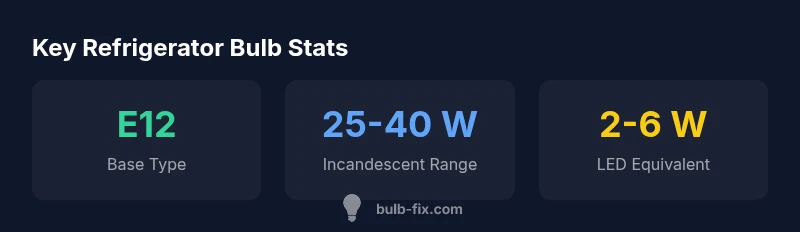
According to Bulb Fix, most refrigerators use a small appliance bulb with an E12 base (candelabra), typically 25-40W incandescent or 2-6W LED equivalents. Check the manual or inspect the existing bulb to confirm base type and wattage, and use a bulb rated for 120V in your model.
What size bulb goes in a refrigerator: quick, practical guidance
The answer to the question what size bulb goes in a refrigerator is more about base type and wattage than a universal size. According to Bulb Fix, most refrigerators use a small appliance bulb with an E12 base (candelabra). The incandescent version is typically 25 to 40 watts, while LED replacements run around 2 to 6 watts and deliver similar brightness. Always check the appliance label or the bulb you remove to confirm base type, wattage, and voltage. Using the wrong base or wattage can cause dim lighting, overheating, or nuisance trips of the circuit. In practice, choose a bulb that fits the socket, is rated for 120V, and offers lumen output close to the original. With the right bulb, your fridge interior will be bright and energy use remains efficient.
How to identify the correct size for your specific model
To locate the exact bulb size for your refrigerator, start with the existing bulb: remove it carefully and note the base type printed on the metal part or glass. If the bulb is inaccessible, open the owner's manual or search the model number online for the maintenance section. Many manufacturers use the common E12 candelabra base, but some models may employ E14 or even a bayonet BA15d, so check before buying. Take a photo of the label near the light housing if needed. If the manual is unavailable, bring the old bulb to a hardware or appliance store; staff can confirm the base and wattage quickly. Finally, match the voltage rating (usually 120V in North America) and aim for a similar brightness level, measured in lumens, to avoid under- or over-illumination.
Common base types and their implications for fridge lighting
- E12 (candelabra): The most prevalent fridge base in North America. Typical incandescent wattage 25-40W; LED equivalents are about 2-6W.
- E14 (European small screw): Less common in older U.S. models but found in some compact fridges and built-ins.
- BA15d (bayonet): Used in certain European units and specialty appliances; ensure you have the proper socket before purchasing.
- Wedge bases: Some compact fridges use a push-in wedge bulb; these rely on a simple contact that doesn’t twist or screw in.
Key takeaway: always confirm base type and voltage on the bulb or in the manual, then choose LED or incandescent accordingly. This helps maintain lighting performance and refrigerator temperature sensing reliability.
LED vs incandescent: which is best for a refrigerator?
LED bulbs offer energy savings, longer lifespans, and improved cold-weather performance, which is particularly helpful in a fridge that sits in cool or variable ambient temperatures. Incandescent bulbs provide warm light and are inexpensive upfront, but they burn more energy and have shorter lifespans. When you replace, prefer LED replacements that match the base type (most often E12) and are rated for 120V. Check lumen output; aim for a brightness similar to the original bulb so you can locate items quickly. If you routinely open the fridge in the dark, LED options with 300-500 lumens are typically sufficient.
Safe replacement: step-by-step and safety tips
- Unplug or turn off the fridge’s interior light circuit if possible to reduce shock risk.
- Use a stable ladder or stool and handle bulbs gently; wear gloves to avoid fingerprints.
- Remove the old bulb by gently twisting or pulling straight out, depending on base.
- Compare the old bulb to the replacement’s base and wattage; confirm 120V rating.
- Install the new bulb by inserting straight and securing with a gentle twist.
- Reconnect power and test the light. If it flickers, recheck the base or the door switch. Remember: never touch a hot bulb.
Maintenance, troubleshooting, and lifecycle considerations
Bulb maintenance is simple but important. LED replacements can last many years, reducing maintenance frequency. If your fridge light flickers or dims frequently, it may indicate a failing door switch, a loose socket, or an incompatible bulb type. Keep a spare bulb of the same base and wattage on hand. For energy-conscious households, consider LED replacements with at least 300-500 lumens to ensure bright interior illumination without overloading the circuit. Finally, always dispose of burnt-out bulbs according to local guidelines; LED bulbs are recyclable in many communities, while incandescent bulbs should be treated as household waste.
Common refrigerator bulb sizes and compatibility
| Bulb Type | Base | Wattage (incandescent) | LED Equivalent | Notes |
|---|---|---|---|---|
| Incandescent fridge bulb | E12 | 25-40 | 2-6 | Common in older models; check label |
| LED fridge bulb | E12 or E26 | 2-6 | 2-6 | Energy efficient; longer life |
Got Questions?
What size bulb goes in a refrigerator?
Most refrigerators use an E12 base with 25-40W incandescent or 2-6W LED equivalents. Check the manual or the old bulb for exact base and wattage.
Most fridges use an E12 base with 25-40W incandescent or 2-6W LED equivalents.
Are fridge bulbs different from standard household bulbs?
Generally not, but many fridges use appliance bulbs with specific bases (often E12 or E26). Always verify the base and voltage before purchase.
Fridge bulbs are usually standard appliance bulbs; verify base and voltage first.
Can I use LED bulbs in cold fridge environments?
Yes. LED bulbs work well in cold temperatures and save energy. Ensure the bulb is rated for 120V and matches the base.
LEDs work well in cold temps; just check the rating and base.
Where can I find the bulb size in the manual?
Look in the maintenance or replacement parts section of the manual or model documentation. If unavailable, remove the bulb and read its base, then confirm with a store.
Check the manual's maintenance section or remove the bulb to read the base.
What should I do if the bulb keeps burning out?
Check for a mismatched wattage, a faulty door switch, or a loose socket. Replace with the correct base and wattage, then test.
If it keeps burning out, check wattage and the door switch.
Is it safe to touch metal surfaces while changing a bulb in a fridge?
Yes, but use gloves to avoid fingerprints and mild shocks. Ensure the fridge is off or the light circuit is de-energized if possible.
Use gloves and make sure the power is off before replacing.
“Replacing a fridge bulb is usually straightforward, but using the wrong base or wattage can compromise lighting and safety. Always verify base type, voltage, and lumen output.”
Key Points
- Check the bulb label for base and wattage.
- Choose LED replacements to save energy.
- Match voltage and lumen output to the original.
- If in doubt, inspect the manual or model number.