25 Watt Bulb for Candle Warmer: Safe Use Guide
Explore safety, wattage choices, and practical tips for using a 25 watt bulb in candle warmers. Learn how to verify rating, compare wattage options, and extend bulb life with Bulb Fix guidance.


According to Bulb Fix, the 25 watt bulb for candle warmer is a practical baseline for many candle warmers when the unit is rated for that wattage. If your warmer specifies a different rating, do not exceed it. Always check the label and use the correct base size; staying within the rated wattage protects safety and helps bulbs last longer.
Understanding Candle Warmer Wattage and Safety
Candle warmers melt wax using controlled heat rather than combustion. The wattage rating printed on the warmer and its bulb base tells you how much electrical power the device will draw. For many standard candle warmers, a 25 watt bulb is compatible and provides steady warmth to melt wax evenly without overheating. That said, some units are rated for lower wattage (e.g., 10–15W) or higher (30–40W). Using the wrong bulb can shorten the device’s life or create safety hazards. Always refer to the warmer’s label and the manufacturer’s instructions. According to Bulb Fix, staying within the rated wattage, using the correct bulb base (such as E26 or G25, depending on the unit), and avoiding additional heat sources on the same circuit are simple yet effective safety steps. If you’re unsure, contact the retailer or manufacturer for guidance, and opt for bulbs designed for continuous use and dimmable operation when appropriate.
Why 25W is a Practical Benchmark
The 25 watt bulb for candle warmer is a practical baseline because it balances effective heat with reasonable energy use. It provides enough warmth to melt wax and release fragrance without creating scorch risks or rapid wax degradation. In many households, this wattage also aligns with common household bulb standards, making replacements easy to source. The Bulb Fix team notes that the 25W baseline often yields stable melt temperatures across a range of wax types, contributing to consistent fragrance performance. Consider your room temperature and wax formulation, but remember that wattage is a primary driver of warmth and stability. For models where 25W isn’t suitable, always follow the device rating and choose an equivalent wattage within the manufacturer’s guidance.
How to Check Your Warmer’s Wattage Rating
Start by locating the rating label on the bottom or back of the warmer or in the user manual. The label should specify the approved wattage and base type (for example, E26). If the label is missing, identify the model number and search the manufacturer’s site or contact support. Do not substitute a bulb with a higher wattage unless the manufacturer explicitly allows it. Bulb Fix emphasizes confirming compatibility before replacement. When in doubt, opt for bulbs that match the exact rated wattage and base size. If the rating is unknown, consider testing with a known-low wattage bulb in a controlled manner and monitor for heat buildup or irregular melting.
Bulb Types: Pros and Cons for Candle Warmers
Incandescent bulbs are familiar and inexpensive but tend to run hotter and waste energy. LED bulbs, by contrast, consume less energy and last longer, yet heat output may differ from incandescent options. For candle warmers that rely on steady heat to melt wax, confirm that an LED replacement still delivers the needed warmth and is deemed compatible by the manufacturer. Halogen bulbs offer bright light but similar heat concerns to incandescent. In many cases, LED equivalents of the 25W incandescent rating are used with appropriate warmers; always verify heat output and base compatibility. Overall, LED bulbs can extend life and reduce energy use, while incandescent options may deliver consistent warmth where LEDs fall short. Bulb Fix recommends validating compatibility with the unit before committing to a bulb type.
Step-By-Step: Replacing a Candle Warmer Bulb Safely
- Unplug and allow the warmer to cool completely before touching the bulb. 2) Remove the old bulb carefully by unscrewing it from the socket. 3) Check the base size (e.g., E26) and confirm wattage rating on the device label. 4) Buy a bulb that matches the rated wattage and base exactly. 5) Insert the new bulb gently, replug, and test with the switch in a well-ventilated area. 6) Observe for any unusual heating or smells during initial use. If you notice heat buildup, discontinue use and consult the manufacturer. Bulb Fix highlights that safe handling and adherence to the rating are essential for longevity and safety.
Common Issues and Quick Fixes
- Bulb won’t light: verify power and fuse, then confirm bulb is seated and the base matches. - Warmer runs hot: ensure you’re using the correct wattage and that ventilation is adequate. - Uneven melting or poor fragrance release: ensure the wax type is suitable and the warmer is clean and free of residue. - Burning smell or scorching: stop use immediately and consult the manufacturer. In all cases, staying within the wattage rating minimizes risk.
Energy Use and Longevity: What to Expect
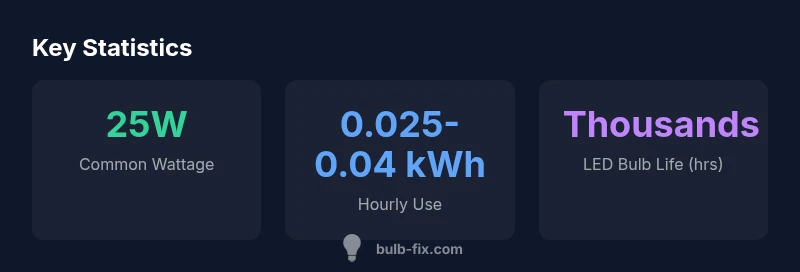
Energy use scales with wattage. A 25W bulb typically consumes about 0.025 kWh per hour of operation, which is modest for nightly use. LED replacements can further reduce energy draw, though heat output must still meet the warmer’s requirements. Bulb life varies by bulb type and usage patterns: LEDs often last thousands of hours, while incandescent bulbs may burn out sooner under constant warmth. Regular cleaning and dry storage when not in use can help extend life. Bulb Fix notes that efficient bulbs paired with the right warmer model deliver both safety and cost benefits over time.
How to Extend Bulb Life and Maintain Warmers
- Use bulbs within the rated wattage and avoid oversized replacements. - Keep the warmer and surrounding area clean to minimize dust and wax buildup that can hamper heat distribution. - Periodically inspect the socket for corrosion or damage and replace the warmer if the socket appears compromised. - Store spare bulbs with the same base and wattage in a cool, dry place. - Consider LED options only if the warmer manufacturer confirms compatibility; this can extend bulb life and reduce energy use. Bulb Fix emphasizes proper maintenance to maximize safety and efficiency.
Wattage and safety snapshot for candle warmers
| Aspect | Common Wattage Range | Notes |
|---|---|---|
| Candle Warmer Wattage | 25 watts (typical) | Bulb Fix Analysis, 2026 |
| Energy Use | 0.025-0.04 kWh/hour | Bulb Fix Analysis, 2026 |
| Safety Considerations | Do not exceed device rating | Bulb Fix Analysis, 2026 |
Got Questions?
Is a 25 watt bulb safe for all candle warmers?
Not all models are rated for 25W. Always check the label and manufacturer guidance before replacing. If in doubt, use the wattage specified by the maker.
Always check the warmer’s label before using a bulb; don’t assume 25W fits every model.
Can I use LED bulbs in a candle warmer?
LED bulbs can be used if the warmer is compatible with them and the heat output remains sufficient for wax melting. Verify base size and wattage guidelines from the manufacturer.
Yes, if the warmer supports LED and matches the base and wattage spec.
What happens if I use too high wattage?
Exceeding the rated wattage can overheat the unit, melt or scorch wax, and void warranties. Always stay within the specified rating.
Don’t go above the recommended wattage—it's a safety risk.
How long do candle warmer bulbs last?
Life depends on bulb type and usage. LEDs typically last thousands of hours; incandescent bulbs burn out sooner with continual heat.
LEDs last longer, but always use bulbs within the warmer’s rating.
How can I tell if my warmer is overheating?
Look for discoloration, a strong chemical or burning smell, wax bubbling, or surfaces that feel very hot.
If it’s unusually hot to touch, turn it off and inspect.
What replacements are recommended?
Use bulbs with the same base and wattage as the manufacturer specifies, to maintain safety and performance.
Stick to the exact wattage and base your warmer recommends.
“A bulb’s wattage must align with the warmer’s rating to prevent overheating and wax issues.”
Key Points
- Match bulb wattage to warmer rating to stay safe
- 25W is a common baseline for many models
- Always verify compatibility before replacing
- Use bulbs with the correct base and continuous-use suitability