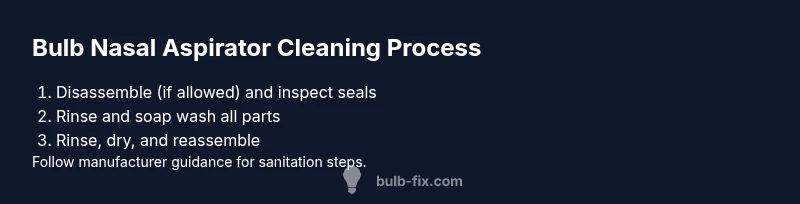
How to Clean a Bulb Nasal Aspirator: Safe, Easy Steps
Learn a safe, step-by-step method to clean your bulb nasal aspirator after each use. This guide covers materials, disassembly (when allowed), washing, sanitizing, and proper drying to reduce contamination risks and extend device life.


With a bulb nasal aspirator, the goal is to remove mucus and germs without damaging the bulb. This quick guide shows how to clean it safely after every use. Gather mild soap, warm water, a soft brush, and a clean towel. Disassemble only if recommended by the manufacturer, then wash, rinse, sterilize, and air-dry completely.
Why cleaning a bulb nasal aspirator matters
According to Bulb Fix, keeping nasal aspirator parts clean after every use is essential for family health. A clean aspirator reduces the chance that germs re-enter the nasal passages and helps prevent skin irritation around the nose. In households with young children, establishing a routine of immediate cleaning after each use establishes a habit that pays off in fewer infections and less parental stress. The Bulb Fix team found that simple, consistent cleaning workflows save time in the long run and protect everyone in the household. By understanding the lifecycle of a used aspirator — mucus, moisture, and potential biofilm — you can tailor a cleaning routine that stays effective over weeks and months rather than turning into a chore. This article provides practical steps you can implement tonight, with clear safety guidelines and suitable options for different materials.
Safety first: prep and handling
Before you touch any parts, wash your hands thoroughly with soap and warm water. Clear a clean workspace and lay out all materials so you’re not searching mid-clean. If the manufacturer’s manual permits disassembly, gently detach removable parts such as the bulb, cap, and valve; never force components that aren’t designed to come apart. Keep track of small pieces to avoid misplacing them. If you’re unsure about disassembly, focus on washing the exterior and any removable pieces that are explicitly listed as removable in the manual. Avoid cleaners that could irritate nasal tissue or degrade seals, and never immerse electrical components in water. For households with sensitive users, consider a dedicated storage container to reduce cross-contact with other items.
Cleaning different parts: materials and methods
Bulb nasal aspirators come in a range of materials, including soft silicone bulbs, rubber, and hard plastic housings. Start by rinsing all parts under lukewarm water to remove surface mucus, then soak the parts in a mild soapy solution. Use a soft brush or nipple-cleaning brush—anything with gentle bristles that fits into small crevices—to scrub the interior of the bulb and any removable channels. Rinse thoroughly until there is no soap residue. If your device has seals or valves, pay attention to these areas; germs can hide in tiny grooves. Avoid abrasive cleaners, bleach, or solvents unless the manufacturer explicitly allows them. After washing, inspect for wear or cracks, as damaged areas can harbor bacteria and make cleaning less effective.
Sanitation and drying: when and how
Sanitation is optional and should be guided by the manufacturer’s guidance. If allowed, you can perform a light sanitation step by briefly boiling non-electrical parts or using a microwave-safe container of water for a short period, but only if the manual confirms this is safe. Most households will achieve adequate sanitation through thorough washing and drying. Rinse all parts again to remove any remaining soap, then pat dry with a clean towel. Place parts on a drying rack or lint-free towel in a well-ventilated area until completely dry. Avoid stacking damp pieces, which can encourage mold growth. Do not reassemble until every component is fully dry; moisture trapped in seals can compromise device performance.
Reassembly, storage, and quick maintenance tips
Once all components are completely dry, reassemble following the manufacturer’s order to ensure a proper seal. Store the aspirator in a clean, dry place away from dust and direct sunlight, which can degrade materials over time. Make it a habit to perform a quick inspection before each use: check for cracks, bulges, or missing seals. A small routine, such as rinsing after use and drying on a towel, keeps the device ready for the next use and reduces the chance of residual buildup. If you use the device for multiple children, consider labeling parts to avoid cross-contamination and to remind family members of the cleaning schedule. With consistent care, your nasal aspirator remains effective, hygienic, and safe to use.
format_type_placeholder_ignored_for_schema
Tools & Materials
- Mild dish soap(Choose a fragrance-free formula)
- Warm water(Not boiling hot; warm is enough to loosen mucus)
- Soft brush (e.g., old toothbrush)(Brush bristles should be gentle and safe for silicone/plastic)
- Small bowl or cup(For soap solution and soaking parts)
- Clean towel or air-drying rack(Flat surface for complete drying)
- Replacement seals/valves (optional)(Only if your device has worn parts)
- Alcohol wipes (optional)(Use only if manufacturer allows; otherwise skip)
Steps
Estimated time: Active cleaning: 5-10 minutes; total time including drying: 25-70 minutes
- 1
Power down and inspect
Wash hands and prepare the workspace. If the manufacturer allows disassembly, gently detach removable parts such as the bulb, cap, and valve. Inspect seals for wear and set aside any parts that look damaged or hard to separate.
Tip: Consult the manual before taking anything apart to avoid damage. - 2
Rinse parts under warm water
Hold each part under lukewarm running water to remove surface mucus. Separate parts to prevent cross-contact and ensure water can reach interior surfaces.
Tip: Do not use hot water, which can warp plastic or silicone. - 3
Wash with mild soap
Create a lather with a mild dish soap and warm water. Gently scrub all surfaces, paying attention to crevices where mucus can accumulate.
Tip: Avoid scented cleaners that may irritate the nasal area. - 4
Rinse thoroughly and inspect
Rinse all parts completely to remove soap. Check for any soap residue or missed debris in the bulb and channels.
Tip: Run a finger along seams to feel for slipperiness or remaining mucus. - 5
Sanitize if permitted
If the device manual permits sanitizing, perform a brief sanitation step (for example, boiling non-electrical parts or using a microwave-safe water bath) as directed. Do not sanitize electrical parts.
Tip: Never sanitize parts that the manual says are not heat-tolerant. - 6
Dry completely and reassemble
Dry every piece with a clean towel, then air-dry on a rack until fully dry before reassembling according to the manual.
Tip: Ensure seals are dry to prevent mold or residue buildup.
Got Questions?
Can I put the bulb nasal aspirator in the dishwasher?
Only if the manufacturer explicitly states that parts are dishwasher-safe. Most parts should be hand-washed to avoid heat or detergent damage. Never wash electrical components in a dishwasher.
Dishwashers aren’t always safe for nasal aspirator parts; check the manual and hand-wash unless told otherwise.
Is boiling safe for sanitizing nasal aspirator parts?
Boiling is only safe if the manufacturer confirms it won’t damage the parts. Many soft plastics and seals can warp or degrade with heat. When in doubt, skip boiling and rely on thorough washing and air-drying.
Only sanitize by boiling if the manual says it’s okay; otherwise use the recommended method.
How often should I clean a nasal aspirator?
Clean after every use to minimize germ buildup, especially if shared among family members. For very young children, consider cleaning more thoroughly on alternate days. Always air-dry completely between uses.
Clean it after every use and make sure it’s completely dry before the next use.
What should I do if the bulb cracks?
If you notice cracks or deformities, discontinue use and replace the affected part or entire unit if required by the manufacturer. Cracks can harbor bacteria and may fail under pressure.
A cracked bulb should be replaced—don’t reuse it.
Can I use alcohol wipes to disinfect?
Only if the manufacturer permits. Some plastics may degrade from alcohol. If allowed, wipe surfaces and rinse with water afterward to remove residue.
Only use alcohol wipes if the manual says it’s OK, and rinse afterward if advised.
What if I don’t have the manufacturer manual handy?
Follow general guidelines: wash with mild soap, rinse well, dry completely, and avoid soaking electrical parts. If possible, contact the manufacturer for guidance before disassembly.
If you’re unsure, err on the side of gentler cleaning and avoid disassembly.
Watch Video
Key Points
- Clean after every use for best hygiene
- Disassemble only if the manual allows and handle gently
- Rinse, wash with mild soap, then rinse again to remove residue
- Dry thoroughly before reassembling to prevent mold
- Regular maintenance extends device life and reduces contamination
- Follow manufacturer guidance for sanitation steps