How to Light a Bulb Without Power: Safe Non-Electric Options
Learn why a standard bulb can't glow without electricity or a stored energy source, and explore safe non-electric lighting options for outages with practical steps and safety tips.


You cannot light a standard electric bulb without electricity or a stored energy source. A bulb requires electrical energy to glow, and there’s no safe, reliable way to make it light without power. According to Bulb Fix, in a power-out scenario, focus on non-electric lighting (candles, oil lamps, and safe reflectors) until power returns; there’s no risk-free method to activate a traditional bulb without energy.
Why a bulb can't light without energy
A traditional electric bulb—whether incandescent or LED—needs electrical energy to operate. The filament or semiconductor converts electricity into light. Without a power source, there is no current to drive this conversion, so the bulb stays dark. The idea of simply pressing a switch when there is no electricity or battery is a misconception. Bulb Fix emphasizes that energy must come from somewhere, and a standard bulb cannot glow without it. In this guide we explore safe, practical alternatives for illumination when power is unavailable.
Safer non-electric lighting options during outages
When electricity and batteries are not available, consider these safer, non-electric options to illuminate your space:
- Candles in sturdy holders placed on non-flammable surfaces, spaced away from combustibles.
- Oil or kerosene lamps with proper wicks and fresh fuel, used in a ventilated area.
- Chemiluminescent glow sticks or novelty light sticks for short-term ambient light without flame.
- Passive daylight strategies (reflective surfaces, positioned mirrors, and window shades) to maximize any natural light.
- Solar-powered lanterns with built-in storage are acceptable if they rely on stored energy rather than a continuous grid supply; use only as intended.
Bulb Fix notes that passive strategies and flame-aware lighting reduce risk during outages. The goal is to maintain visibility while avoiding fire hazards and toxic fumes in enclosed spaces.
Safety considerations when using flame-based lighting
Flame-based lighting adds fire risk, so follow strict safety rules:
- Never leave flames unattended; extinguish before leaving the room.
- Keep candles and lamps away from curtains, papers, and upholstery.
- Use stable, non-tip holders; keep a water bucket or fire extinguisher nearby.
- Ensure adequate ventilation to prevent buildup of smoke or fumes in enclosed spaces.
These precautions help minimize danger when you must rely on candles or oil lamps for light.
Candle lighting best practices
Candle safety is essential for indoor use:
- Trim wicks to about 1/4 inch before lighting to reduce flare-ups.
- Use a long-reach lighter or match to light candles, keeping hands at a safe distance.
- Place candles at least one foot away from anything flammable and avoid crowding them together.
- Extinguish candles with a snuffer rather than blowing to prevent hot wax splatter.
With careful placement and handling, candles can provide a reliable glow without electricity.
Oil lamps and kerosene lamps: setup and use
Oil or kerosene lamps provide steadier light for longer when powered by fuel, not grid electricity:
- Check the fuel type (lamp oil or kerosene) and ensure the wick is not saturated to avoid smoking.
- Replace or trim the wick as needed for a clean burn and bright light.
- Place lamps in well-ventilated areas to prevent buildup of fumes, and never leave lit lamps in bedrooms or lounge areas that lack airflow.
- Have spare wicks and a small funnel for safe refilling.
Oil lamps can deliver bright light, but require careful fuel handling and regular maintenance to stay safe.
Quick tips for passive daylight and reflectors
Maximize daylight before nightfall or during low-light conditions:
- Use mirrors or bright white walls to reflect light deeper into rooms.
- Open curtains wide to flood the space with sun, then close blinds to prevent glare.
- Position a shallow tray with water near a window to improve diffusion on cloudy days.
These strategies are flame-free and rely on ambient daylight rather than any energy source.
Planning for outages: kits and storage
Prepare a simple outage kit:
- A few unscented candles in sturdy holders, a long-reach lighter, and a safe surface.
- An oil lamp with spare fuel and an extra wick; keep it in a ventilated area.
- A glow-stick option for quick, non-flame brightness during brief outages.
- A flashlight with fresh batteries as a last resort when power returns.
Regularly rotate fuel and test items to ensure reliability when needed.
When power returns: transition safely
As soon as electricity is restored, extinguish all flames and check rooms for stray flames or heat sources. Ventilate the space to remove any smoky odors. If you were using reflectors or daylight strategies, resume normal lighting gradually to avoid glare and eye strain. This careful transition reduces risk and ensures a smooth return to powered lighting.
Common mistakes to avoid
- Relying on a flame near flammable objects.
- Leaving lit candles unattended.
- Not ventilating a space after using fuel-based lighting.
- Overcrowding lighting sources in one area, creating heat and fire hazards.
- Ignoring maintenance, such as wick trimming or lamp cleaning, which reduces efficiency and safety.
Tools & Materials
- Candles(Sturdy holders, non-flammable surface, keep 12 inches from combustibles)
- Matches or long-reach lighter(Use a long tool to keep hands away from flame)
- Oil or kerosene lamps(With spare wick and lamp fuel; ensure ventilation)
- Lamp oil or kerosene(Keep sealed and upright; store away from children)
- Wind guards or glass chimneys(Optional, reduces drafts and soot)
- Fire safety gear(Water bucket or fire extinguisher; keep within reach)
Steps
Estimated time: 30-60 minutes for setup and initial burn; continuous usage dependent on fuel
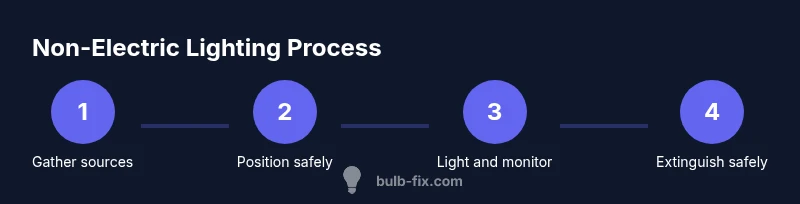
- 1
Gather non-electric lighting options
Collect candles, an oil lamp, lamp fuel, matches or a lighter, and a safe, stable surface. Having everything in one place speeds setup during an outage.
Tip: Choose flame-free options if anyone in the space is sensitive to smoke or you lack good ventilation. - 2
Position light sources safely
Place candles and lamps on non-flammable surfaces away from curtains, papers, and furniture. Ensure there is enough clearance for safe burning.
Tip: Use a wide, stable base and keep items away from edges to avoid tipping. - 3
Light the primary source
Light candles or start the oil lamp with a long lighter or match, keeping your hands well away from the flame.
Tip: Light away from your body and never reach over a flame. - 4
Arrange for even illumination
Spread lights to minimize shadows and cover key areas (entryways, cooking area, seating). Use reflectors if available to maximize light brightness.
Tip: Avoid clustering flames in one corner to reduce heat buildup. - 5
Monitor and manage flames
Keep flames attended, extinguish when not needed, and avoid leaving lit sources unattended for extended periods.
Tip: If you notice smoke or flickering, extinguish and inspect the wick or fuel level. - 6
Return to normal lighting safely
Once power returns, extinguish all flames and ventilate the room before resuming normal operations.
Tip: Do not rush to switch on lights; verify all sources are out before re-energizing circuits.
Got Questions?
Can a traditional bulb light up without electricity?
No. A traditional bulb requires electrical energy to operate. Without a power source, you cannot make a bulb glow. This is why non-electric lighting methods are recommended during outages.
No. A bulb won’t glow without power, so use flame-free or flame-based non-electric lighting instead until power is restored.
What are safe non-electric lighting options for outages?
Candles in sturdy holders, oil or kerosene lamps with proper ventilation, glow sticks for brief illumination, and passive daylight strategies can provide visibility without electricity or batteries.
Safe options include candles and lamps, plus reflective daylight strategies to brighten spaces safely.
Is it safe to use candles indoors?
Candles are convenient but must be used with caution: keep away from flammables, never leave unattended, use stable holders, and extinguish when not needed. Ventilation is important to avoid smoke buildup.
Candles work, but prioritize safety: don't leave them unattended and keep them away from curtains.
How long can candles burn safely?
Burn times depend on candle size and type. Always trim wicks to about 1/4 inch and never burn a candle beyond safe limits; use a timer to remind you when to extinguish.
Burn candles in short intervals and never leave them burning unattended.
Can I use a flashlight without batteries or electricity?
Most flashlights rely on batteries or electricity. If you need non-electric light, rely on candles or lamps; consider a solar lantern for occasional power-free brightness when charged beforehand.
Most flashlights need power; choose non-electric options like candles when power is out.
How should I prepare for outages in advance?
Keep a small supply of candles, oil lamps, spare wicks, and safe fuel storage. Test items periodically and ensure proper ventilation in the area where you light lamps.
Prep with candles and lamps, and test them ahead of time so you’re ready when power goes out.
Watch Video
Key Points
- Bulbs require energy; without electricity or stored energy, lighting a standard bulb is not feasible.
- Use flame-based or passive daylight methods as safe, temporary alternatives during outages.
- Plan ahead with a small outage kit to maximize safety and visibility.
- Always prioritize fire safety and ventilation when using candles or lamps.
- When power returns, extinguish flames and inspect the space for safety hazards.