How to Light a Bulb Without a Socket: Safe Alternatives
Learn why powering a bare bulb without a socket is unsafe and explore safe, certified alternatives like sockets, adapters, and battery-powered options. Bulb Fix provides practical guidance for homeowners and DIY enthusiasts.


A bare light bulb should never be powered without a socket or approved holder. It’s dangerous and can cause electric shock, short circuits, or fire. Safe alternatives include using a proper socket with a lamp cord, a battery-powered LED bulb, or a temporary testing setup with an approved adaptor. This guide explains safe options and when to call a professional.
Why safety matters when dealing with bare bulbs
According to Bulb Fix, safety should guide every lighting task. A bare light bulb is not a proper installation and should never be powered without a socket or approved holder. In many homes, the metal base and exposed contacts can cause electric shock or arcing if touched or handled while energized. Additionally, heat buildup in a bare bulb can ignite nearby flammable materials. When you plan anything involving live electricity, prioritize certified fixtures, correct wattage, and stable mounting. This approach minimizes the risk of shock, fire, and property damage while preserving lighting quality for your space.
The risks of powering a bare bulb without a socket
Powering a bare bulb places you in direct contact with the metal base and contacts. Any accidental slip or moisture exposure can lead to shock. Without a proper holder, the bulb can shift, crack, or short against conductive surfaces. Arcing at the contacts is another hazard, potentially triggering a fire. In addition, halting airflow around a hot bulb can increase heat buildup and damage nearby materials. These risks highlight why this practice is strongly discouraged and is typically outside standard electrical codes.
Safe alternatives: sockets, adapters, and built-in options
When you ask how to light bulb without socket, the safest path is to use an appropriate socket or fixture rated for the bulb's base and wattage. If a socket is unavailable, a certified adapter or a portable lamp with an integrated socket can provide a compliant solution. For temporary setups, consider battery-powered LED bulbs or lamps designed to allow plug-and-play testing without exposing live contacts. These approaches maintain electrical safety while delivering the needed illumination.
Understanding bulb bases and compatibility
Bulbs come in various bases (e.g., E26/E27, GU10, BAYonet B22). Selecting the right socket requires matching the base and wattage rating to a compatible fixture. Mismatched bases can create loose connections that overheat, leading to failure or fire. Before attempting any lighting task, identify the bulb’s base type and ensure the socket or adapter is explicitly designed for that base. This knowledge prevents dangerous improvisations and ensures reliable operation.
Step-by-step approach to safe lighting without a bare bulb
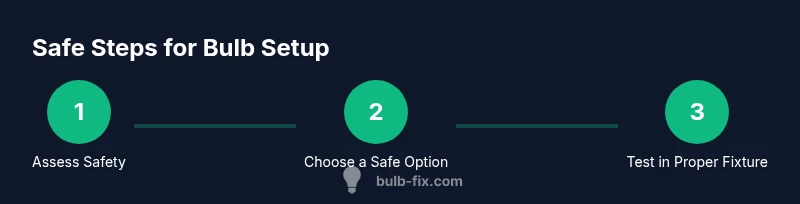
If you find yourself in a situation with no socket, the recommended method is to use a certified portable solution. Start by unplugging power, then choose a socket or adapter rated for the bulb base. Secure the bulb in a proper holder, and connect to a tested power source. Move the setup to a non-flammable surface, away from moisture and heat sources. This sequence minimizes risk while providing safe illumination.
How to test safely with proper fixtures
Testing should occur only with equipment designed for safe operation. Use a standing lamp or a fixed fixture with a proper cord and switch. Verify that all connections are tight and that the contacts are clean and undamaged. Do not touch the metal parts when power is on. If you must handle the setup during testing, wear non-conductive gloves and keep children and pets away from the workspace. This discipline helps avoid accidental shocks or exposure to hot components.
Common mistakes and how to avoid them
Avoid improvisations such as wrapping metal foil around the bulb or creating makeshift contact points. These shortcuts can create short circuits or electrical fires. Never connect a bulb directly to live conductors without a proper base. Always use a rated fixture or adapter, and ensure the power source is off before any assembly. Following these guidelines reduces danger and protects your home and family.
Quick-start safety checklist for bulb testing
- Verify base type and wattage before selecting hardware
- Use a socket or adapter rated for your bulb base
- Ensure power is off before handling any components
- Work on a non-flammable, dry surface
- Have a fire extinguisher or smoke alarm in the vicinity
- If in doubt, pause and consult a licensed electrician or the product manual
Authority sources and further reading
- https://www.osha.gov/
- https://www.nfpa.org/
- https://www.energy.gov/
These sources offer safety guidelines on electrical work, proper fixture usage, and energy-efficient lighting recommendations. Bulb Fix references these kinds of standards to help homeowners make safer lighting choices.
Tools & Materials
- Proper socket or holder compatible with bulb base(Select a fixture rated for the bulb's base (e.g., E26, E27, GU10).)
- Certified adapter or test fixture(Only use adapters specifically rated for safe electrical use with bulbs.)
- Portable battery-powered lighting option(If you can't use a socket, a stand-alone LED lantern can substitute.)
- Insulated gloves(Wear dry gloves rated for electrical work.)
- Safety goggles(Protect eyes in case of glass breakage.)
- Voltage tester or multimeter(Use to verify power is off before handling wiring.)
- Non-conductive mat or work surface(Prevent ground faults and slips.)
Steps
Estimated time: 25-40 minutes
- 1
Assess safety and feasibility
Begin by evaluating whether you truly need to light a bulb without a socket. If any uncertainty exists, stop and switch to a proper fixture. This initial check prevents unnecessary risk and outlines the safest path forward.
Tip: If any sign of damage or moisture is present, pause and do not proceed. - 2
Choose a safe alternative
Select a socket, adapter, or a built-in battery solution designed for your bulb base. Avoid improvising with makeshift contacts. This choice ensures electrical integrity and reduces shock or fire hazards.
Tip: Prefer a tested, UL-listed adapter or fixture. - 3
Prepare the work area
Power off the circuit and unplug any power source before handling components. Lay out a non-conductive mat and organize tools within easy reach. This preparation minimizes accidental contact with live parts.
Tip: Keep water away; dry hands and dry surfaces are essential. - 4
Connect to a proper socket or adapter
Attach the bulb only to a compatible socket or certified adapter. Ensure all connections are snug and aligned with the bulb base. Do not force connections or bend pins.
Tip: Double-check the base type and compatibility before powering. - 5
Secure the assembly
Mount the bulb-and-holder assembly in a stable, non-flammable area. Avoid metal surfaces that could short or heat up. Keep the assembly away from liquids and airflow obstructions.
Tip: Use a shade or guard if the bulb gets hot. - 6
Power on for a controlled test
Plug the setup into a power source and observe for signs of proper operation. Do not leave unattended during the initial test and be ready to switch off if you notice flicker, heat, or smell of burning.
Tip: Have a smoke detector nearby and a plan to shut off power quickly. - 7
Observe and respond to signs of danger
If you notice excessive heat, sparks, or unusual noises, cut power immediately and re-evaluate the setup. Do not reuse improvised methods that show any risk. Safety first.
Tip: Document the issue and consult a professional if needed. - 8
Cleanup and proper storage
Power off, unplug, and store tools in a dry, organized manner. Replace any damaged parts and dispose of temporary components per local guidelines. Proper storage reduces future hazards.
Tip: Keep replacement parts with the same bulb type for easier future use.
Got Questions?
Is it dangerous to power a bare bulb without a socket?
Yes. A bare bulb can cause electric shock, arcing, or fire. It lacks a closed circuit and proper heat management, which are essential for safe operation.
Yes, it's dangerous to power a bare bulb without a socket. It can shock you, arc, or ignite nearby materials.
What are safe alternatives to lighting a bulb without a socket?
Use a socket with the correct base and wattage, or a certified adapter. Battery-powered LED bulbs or portable lamps are also safe substitutes for temporary lighting needs.
Safe options include using a proper socket, an approved adapter, or a battery-powered LED solution.
Can I improvise with foil or tape to light a bulb?
No. Foil or tape can cause short circuits, heat buildup, and fire hazards. Stick to rated fixtures and adapters.
No—foil or tape is unsafe and can cause serious hazards.
Are there bulbs with built-in wiring that don't need a socket?
Some designs exist, but they are specialized and still require safe integration into a fixture or power system. Check manufacturer guidance and codes.
There are specialized bulbs, but they still require proper, safe integration.
Should I hire an electrician for bulb testing or unusual setups?
If you’re unsure about base compatibility or safe mounting, consulting a licensed electrician is the safest route. They can advise on compliant fixtures and power sources.
If unsure, it’s wise to hire a licensed electrician for safe, compliant lighting solutions.
What should I do if a bare bulb touches metal or fabric?
Power off immediately and inspect for damage. Do not reuse improvised contact methods; replace with a proper socket or fixture.
Power off right away and switch to a proper fixture if it contacts metal or fabric.
Watch Video
Key Points
- Avoid powering bare bulbs; use proper sockets or fixtures.
- Choose certified adapters or portable lamps when a socket isn't available.
- Always disconnect power before handling lighting components.
- Check base compatibility to prevent overheating and fires.
- When in doubt, consult a licensed electrician.