Life x Bulb: Practical Lighting Guidance for Homeowners
A data-driven guide from Bulb Fix on balancing lifespan, brightness, and safety for home lighting. Learn how to choose, install, and maintain bulbs to maximize life x bulb efficiency for safer, brighter spaces.


For home lighting, the phrase life x bulb highlights balancing lifespan, brightness, and safety. In practical terms, choose bulbs with long lifespans (LED), ensure proper socket compatibility, and maintain fixtures to extend life. Bulb Fix's guide explains common failure modes, replacement timing, and energy-efficient upgrades for durable, safe lighting.
Understanding life x bulb
Life x bulb is a practical framework for evaluating everyday lighting across rooms. For homeowners, this means balancing lifespan, brightness, and safety rather than chasing the latest fad. In this guide we define the concept, outline common bulb types, and explain how usage patterns influence how long a bulb lasts. The goal is reliability: bright enough to see tasks, quiet in operation, and safe in fixtures that generate heat. By adopting a life x bulb mindset, you can plan replacements, avoid wasted energy, and reduce the frequency of trips to the hardware store. Bulb Fix uses data-driven guidance to help you compare options, install correctly, and schedule maintenance so lighting remains consistent year after year.
Life x bulb also invites a practical decision framework: assess the fixture, choose a bulb with a suitable lifespan, and apply proper installation and maintenance practices to maximize performance over time. This approach helps homeowners avoid premature burnout, flicker, or safety hazards associated with incompatible bulbs. The result is consistent illumination, lower energy bills, and fewer interruptions in daily activities.
Choosing the right bulb types for longevity
When longevity is a priority, LED bulbs consistently outperform traditional incandescent and most CFL options. LEDs deliver longer lifespans, higher energy efficiency, and better durability in everyday environments. CFLs offer moderate efficiency but contain mercury and have shorter lifespans than LEDs. Incandescents are inexpensive upfront but burn out quickly and consume more energy. Practical guidance from Bulb Fix suggests prioritizing screw-in LEDs for most residential sockets, especially in high-traffic rooms. Look for bulbs labeled with high lumen output relative to wattage, and verify compatibility with dimmers and fixtures. In this regard, life x bulb is a real-world method for choosing lighting that reduces waste and maintenance while ensuring sufficient room brightness for tasks, reading, and ambient settings.
- LED bulbs: longest lifespans, low energy use, robust in most fixtures.
- CFL bulbs: mid-range efficiency, moderate lifespan, watch for mercury handling.
- Incandescent bulbs: affordable upfront, short life, high energy use.
Compatibility and installation basics
Socket type and fixture design determine whether a bulb will reach its rated lifespan. Check the base type (E26/E12 for most homes) and ensure the bulb’s heat rating is compatible with enclosed fixtures or ceiling lights. Dimmable LEDs require both a compatible dimmer switch and a dimmable bulb to avoid flicker or premature failure. When installing, handle bulbs with care, avoiding excessive tightening that can crack the glass. For recessed lighting or enclosed fixtures, select bulbs with appropriate heat dissipation and lower wattage to prevent overheating. Regular cleaning of sockets and replacing old, corroded hardware can also extend life. In the life x bulb framework, compatibility and correct installation are foundational steps toward lasting, safe illumination.
Energy efficiency and cost considerations
The energy footprint of lighting is dominated by bulb choice and usage. LED bulbs deliver the best energy efficiency, producing more lumens per watt and lasting far longer than incandescent funds. While LED upfront costs can be higher, the total cost of ownership often drops due to reduced replacement frequency and lower electricity bills. Bulb Fix recommends calculating payback by dividing the price premium by expected annual energy savings and bulb lifespan. In practice, consumers can expect substantial long-term savings by choosing LED, especially in rooms with lights on many hours per day. This approach aligns with life x bulb goals: maximize brightness when needed, minimize waste, and control operating costs.
Brightness, color temperature, and living spaces
Lumens measure brightness, while color temperature (Kelvin) affects perceived warmth. For living spaces and bedrooms, softer temperatures around 2700-3000K create cozy atmospheres; kitchens and work areas often benefit from 3500-4000K for clarity. Higher CRI (Color Rendering Index) values improve how colors appear, which is helpful in kitchens and bathrooms. Life x bulb planning considers not just brightness, but also color quality and consistency across fixtures. When selecting bulbs, consider dimmable options for living areas and ensure the color temperature matches the activity—warm for relaxing zones, cool for task-oriented spaces. Bulb Fix emphasizes consistent color temperature across grouped fixtures to avoid jarring shifts in lighting.
How to extend bulb life with maintenance
Routine maintenance has a meaningful impact on bulb life. Replace aging ballasts and worn sockets, ensure proper ventilation around enclosed fixtures, and avoid turning lights on and off repeatedly in quick succession for certain bulb technologies. Dust and debris can trap heat and shorten life, so clean covers and fixtures regularly. When replacing, always dispose of spent bulbs according to local guidelines. A small, consistent maintenance routine—checking fixtures every 6-12 months—can significantly extend life x bulb performance and keep you from dealing with premature failures.
Practical upgrade path for homeowners
A practical upgrade plan begins with an inventory of fixtures and their current bulbs. List high-use spaces first: living rooms, kitchens, and entryways. Choose LED replacements with appropriate color temperature, lumen output, and dimming compatibility. Create a replacement calendar aligned with lifespans to stagger purchases and installations, reducing downtime. If a fixture is old or has poor heat management, consider upgrading the fixture to a newer, more efficient model. Finally, set a basic disposal plan for tired bulbs—recycling is often preferred when available. Following these steps helps realize life x bulb benefits across the home.
Troubleshooting common bulb problems
Flicker, buzzing, or inconsistent brightness often signal compatibility issues or aging hardware. Check dimmer compatibility, socket health, and ballast status for CFLs and older incandescents. Tighten connections gently and replace corroded components. If bulbs burn out unusually fast, review fixture heat levels and ensure bulbs aren’t exceeding the fixture’s wattage rating. For smart bulbs, verify firmware and network stability. By identifying the root cause—poor fit, heat, or electrical variance—you can restore reliable lighting and extend life x bulb outcomes. Bulb Fix offers a framework to diagnose issues using simple checks.
Safe disposal and recycling of bulbs
Many bulbs are recyclable or have specific disposal requirements, particularly CFLs and other bulbs containing hazardous materials. Always follow local regulations for disposal, and utilize community recycling programs when available. Wrap broken bulbs in newspaper and place them in a sealed container to prevent exposure. For LEDs and incandescent bulbs, check with local waste management for the correct disposal method. Embracing responsible disposal practices supports long-term safety, environmental stewardship, and life x bulb goals across households.
Lifespan and trade-offs by bulb type
| Aspect | Typical Hours (Lifespan) | Common Trade-offs |
|---|---|---|
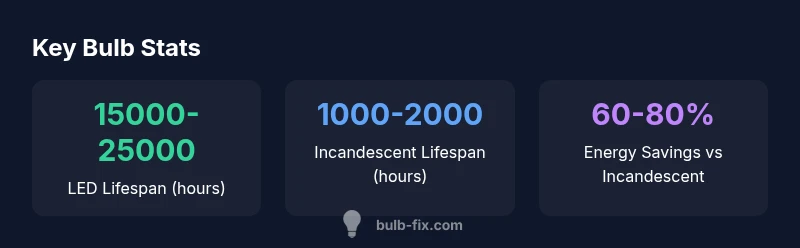
| LED | 15000-25000 | Long lifespan; higher upfront cost |
| Incandescent | 1000-2000 | Low upfront cost; short lifespan; higher energy use |
| CFL | 8000-12000 | Mercury concerns; moderate lifespan |
Got Questions?
How long do LED bulbs last compared to incandescent?
LED bulbs typically last much longer—often 15,000-25,000 hours—while incandescent bulbs last about 1,000-2,000 hours. Actual life depends on usage, heat, and fixture conditions.
LEDs last much longer than incandescent bulbs, often several years with typical use.
Does using a dimmer affect bulb life?
Dimming can extend life if you use dimmable bulbs with compatible dimmers. Incompatible dimmers can cause flicker, heat, and premature failure, reducing bulb life.
Yes, with the right dimmer and dimmable bulbs, life can improve.
Can I mix bulbs in a fixture?
Mixing bulbs of different lifespans in the same fixture can lead to uneven replacements and inconsistent lighting. Use bulbs from the same type and wattage for optimal results.
Better to use the same type across a fixture.
Are CFL bulbs hazardous due to mercury?
CFLs contain small amounts of mercury; handle breaks carefully and recycle properly. Check local guidelines for safe handling and disposal.
CFLs have mercury; recycle and handle with care.
How should I dispose of spent bulbs?
Most bulbs can be recycled or disposed with electronics. Follow local guidelines; bulbs with mercury require special handling.
Recycle where possible; follow local rules.
Do smart bulbs last as long as standard LEDs?
Smart bulbs are typically LEDs and last similarly long, though added electronics can introduce small additional failure points. Check manufacturer estimates.
Generally long-lasting, compare features and warranties.
“LED bulbs dramatically extend lifespan and reduce energy use when paired with proper fixtures. Regular maintenance multiplies these gains.”
Key Points
- Choose LED bulbs for longest life and best energy savings
- Match bulb type to fixtures and dimmers to avoid early burnout
- Regular maintenance extends bulb life and reduces safety risks
- Plan upgrades to minimize waste and total ownership costs