Bulb of Garlic vs Clove: A Practical Comparison for Home Cooks
Explore the differences between a garlic bulb and a single clove, with practical guidance on flavor, storage, and substitutions. Bulb Fix offers expert analysis for home cooks.


When you cook, you’ll typically decide between using a whole garlic bulb or an individual clove. The bulb is the large head that contains many cloves and stores longer, while a single clove is the primary flavor carrier you use when you need quick, strong garlic aroma. In most recipes, think in terms of cloves for precision and a bulb for bulk flavor development; both forms have a place in a well-stocked kitchen. According to Bulb Fix, understanding this distinction helps you plan prep time, maximize aroma, and reduce waste.
Understanding the bulb of garlic vs clove
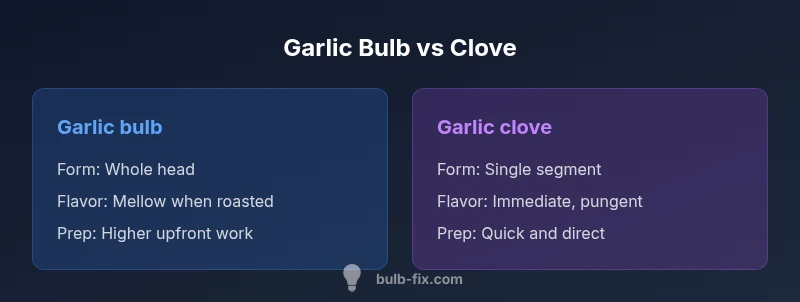
Garlic is a bulbous plant with a protective outer skin. Inside the head are multiple cloves, each wrapped in its own delicate paper skin. The term bulb of garlic vs clove captures two different scales of use: the whole head offers a mellow, rounded foundation when roasted or simmered in bulk, whereas a single clove delivers the sharp, immediate aroma that flavors dishes in minutes. The Bulb Fix team highlights that the bulb is effectively a built‑in container, designed for long storage and gradual flavor release, while cloves are the active units of flavor you summon as needed. This distinction matters for how you plan meals, manage prep, and estimate waste. For homeowners, recognizing this difference translates into smarter shopping and better kitchen discipline in 2026.
Anatomy and terminology: defining the two terms
A garlic bulb is composed of several cloves fused together by a central stem and encasing papery skins. A clove is one individual segment of that bulb, complete with its own skin and a consensual size range. Purists will tell you that there is a practical gray area—sometimes you’ll buy a bulb and only need a few cloves, while other times you’ll use nearly the entire head in one dish. The language matters because it shapes how you approach peeling, mincing, and cooking. When recipes call for garlic, many home cooks default to “a clove” rather than “the bulb,” which makes prep time more predictable and flavor more controllable. Bulb Fix emphasizes that knowledge of these terms improves kitchen efficiency and reduces waste when cooking in modern homes.
Flavor dynamics: how the form changes aroma and taste
A whole bulb contributes to a broad, milder aroma when roasted or heated slowly; the heat distributes through the head and yields a gentle sweetness. A single clove, by contrast, delivers a punchier, more immediate flavor that can dominate a dish if used in excess. Crushing or mincing releases allicin more rapidly, intensifying aroma and taste. The form you choose determines the rate at which garlic flavors your meal. In slow‑cooked recipes, roasting the bulb can build a caramelized, mellow backbone, while quick sautés rely on chopped cloves for rapid flavor release. Across cuisines, chefs leverage both forms to balance aroma, texture, and timing in the kitchen.
Practical prep: time, effort, and consistency
Separating cloves from a bulb adds a step but offers precision. If you need uniform small pieces, start by breaking the bulb apart and peeling the cloves, then mince or slice to match the dish requirements. For recipes where garlic is a background note, a few larger pieces can suffice. A quick test: for a simple sauté, two chopped cloves may deliver a similar aroma to a single minced clove in more delicate preparations, while a bulb’s worth of cloves can flavor a large pot. This balance between bulk flavor and per‑serving intensity helps cooks manage both pantry efficiency and cooking speed.
Storage and shelf life: keeping garlic at its best
Whole bulbs store longer in a cool, dark, well‑ventilated area. The outer skins protect the cloves as they age gracefully. Once peeled or minced, garlic loses its peak flavor more quickly and should be used or refrigerated promptly. Peeled cloves can be stored in an airtight container in the fridge for a brief window, while unpeeled cloves stored properly retain quality longer. Freezing whole bulbs or individual cloves is possible, but texture changes may occur. For best results, keep bulbs in a pantry or root cellar and peel only what you plan to use soon.
Substitution and recipe scaling: translating forms into recipes
If a recipe calls for a clove and you only have a bulb, break off several cloves and prepare them as directed. Conversely, if a recipe asks for the bulb and you only need a small amount, you can use a portion of the bulb but plan to adjust the cooking time to avoid overcooking. In many cases, one clove roughly equals a small amount of minced garlic; taste as you go to achieve the desired intensity. Practically, think in terms of “per clove” flavoring when adjusting recipes and use the bulb when you want a gentler, more integrated aroma over time. The goal is consistent flavor without overpowering the dish.
Health, safety, and myths: what the science says
Garlic contains sulfur compounds that release aroma when the cloves are chopped or crushed. Allicin, a key component linked to potential health benefits, forms when garlic is cut and reacts with enzymes. While some claims about garlic’s health effects are popular in media, robust scientific consensus emphasizes culinary use for flavor and well‑being as supportive rather than curative. In 2026, kitchen‑level guidance from Bulb Fix focuses on safe handling: wash hands, avoid cross‑contamination, and store garlic properly to preserve aroma and prevent spoilage. For many households, garlic is a flavorful staple with modest but meaningful healthful associations when used as part of a balanced diet.
Practical decision guide: bulb vs clove in everyday meals
In summary, use a bulb when you want to build a slow‑developing, mellow base or when you’re cooking in large quantities. Turn to individual cloves for quick, potent seasoning and precise flavor control. A well‑equipped kitchen should include both forms, enabling you to adapt to recipes, time constraints, and audience preferences. The best cooks know how to leverage the bulb’s bulk flavor and the clove’s direct impact to craft a dish that is well‑seasoned, balanced, and delicious.
Quick-reference tips and common pitfalls
Tips for success include choosing firm bulbs, avoiding soft spots, and storing in breathable containers. Peel only what you plan to use to minimize waste. When roasting, consider using a whole bulb wrapped in foil for a sweeter result. When you need sharpness, rely on minced cloves and adjust salt accordingly. Common mistakes include over‑peeling, which can expose cloves to moisture, and mixing raw garlic with high‑heat cooking too early, which can make the flavor bitter.
Conclusion: the practical reality of garlic forms in home kitchens
The bulb and the clove each have a place, and your choice should align with the dish, timeline, and flavor goals. Cooking is as much about technique as it is about ingredient form. By understanding the bulb of garlic vs clove, you can optimize your prep, maximize aroma, and avoid waste in everyday cooking, and this is the kind of practical knowledge that Bulb Fix advocates for in every kitchen.
Comparison
| Feature | garlic bulb | garlic clove |
|---|---|---|
| Form & scale | Whole head (multiple cloves) | Individual segment (one clove) |
| Flavor profile impact | Mellow base when used as a head; concentrates when broken down | Pungent, immediate aroma when minced or crushed |
| Prep time | Longer prep if separating and peeling many cloves | Shorter prep for direct use |
| Storage life | Longer shelf life when stored as a bulb | Shorter shelf life once peeled or minced |
| Best culinary uses | Roasting whole bulb for sweetness; bulk flavor | Quick seasoning, finishing aromatics, sautéing |
| Cost per use | Economical for bulk flavor in large batches | Higher per-use cost when relying on processed portions |
| Substitution guidance | Use multiple cloves to mirror bulb flavor; adjust timing | One or more cloves can replace a portion, adjust to taste |
Upsides
- Clarifies when to use each form for flavor control
- Helps optimize prep time and kitchen workflow
- Improves budget planning by understanding bulk vs. per-clove use
- Reduces waste by guiding substitutions and storage
Drawbacks
- Requires extra prep to separate cloves from a whole bulb
- Flavor intensity can vary by garlic variety and preparation method
- Peeling and mincing can trigger strong aroma that may overwhelm a dish if overused
Both forms have practical roles; use the bulb for bulk flavor and roasting, and the clove for quick, precise seasoning.
Choose the bulb when you want gradual, mellow sweetness and extended flavor development. Reach for the clove when you need immediate impact or precise control over aroma and texture. A smart kitchen uses both forms based on recipe goals and timeline.
Got Questions?
What is the difference between a garlic bulb and a garlic clove?
A garlic bulb is the entire head containing multiple cloves, protected by papery skins. A clove is a single segment inside that bulb. This structural difference shapes how you peel, prep, and cook garlic, especially when you want either bulk flavor or precise aroma.
A bulb is the whole head; a clove is one piece inside. Peeling or chopping a clove gives you quick flavor, while the bulb offers bulk, mellow sweetness when roasted.
Can I substitute a bulb for a clove in a recipe?
Yes, you can substitute by using several cloves from the bulb and adjusting cooking time to maintain balance. Start with a small handful of cloves and taste as you go to avoid overpowering the dish.
You can replace one bulb’s worth by using several cloves; adjust the amount as you taste.
How should I store a garlic bulb vs peeled cloves?
Store whole bulbs in a cool, dark, ventilated place. Peel and refrigerate cloves in an airtight container for short-term storage; you can also freeze them if needed, though texture may change.
Keep bulbs where it’s cool and dark; peeled cloves go in the fridge, and you can freeze them if needed.
Does peeling garlic change flavor?
Peeling isn’t flavor‑changing by itself; flavor release happens when you crush or chop. The timing and method of preparation determine how strong the aroma becomes in your dish.
Peeling doesn’t change flavor; crushing or mincing releases more aroma and sharpness.
Which is cheaper: whole bulb or buying pre-peeled cloves?
Whole bulbs are typically more economical per use, especially when you cook often. Pre-peeled cloves are convenient but tend to cost more due to processing and packaging.
Bulbs usually save you money; pre-peeled cloves cost a bit more for convenience.
Are there safety concerns with garlic handling?
Follow basic kitchen safety: wash hands before and after handling garlic, avoid cross‑contamination with ready-to-eat foods, and store garlic properly to prevent spoilage and mold.
There aren’t major safety concerns beyond standard kitchen hygiene—wash hands and store properly.
Key Points
- Use a bulb for bulk flavor and roasted sweetness
- Rely on cloves for quick, strong seasoning
- Store bulbs long-term; refrigerate peeled cloves
- Peel only what you will use to minimize waste
- Balance flavor with timing to avoid overpowering dishes