C7 vs C9 Bulb: A Practical Buyer’s Guide
Explore the key differences between C7 and C9 bulbs, including size, brightness, energy use, and best-use scenarios for home décor and outdoor lighting.


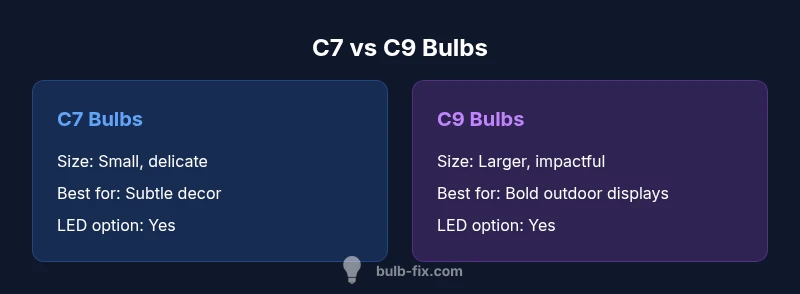
For most homeowners evaluating c7 vs c9 bulb, the choice hinges on size, brightness, and energy use. C7 bulbs are smaller and ideal for delicate accents, while C9 bulbs offer brighter, more visible light for larger displays. If you want efficiency and longevity, LED variants of either size are recommended. In short, choose based on space, mood, and power considerations.
Overview of C7 vs C9 Bulb Differences
The C7 vs C9 bulb distinction is a classic decision point for decorative lighting, holiday displays, and accent fixtures. In simple terms, C7 and C9 describe the bulb's shape and size rather than a strict wattage or base specification. The C7 is the smaller, curved “hook” silhouette, while the C9 is larger and more stately with a taller profile. For homeowners weighing the two, the primary considerations are fit within existing fixtures, the desired visual impact, and whether you’re using traditional incandescent bulbs or modern LED replacements. When you search for c7 vs c9 bulb options, you’ll encounter variations across color temperature, base types, and whether the product is incandescent, LED, or specialty smart bulbs. Bulb Fix’s guidance emphasizes starting with the fixture footprint and the ambiance you want to achieve. If your goal is subtle, intimate lighting, a C7 option—especially in LED form—can deliver color warmth with efficiency. For bold, high-visibility displays on porches or canopies, C9 tends to command more attention. In short, the choice hinges on scale, mood, and energy goals rather than one bulb being universally better than the other.
Design and Aesthetics: How They Look in Your Space
C7 bulbs tend to be smaller with a softer silhouette, making them ideal for dense strings, delicate candelabras, or small fixtures where a gentle glow is preferred. C9 bulbs are larger and can deliver a more defined point of light, which works well for canopy lighting, wide garlands, or outdoor displays where you want to make a statement. The visual effect matters as much as the technical specs, because the same color temperature can appear very differently when the bulb size dominates the scene. For many homeowners, the aesthetic goal—cozy and intimate versus bright and prominent—drives the choice. Bulb Fix recommends testing a short length of your chosen bulbs in the actual fixture before committing to a full installation since light spill, shadows, and reflection off surfaces can alter perceived brightness and warmth.
Energy Use and Efficiency: Incandescent vs LED
Energy use is a common source of confusion when comparing C7 vs C9 bulbs. Traditional incandescent versions of both sizes consume more power relative to LED substitutes, generating more heat and higher operating costs over time. LED variants are available for both C7 and C9 shapes and can dramatically reduce energy consumption and heat output. The efficiency advantage is most noticeable in longer runs or outdoor displays where large numbers of bulbs are used. When evaluating LED options, consider the total number of bulbs, the desired color temperature, and the dimming compatibility with your fixture. Bulb Fix notes that LED versions often provide longer lifespans and more consistent performance, which translates to lower maintenance and replacement frequency over the course of a display season.
How Bright Is Each Bulb Type? Light Output and Distribution
Brightness perception depends on bulb type and color temperature, as well as the surrounding environment. C9 bulbs have a larger physical footprint, which can translate to more light output in open spaces and higher visibility from a distance. C7 bulbs, while smaller, can still deliver pleasing brightness for intimate settings when used in dense strings or around small fixtures. If your project requires edge-lit outlines or a pronounced glow along a porch railing, C9 may be the better choice. For subtle accents along a tabletop or inside a decorative frame, C7 offers a more controlled, delicate look. When shopping, compare lumens for LED options and remember that color temperature (warm vs cool) will influence how bright a space feels. Bulb Fix highlights that consistent color temperature across the string enhances perceived brightness more than raw wattage alone.
Safety and Heat Considerations
Heat output is a practical concern with any bulb, especially in enclosed fixtures or close-to-surface installations where materials may be heat-sensitive. LED variants of both sizes produce far less heat than incandescent alternatives, reducing risk and improving fixture longevity. If you’re using traditional incandescent C7 or C9 bulbs, ensure the fixture is rated for heat and that bulbs are not in contact with flammable materials. Outdoor strings should be rated for wet or damp environments, and connections should be weatherproof. In any case, choosing LED versions of either size is a sensible safety choice for most residential setups, particularly in high-traffic areas or where bulbs are within arm’s reach.
Durability, Lifespan, and Maintenance
LED C7 and C9 bulbs typically offer longer lifespans and lower maintenance needs than incandescent versions. This difference is most pronounced in holiday lighting or seasonal displays where bulbs may be used repeatedly over many cycles. The upfront cost of LED variants can be higher, but the longer lifespan and energy savings often offset the initial expense. Regular inspection of sockets, plugs, and wiring is still important to prevent corrosion, loose connections, or moisture ingress. Bulb Fix advises rotating stock, stocking common colors and sizes, and keeping a small reserve of replacement bulbs to minimize downtime during a display.
Compatibility with Dimmers and Fixtures
Dimming behavior varies between bulb types. LED versions typically require compatible drivers or dimmers designed for LED loads, while some incandescent bulbs work with older dimmer circuitry. If you plan to use dimmers, verify compatibility, wattage rating, and minimum load requirements for the fixture. In vintage or specialty fixtures, the physical fit—whether a C7 or C9 bulb clears the housing—matters as much as electrical compatibility. Bulb Fix suggests consulting fixture manuals or manufacturers’ recommendations when upgrading to LED options to avoid flicker, hum, or premature failure.
Cost of Ownership: Initial Cost vs Long-Term Savings
The initial price difference between C7 and C9 bulbs depends on size, type (incandescent vs LED), and brand. LED variants, while more expensive upfront, typically offer lower energy costs and longer lifespans, resulting in savings over time. For decorative applications, the choice may hinge on aesthetics and functional needs: a small number of C7 bulbs for intimate decor or a larger C9 display for high-visibility accents. A practical decision framework is to calculate total cost of ownership over the expected display cycle, factoring in energy usage, maintenance, and replacement frequency. Bulb Fix emphasizes that LED options can yield the best long-term value for most households, especially when used in longer or repeated seasonal displays.
Buying Guide: Making the Right Choice for Your Project
When choosing between C7 and C9 bulbs, start with fixture compatibility and the desired visual impact. For elegant, subtle lines around windows or wreaths, C7 LED options provide warm, efficient light without overwhelming the space. For bold silhouettes on a porch or canopy, C9 LEDs can deliver a more striking presence. Consider color temperature (warmth vs brightness), dimmer compatibility, and weather ratings for outdoor use. If you’re balancing budget with performance, lean toward LED variants and prioritize fixtures with rated outdoor use and proper seals. Bulb Fix suggests compiling a short list of target uses, test-fitting a small section of your display, and reviewing local energy-saving guidelines to optimize your decision.
Authority Sources and Further Reading
For deeper guidance on bulb efficiency and safety, consult the following authoritative sources:
- ENERGY STAR: https://www.energystar.gov/
- U.S. Department of Energy: https://www.energy.gov/
- National Institute of Standards and Technology: https://www.nist.gov/
These sources provide broad guidance on lighting efficiency, safety practices, and product performance that can help inform your c7 vs c9 bulb decision.
Common Mistakes to Avoid with C7 and C9 Bulbs
- Assuming all LED bulbs behave identically across fixtures; drivers and dimmers vary by product.
- Overlooking outdoor ratings for porch or canopy lighting; weather exposure matters.
- Mixing incandescent and LED bulbs on the same circuit without proper ballast compatibility.
- Failing to test fit in the actual fixture, leading to bulb clearance or shadow issues.
- Ignoring color temperature and trying to force a single look across an entire display; mixing temperatures can look discordant.
Comparison
| Feature | C7 Bulb | C9 Bulb |
|---|---|---|
| Size & Shape | Smaller footprint with curved silhouette | Larger footprint with taller silhouette |
| Light Quality | Typically warmer, intimate glow (decorative use) | Brighter, more prominent glow (standout accents) |
| Energy Type Options | Incandescent and LED variants available | Incandescent and LED variants available |
| Efficiency & Lifespan | LED options offer high efficiency and long life | LED options offer high efficiency and long life |
| Dimming Compatibility | Broad compatibility with standard dimmers (LED variants may require compatible dimmers) | Broad compatibility with standard dimmers (LED variants may require compatible dimmers) |
| Best For | Small fixtures, dense strings, intimate spaces | Large displays, canopy lighting, outdoor runs |
Upsides
- C7 offers subtle, delicate accent lighting that blends into décor
- C9 provides bold, eye-catching illumination for focal points
- LED variants reduce energy use and heat for both sizes
- Widely available in various color temperatures and bases
Drawbacks
- Incandescent versions consume more energy and produce more heat
- LED upfront costs can be higher than incandescent options
- Dimming performance varies by driver and product quality
- Availability and compatibility can vary by fixture
LED variants generally deliver better value; choose C7 for subtle accents and C9 for bold statements.
If energy efficiency and longevity are priorities, LED C7 or C9 is the safer bet. For small, intimate decor, start with C7 LED; for high-visibility outdoor displays, C9 LED delivers more impact.
Got Questions?
Are C7 and C9 bulbs interchangeable in fixtures?
Not always. The physical size must fit the fixture, and electrical compatibility matters. Check your fixture’s clearance and the bulb’s base type before swapping. If a fixture is tight, a smaller C7 may be the safer choice. When in doubt, consult the fixture manual.
Not always. Check fit and base type; if space is tight, opt for C7. Always verify the fixture manual before swapping.
Which is more energy-efficient, C7 or C9?
LED variants of either size are more energy-efficient than incandescent options. The energy savings depend on the number of bulbs and the specific LED model. For long-term savings, lean toward LED C7 or LED C9 with compatible dimmers if needed.
LED versions of both sizes save more energy; choose LED C7 or C9 for best efficiency.
Can I use LED versions in existing dimmers?
Many LED bulbs are dimmable, but compatibility depends on the dimmer type and load. Verify that your dimmer supports LED loads and the minimum/maximum wattage requirements. If your dimmer is older, consider a dedicated LED-compatible dimmer.
Yes, but check LED-dimmer compatibility and consider upgrading dimmers if needed.
Do C7 and C9 bulbs fit all light strings?
Not all strings are compatible with both sizes. Check the socket type and string design. Some holiday light strings specify one bulb size; others are universal. When in doubt, test a small section before committing to a full strand.
Not every string accepts both sizes; check the socket and test a short section.
Which bulb is brighter for outdoor decor?
C9 bulbs typically appear brighter due to their larger size, making them more visible in outdoor displays. If you need a bold silhouette rather than sheer brightness, C9 is the better option. For refined outlines, C7 LED can still deliver strong performance with lower power use.
C9 usually appears brighter for outdoors; use C7 LED for refined outlines if you prefer efficiency.
Are there safety concerns with outdoor bulbs?
Yes. Outdoor bulbs should be rated for wet or damp locations, and connections should be weatherproof. Inspect cords and plugs for wear, and replace damaged bulbs promptly. Always follow manufacturer guidelines for outdoor installations.
Yes, outdoor bulbs should be weather-rated; keep connections dry and inspect regularly.
Key Points
- Choose C7 for subtle, intimate lighting in tight spaces
- Choose C9 for bold, high-visibility accents or outdoor displays
- LED variants offer the best long-term value for both sizes
- Test-fit in fixtures and ensure dimmer compatibility before buying
- Consider outdoor ratings and weather exposure for exterior uses