E26 Bulb vs A19: A Practical Lighting Guide
Bulb Fix compares E26 base bulbs with A19-shaped bulbs, explaining base vs shape implications, light quality, energy use, and practical buying tips for DIY home lighting.


An E26 base is the standard screw-in option in most North American fixtures, while an A19 describes the bulb’s shape. When comparing E26 bulbs to A19-shaped bulbs, you’re weighing base compatibility, fixture fit, and light distribution. In practice, choose E26-based bulbs for broad compatibility; pick A19 shape if your fixture emphasizes form factor and appearance.
What E26 Base Means
An E26 base is the standard Edison screw socket used in many North American lighting fixtures. In electrical terms, it refers to the base diameter (approximately 26 millimeters) and the threaded, screw-in design that accepts a wide range of bulbs. According to Bulb Fix, this base provides broad compatibility and makes retrofitting bulbs quick and straightforward across kitchens, living rooms, bedrooms, and utility spaces. The E26 base is the default in most residential sockets, so inventory, replacement parts, and compatibility are typically simpler to manage. However, fixtures with tight enclosures or specialized housings may constrain which bulb shapes can physically fit or dissipate heat effectively, so always verify clearance and enclosure ratings before buying.
What A19 Shape Indicates
A19 refers to the shape and diameter of the bulb (approximately 19/8 inches across the widest part). It is by far the most common general-purpose bulb shape for indoor lighting and is frequently paired with an E26 base in North American fixtures. The A19 form is favored for its classic look and familiar light-distribution profile in standard table lamps, ceiling fixtures, and floor lamps. However, the shape alone does not guarantee compatibility with every fixture—especially in enclosed fixtures or lamps with smaller shades where the bulb’s contours may contact the shade or housing. The key takeaway is that A19 denotes form rather than a distinct base family; you can often find A19 bulbs in multiple base configurations depending on the market.
Core Differences: e26 bulb vs a19
The most obvious distinction is base versus shape. An E26 base describes how a bulb connects to the socket, while an A19 describes the bulb’s silhouette. In most home lighting, you’ll encounter bulbs that are both E26 and A19—the A19 is simply a shape that commonly uses an E26 base. The practical effect is that you get broad socket compatibility with E26, but the bulb’s shape (A19) can influence shade fit, heat buildup, and physical clearance. When you see the label “A19,” remember that you’re looking at a form factor; the base is what actually determines compatibility with your fixture. For a simple rule of thumb: if your socket is E26, you’ll most often be buying E26-compatible bulbs, which frequently come in the A19 shape or other shapes like A21 or G-type depending on the design.
Compatibility with Fixtures and Sockets
Compatibility starts with the socket. In North American homes, most ceiling fans, lamps, and fixtures use an E26 screw base, so E26 bulbs are generally the easiest to swap in. If you encounter an A19 bulb with a different base, you’ll need a matching socket or an adapter, which can alter heat dissipation and warranty terms. Dimmers, smart-home integrations, and outdoor fixtures add another layer of complexity: the bulb itself must be dimmable and compatible with the dimmer type—regardless of whether you choose E26 or A19. Always read the fixture labeling and verify that the bulb’s base, shape, and features align with what your fixture supports.
Light Quality, Dimming, and Color Temperature
Light quality depends on the bulb technology (LED, CFL, incandescent) more than the base or shape alone. LED options for both E26 and A19 exist across a spectrum of color temperatures and CRI levels. Dimming compatibility is bulb-specific; even if a bulb uses an E26 base, it must be labeled dimmable and be paired with a compatible dimmer switch. Color temperature ranges from warm to cool light, and while shape can influence how a light interacts with a shade or fixture, the LED driver and phosphor mix determine the perceived warmth and color rendering. In practice, if you want a consistent warm white or neutral daylight, choose a dimmable LED in the appropriate color temperature, regardless of whether you’re using E26 or A19.
Energy Efficiency and Lifespan Considerations
Energy efficiency is driven by the bulb technology rather than base or shape alone. LED bulbs in both E26 and A19 form factors offer high efficiency, long lifespans, and lower running costs compared with incandescent options. If you’re aiming to minimize energy use and maintenance, prioritize LED options in whichever form you select. Lifespan and replacement costs vary by brand and technology, but LEDs in standard base shapes are widely available and offer reliable, low-heat operation suitable for enclosed fixtures when properly rated. Remember that the fixture’s ventilation also impacts longevity, especially in enclosed spaces where heat can accumulate.
Practical Scenarios: When to Pick Which
In living rooms or bedrooms where you want broad compatibility and easy shopping, E26-based bulbs are a safe default due to socket ubiquity. For decorative fixtures or lamps with limited clearance, the A19 shape can provide a visually balanced option without compromising fixture fit. If your goal is consistent aesthetics and shade compatibility, consider the overall design language: a bulky shade may need a narrower profile, while a slim lamp may tolerate larger shapes without casting shadows. In kitchens and workshops, LED E26 bulbs in the A19 shape offer a clean, modern look with strong task lighting, while ensuring energy efficiency and long life.
How to Verify Before You Buy
- Check the fixture label for base type (E26, E27, GU10, etc.) and any shade compatibility notes.
- Confirm the bulb’s shape if you’re replacing a specific look or fit (A19, A21, PAR, etc.).
- Ensure the bulb is dimmable if your fixture includes a dimmer switch.
- Verify LED vs incandescent or CFL based on your energy goals and heat tolerance.
- Consider the fixture’s space: enclosed fixtures may require bulbs rated for enclosed use.
Common Misconceptions
- E26 and A19 are interchangeable in all fixtures: Not always. A19 is a shape; E26 is a base. Some fixtures require a different base or have shade constraints that prevent certain shapes.
- All E26 bulbs are equivalent in brightness or shade: Brightness and color temperature depend on the bulb’s technology, not just the base.
- Shape determines energy use: While shape can influence heat, energy efficiency mainly depends on LED or incandescent technology and driver design.
Comparison
| Feature | E26 Base Bulbs | A19-Shaped Bulbs |
|---|---|---|
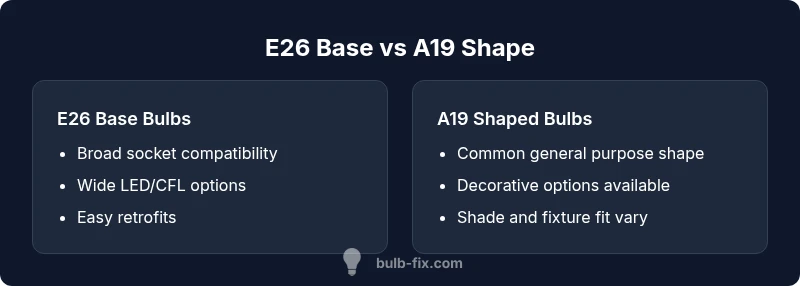
| Base compatibility | Broad compatibility with standard E26 sockets | Commonly uses E26 base; shape may influence fixture fit |
| Shape impact on fit | Base dictates socket fit; shape affects shade clearance and enclosure | |
| Light distribution | Depends on bulb technology; widely varied across options | |
| Energy options | LED, CFL, incandescent widely available in E26 form | |
| Dimming compatibility | Dimmers require compatible dimmable bulbs; base is not sole determinant | |
| Cost and availability | Extensive market with broad price range for both base/shape | |
| Best use case | General-purpose lighting with broad sockets | Decorative or space-limited fixtures where shape matters |
Upsides
- Broad fixture compatibility with standard sockets
- Wide availability of LED options for both base/shape
- Simple retrofits and easy replacement paths
- Clear labeling and widespread consumer education
Drawbacks
- Shape limitations can constrain fixture choice in tight spaces
- Some fixtures require non-E26 bases or integrated LEDs
- Decorative shapes may come at a premium compared to basic options
E26-based bulbs are the safer default for most homes, while A19 shape is ideal when form factor and shade fit matter.
Choose E26 when you want broad compatibility and easy sourcing. Opt for A19 shape when a specific silhouette or shade clearance is critical. Overall, LED options in either form provide the best energy efficiency and longevity.
Got Questions?
What does E26 mean and how does it relate to A19?
E26 is a base type (the screw-in connection), while A19 is a bulb shape. In most homes, you’ll find E26 base bulbs in A19 shape, but the two terms describe different aspects of a bulb. When shopping, confirm both base and shape to ensure compatibility with your fixture.
E26 is how the bulb connects; A19 is how it looks. They’re separate factors, so check both when buying.
Can I use an A19-shaped bulb in an E26 socket?
Yes, if the A19 bulb has an E26 base. The base must match the socket; shape alone doesn’t determine compatibility. Always verify both base and shape on the packaging.
Yes, as long as the base matches the socket.
Are E26 and E27 interchangeable?
E26 and E27 refer to very similar screw bases used in different regions. They’re not always interchangeable in every fixture, especially if the fixture specifies a particular base tolerance or if the wiring is near the socket. Check manufacturer guidance before swapping.
They’re similar but not always interchangeable; check the fixture label.
Do A19 bulbs come in non-E26 bases?
Yes, A19 bulbs can come with bases other than E26, but non-E26 options are less common in typical residential settings. Always check the base on the product label to ensure socket compatibility.
A19 bulbs can have other bases, but most common is E26.
Which is better for a kitchen?
For kitchens, LED E26 bulbs in an A19 shape are a practical default due to compatibility and energy efficiency, while also offering good task lighting. If you have decorative fixtures, A19 shapes in suitable bases can balance aesthetics with performance.
LED E26 with A19 shape works well for kitchens.
What should I check before buying bulbs?
Always verify socket type (base), bulb shape, dimmer compatibility, and whether the bulb is rated for any enclosed fixture. This reduces returns and ensures the bulb fits and performs as expected.
Check base, shape, dimmer compatibility, and enclosure rating.
Key Points
- Check your socket type before buying.
- Prefer E26 base for maximum compatibility.
- Consider A19 shape if shade fit and aesthetics are important.
- Prioritize LED bulbs for energy efficiency and longevity.
- Verify dimmer compatibility if used with a dimmer switch.