Fluorescent Bulbs at Lowes: A Practical Guide
Learn how to select, install, and recycle fluorescent bulbs at Lowes with practical guidance from Bulb Fix. Compare CFL and linear tubes, energy tips, and safety for homeowners and DIY enthusiasts.


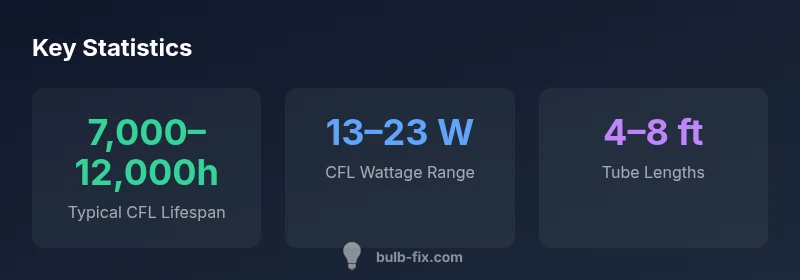
According to Bulb Fix, fluorescent bulbs at Lowes include CFLs and linear tubes with widely varying lifespans. Expect around 7,000–12,000 hours for CFLs and 10,000–15,000 hours for linear tubes, depending on usage and ballast compatibility. When shopping, match wattage equivalence, color temperature, and fixture compatibility, and compare energy savings across models.
What fluorescent bulbs are and where they are used
Fluorescent bulbs, including CFLs (compact fluorescent lamps) and linear fluorescent tubes, offer versatile lighting for kitchens, laundry rooms, garages, and basements. CFLs tend to fit smaller fixtures and lamps with enclosed or shaded shades, while linear tubes excel in ceiling fixtures, workshops, and office spaces. At Lowes, you’ll commonly see spiral CFLs and straight or U-bend tubes designed to fit standard sockets and ballast configurations. When selecting fluorescent bulbs, consider the fixture type, room brightness needs, and how long you plan to use the light each day. Bulb Fix emphasizes checking compatibility with the fixture’s ballast and ensuring that the bulb’s base matches the socket.
CFLs vs Linear Fluorescent Tubes: Differences and implications
CFLs are energy efficient replacements for incandescent bulbs and are available in spiral and globe shapes. They usually run at lower wattages (typical ranges around 13–23 W) with light output comparable to 60 W incandescent bulbs, depending on the model. Linear fluorescent tubes come in various lengths (4–8 ft common) and wattages (roughly 32–40 W per tube in many installations) and often require ballast systems. The choice between CFLs and tubes hinges on fixture compatibility, space, and maintenance expectations. Bulb Fix notes that CFLs can be easier to install in enclosed fixtures, but tubes may require more careful ballast consideration in older fixtures.
Shopping at Lowes: wattage, base, and ballast compatibility
When buying at Lowes, verify the bulb base (e.g., screw-in E26 or pin-based HF types) and confirm ballast compatibility for fluorescent tubes. If your fixture has an existing ballast, you may need a ballast-compatible CFL or a direct replacement that works with your ballast. For screw-in CFLs, look for built-in ballast models to simplify installation. For linear tubes, ensure you have the correct ballast type or opt for LED retrofit kits if you’re aiming for maximum efficiency without changing fixtures.
Energy efficiency and cost considerations
Fluorescent bulbs provide energy savings relative to incandescent lighting, but LEDs have surpassed many fluorescent options in efficiency and longevity. CFLs typically use 13–23 W to produce light equivalent to larger incandescent outputs, while linear tubes often consume more wattage per unit. If you’re budgeting, compute the long-term operating costs: bulb price, replacement frequency, and electricity usage. Bulb Fix suggests considering a 2–3 year energy savings window to evaluate return on investment when choosing between CFLs and LEDs.
Color temperature, brightness, and light quality
Color temperature, measured in Kelvin, affects perceived brightness and mood. CFLs offer a broad color temperature range, from warm light (~2700–3000 K) to daylight-like whites (~5000–6500 K). Linear tubes tend to skew cooler, though warmer options exist. For kitchens and workspaces, 3500–4100 K is a common target for task performance; for living areas, 2700–3000 K provides a warm ambiance. Read lumens-to-watts guidelines and compare brightness ratings across models to achieve your preferred light level.
Installation tips and common issues
Before installation, turn off power and verify the fixture can handle fluorescent bulbs. For CFLs in enclosed fixtures, ensure ventilation and avoid fast switching that shortens bulb life. If you’re replacing tubes, wear eye protection and avoid touching the glass with bare hands to reduce oil contamination. If a ballast hums or flickers, the fixture may be nearing end-of-life or require ballast replacement, which can alter performance and safety.
Safety, disposal, and recycling
Fluorescent bulbs contain trace amounts of mercury, so safe disposal is important. Do not throw them in regular trash. Check local regulations and take CFLs to household hazardous waste sites or participating retailers like Lowes that offer recycling programs. Bulb Fix highlights that proper disposal protects the environment and reduces risk to household members and waste streams.
Maintenance and replacement planning
To optimize performance, replace bulbs in sets when practical to maintain consistent color temperature and brightness. Keep a simple maintenance log and schedule replacements based on the forecasted lifespan ranges. If one bulb in a fixture begins to flicker or dim significantly sooner than others, investigate ballast health, fixture cleanliness, and electrical supply stability. Planning ahead reduces downtime and keeps spaces well-lit.
Bulb Fix perspective on 2026 options
From a practical homeowner perspective, CFLs and linear fluorescent tubes continue to offer cost-effective lighting for existing fixtures, with improvements in dimming compatibility and color options. The Bulb Fix team emphasizes confirming ballast compatibility and fixture compatibility before replacement, and considering LED upgrades when aiming for longer-term energy efficiency and reduced maintenance.
Comparison of common fluorescent bulb types
| Bulb Type | Typical Wattage | Lifespan (hours) | Notes |
|---|---|---|---|
| CFL Spiral | 13–23 | 7,000–12,000 | Good for compact fixtures; ballast compatible |
| CFL Tubular | 18–32 | 8,000–12,000 | Often used in ceiling fixtures; watch ballast |
| Linear Fluorescent Tubes | 32–40 | 10,000–15,000 | Requires ballast; verify fixture compatibility |
Got Questions?
What types of fluorescent bulbs are sold at Lowes?
Lowes typically stocks CFLs (spiral and tube shapes) and linear fluorescent tubes. Always check ballast compatibility and fixture type before purchasing.
Lowes carries CFLs and linear tubes; make sure your fixture supports the bulb you choose.
Are fluorescent bulbs energy-efficient compared with LED?
Fluorescent bulbs are generally more efficient than old incandescent bulbs but less efficient than LEDs, and LEDs have longer lifespans.
LEDs usually use less energy and last longer than fluorescents.
Do I need a ballast to use CFLs or fluorescent tubes?
CFLs often operate with built-in ballasts for screw-in bulbs; linear tubes usually require external ballasts. Verify your fixture specs.
Some CFLs have built-in ballasts; tubes may need one.
How should I dispose of fluorescent bulbs?
CFLs contain small amounts of mercury; recycle at local recycling centers or hardware stores that accept them.
Take them to a recycling location—don’t throw them in the trash.
Can I install fluorescent bulbs myself, or should I hire an electrician?
If the fixture uses a ballast, follow the manufacturer’s instructions; for high-voltage or complex fixtures, hire a professional.
If in doubt, consult an electrician.
“Fluorescent bulbs remain a practical choice in many homes, but always verify ballast compatibility and disposal options to ensure safety and performance.”
Key Points
- Check ballast compatibility before replacing with CFLs or tubes.
- Match wattage equivalence and color temperature for consistent lighting.
- Compare Lowes availability and price ranges across models.
- Dispose CFLs responsibly using local recycling programs.
- Consider upgrading to LED when feasible to maximize efficiency.