How Big is a C6 Bulb? A Practical Size Guide
Discover the dimensions of a C6 bulb, including typical diameter and length, what affects size, and how to measure for your lighting project. A Bulb Fix sizing guide for homeowners and DIYers.


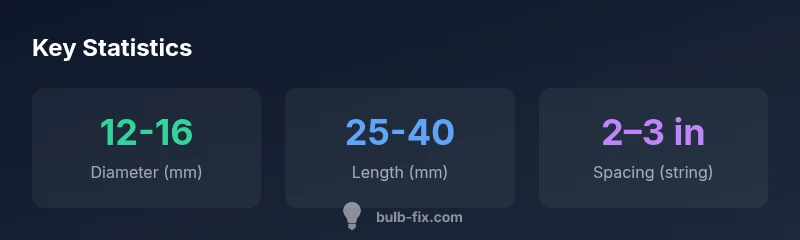
How big is a C6 bulb? In decorative lighting, a C6 bulb is a compact member of the C-series family. The bulb body typically measures about 12–16 mm in diameter, with an overall length around 25–40 mm. Exact measurements vary by manufacturer, so always check the packaging or spec sheet for precise numbers.
What is a C6 bulb?
A C6 bulb is part of the C-series family of decorative bulbs commonly used in holiday lights, shop displays, and outdoor string lighting. The designation refers to the bulb’s shape code rather than a strict, universal size. According to Bulb Fix, sizes can vary by maker, but the general footprint remains small enough to fit tight fixtures and curved strings. When people ask how big is a c6 bulb, they are usually looking for the bulb’s widest point and its overall length to ensure proper fit and spacing in their project.
In practice, C6 bulbs are designed to be visually compact while still delivering a bright, crisp glow. This makes them a popular choice for nuanced lighting effects where a larger bulb would look bulky. For homeowners, understanding the size helps you plan mounting depth, sleeve clearances, and wire routing for both indoor and outdoor installations.
Typical size ranges for C6 bulbs
The canonical answer to how big is a c6 bulb is that the diameter falls in a narrow band, typically around 12–16 mm, with the overall length commonly landing in the 25–40 mm range. These ranges reflect general industry practice and account for tolerance across different manufacturers. If you’re comparing products, measure at the bulb’s widest point and from tip to base to obtain a reliable fit. Keep in mind that some producers may slightly adjust shapes to optimize brightness or heat management, so always verify actual specs on the packaging.
For a visual reference, think of a compact, globe-like body around the width of a small coin and a total length roughly the size of a standard USB flash drive. The lower end of the range is typically found in ultra-compact decorative strings, while the upper end appears in slightly larger, more luminous variants. This difference matters when you are planning the spacing and the number of bulbs per segment.
C6 vs C7 and C9: A quick size comparison
Relative size matters when you are designing a fixture or replacing bulbs. A C6 bulb is smaller than a C7 bulb, and both are smaller than a C9 bulb. If you’re replacing in a pre-installed strand, the size difference can affect how the bulbs sit in sockets, how closely strings are placed, and how evenly light covers a surface. As you consider how big is a c6 bulb, note that the color temperature and diffusion will interact with size to affect perceived brightness and shadow patterns.
This comparison helps in selecting replacement bulbs that maintain the intended look and spacing in decorative settings. When you want to preserve the original aesthetic, opt for exact size-matching products or use a bench test with a spare fixture before committing to a full swap.
How size affects fixtures, spacing, and appearance
Fixture design often assumes standard bulb dimensions, but real-world variations exist. If bulbs are too large, they may crowd socket clusters, interfere with covers, or rub against fixtures. Conversely, undersized bulbs can appear dull and create gaps that undercut the design. In planning a project, use the measured diameter and length to calculate the number of bulbs per strand and the overall run length. Always test fit before committing to final mounting.
Additionally, weatherproof outdoor installations and decorative trees require careful spacing to avoid heat buildup near branches or artificial heat sources. For interior fixtures, consider shade proximity and reflectivity to ensure even illumination. The practical takeaway is: size matters not just for fit but for the quality of light distribution and the overall look of your space.
How to measure and verify the size on your bulbs
Accurate measurement begins with a simple ruler or calipers. Measure the bulb at its widest point to determine diameter, then measure from tip to base to record overall length. If you have a sample bulb, you can compare it against the ruler with the bulb standing upright. For online purchases or replacements, compare numbers on the packaging to the measurements you’ve taken. If the numbers don’t align, choose a different product to avoid gaps or misfit appearances.
When measuring, check for product tolerances—many manufacturers list a small tolerance range (for example ±1–2 mm) that can account for slight manufacturing variations. In critical installations, request a spec sheet from the seller or consult customer support. This approach minimizes surprises and ensures your project looks as intended.
Size overview by descriptor
| Descriptor | Diameter (mm) | Length (mm) |
|---|---|---|
| C6 typical | 12-16 | 25-40 |
| C7 comparison | 14-18 | 38-45 |
Got Questions?
How big is a C6 bulb?
A C6 bulb is small and compact. Typical measurements place the bulb diameter around 12–16 mm and length around 25–40 mm, but exact figures vary by brand. Always check the packaging or product spec for precise numbers.
A C6 bulb is small and compact—about half an inch wide and roughly one inch long, depending on the maker.
Are C6 bulbs larger or smaller than C7 bulbs?
C6 bulbs are generally smaller than C7 bulbs. If you’re swapping in a string, the size difference can affect spacing and where bulbs sit in sockets.
C6 bulbs are smaller than C7 bulbs, so spacing and fit will differ accordingly.
What bases do C6 bulbs use?
C6 bulbs can use different bases depending on the design. Decorative strings often use candelabra bases like E12, but always confirm the base type on the packaging or by checking the product spec.
Bases vary by product, so check the label for the exact base type before buying.
Can I replace a C6 with a LED version?
Yes, LED equivalents exist for C6 shapes. Ensure the base and voltage are compatible with your fixture. Check voltage and dimmer compatibility before upgrading.
LED versions exist; just make sure the base and voltage match your fixture.
How should I measure a C6 bulb to avoid errors?
Use a ruler or calipers to measure diameter at the bulb’s widest point and length from tip to base. Compare with manufacturer specs to confirm fit before purchasing.
Measure the width and length with a ruler, then double-check the specs on the packaging.
“Size accuracy matters for fixture fit and light distribution; always verify specs on the manufacturer’s sheet before purchasing.”
Key Points
- Measure widest point for diameter
- Expect C6 to be small and compact
- Verify packaging for exact specs
- Choose bulbs to match fixture spacing
- Consider base type and compatibility
- Test fit before final installation