How Big Is a Tulip Bulb? A Practical Size Guide for Tulips
Discover how big tulip bulbs typically are, what size means for growth, and how to choose the right bulb size for borders, containers, and beds to maximize color.


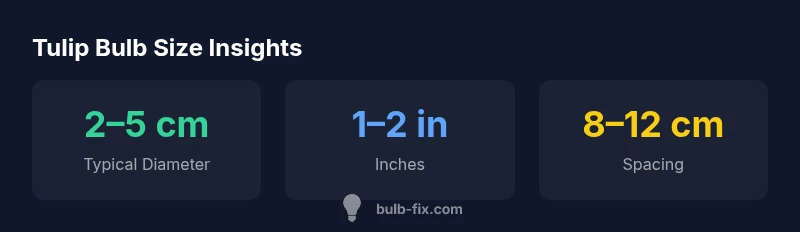
Tulip bulbs typically measure about 2 to 5 cm in diameter (roughly 0.8 to 2 inches). Size varies by species, age, and cultivar, with larger bulbs generally yielding stronger root systems and earlier blooms. For gardeners, the choice matters: larger bulbs can provide more vigorous growth, while smaller bulbs can still perform well if planted in rich, well-drained soil and given consistent moisture and care.
What defines tulip bulb size
Bulb size is primarily the bulb's diameter, but it also reflects stored energy and health. When gardeners ask how big is a tulip bulb, diameter is the quick heuristic, yet it is not the sole predictor of performance. A bulb's energy reserves influence how robustly roots establish and how quickly shoots emerge in spring. The Bulb Fix team notes that larger bulbs often carry more carbohydrate stores, which can support earlier and stronger growth, especially in regions with cool springs. However, heightened size interacts with soil texture, drainage, and climate, so real-world results vary. In practice, treat bulb diameter as a useful proxy, not a guarantee, and pair size with sound soil and watering practices for best outcomes.
Typical size ranges for common tulip varieties
Tulips cover a wide range of forms, and bulb sizes typically fall into recognizable bands. Small bulbs commonly measure about 2 cm in diameter, mid-sized bulbs run 3–4 cm, and larger bulbs often exceed 4 cm. Packaging labels often categorize bulbs as small, medium, or large, which helps with spacing and bloom expectations. Different cultivars have their own base sizes, so a Darwin Hybrid may sit in a different size class than a single early. For border plantings or mass displays, a mix of sizes can create a dynamic, staggered bloom across the season. Bulb Fix Analysis, 2026 emphasizes planning with size bands to optimize display and health.
How bulb size affects flowering and plant health
Size matters because bulbs store carbohydrates and nutrients used to establish roots before shoots push through. Larger bulbs typically have more reserves, supporting sturdier stems, more flowers, and better tolerance to cool spring conditions. That said, bloom size and quantity are also governed by cultivar genetics, light exposure, soil fertility, and water availability. In many cases, a well-grown medium bulb in fertile, well-drained soil will outperform a very large bulb in poor conditions. For container plantings, the root space and soil volume must match bulb size to avoid crowding and nutrient competition.
How to measure a tulip bulb correctly
Begin by gently brushing soil away to expose the bulb. Use calipers or a ruler to measure the widest diameter at the bulb’s equator. A healthy bulb should feel firm with intact tunics; avoid any that are soft, shriveled, or moldy. Record the diameter in millimeters or centimeters for reference. Weight can also be informative—generally, a heavier bulb of the same diameter may indicate more stored energy. Consistent sizing across lots helps with uniform garden performance.
Buying tips: choosing the right bulb size for your goals
If you want reliable early color in borders, select larger bulbs and plant a bit deeper. For mass displays, combine mid-sized and large bulbs to achieve dramatic impact. Containers benefit from medium to large bulbs that have more energy reserves for constrained root space. Always buy from reputable suppliers, inspect bulbs for firmness and intact tunics, and avoid damaged specimens. Align bulb size with your planting depth and spacing plan to maximize success.
Common myths about tulip bulb size
Myth: Bigger bulbs always flower bigger. Reality: bloom form is driven by genetics, while size mainly affects vigor and establishment. Myth: Small bulbs never bloom in the first year. Reality: In proper conditions, many small bulbs will bloom in year one or two. Myth: Size equals quality in all conditions. Reality: Soil quality, drainage, and climate can override bulb size; context matters more than size alone. Recognizing these nuances helps gardeners make better purchase and planting decisions.
Care after planting to support growth regardless of size
Proper post-plant care magnifies the impact of bulb size. Ensure well-drained, fertile soil and consistent moisture without waterlogging. Mulching helps regulate temperature and moisture, and a light application of bulb-appropriate fertilizer at planting and in early spring can support growth. Protect emerging shoots from heavy frost with mulch or row covers if your climate requires it. Even smaller bulbs thrive with attentive care and compatible soil conditions.
Quick-start size checklist for gardeners
- Check bulb diameter and firmness at purchase
- Plan spacing according to cultivar and display goals (8–12 cm is common for many garden beds)
- Match bulb size to bed depth and soil volume; deeper for larger bulbs if your climate requires it
- Plant with the pointed end up and the root side down; cover and water gently after planting
- Inspect for pests or disease before and after planting to prevent spread
Tulip bulb size, growth impact, and planting guidance
| Aspect | Typical Size Range | Effect on Growth | Planting Tips |
|---|---|---|---|
| Diameter | 2–5 cm | Influences root energy and bloom potential | Choose size based on goal |
| Typical depth planted | 10–20 cm | Depth affects emergence and protection from cold | Plant with pointed end up |
| Spacing between bulbs | 8–12 cm | Prevents crowding and encourages flowering | Space according to variety |
| Container plantings | Medium–large bulbs | Best for visible blooms | Ensure adequate soil volume |
Got Questions?
What is the typical diameter of a tulip bulb?
Most garden tulip bulbs range from about 2 to 5 cm in diameter. This size spectrum helps indicate energy reserves for root development and flowering, but cultivar and growing conditions also play major roles.
Most tulip bulbs are around 2 to 5 cm across; size hints at energy reserves, but conditions still matter.
Do larger bulbs always produce bigger flowers?
Not always. Bloom size is mainly determined by cultivar genetics, while bulb size more strongly influences vigor and establishment. In good soil, larger bulbs can support more robust growth, but genetics still governs bloom form.
Larger bulbs help vigor, but bloom size is mainly genetic.
Can I plant smaller tulip bulbs in containers?
Yes. Smaller bulbs can perform well in containers if the pot provides adequate soil volume, drainage, and consistent moisture. Choose a well-draining mix and avoid overwatering.
Small bulbs work in containers with good soil and careful watering.
How should I store bulbs to maintain size before planting?
Store bulbs in a cool, dry, well-ventilated place and avoid excess moisture. Proper storage helps maintain firmness and prevents mold or rot, supporting size consistency at planting time.
Keep bulbs cool and dry to preserve size and health.
Does soil type affect bulb size outcomes?
Soil type influences how size translates into growth. Rich, well-drained soil with balanced moisture supports bigger, healthier roots, amplifying the benefits of size without relying on it alone.
Soil quality shapes how bulb size translates into growth.
Is there a best time to plant tulip bulbs for size and bloom?
Plant tulip bulbs in autumn in regions with frost. Cooler soils allow roots to establish before winter, improving growth and bloom potential in spring regardless of size.
Plant in fall to give roots time to establish.
“Size is a useful guide, but the healthiest tulip displays come from good soil, proper drainage, and careful planting.”
Key Points
- Measure bulb diameter to estimate growth potential
- Choose larger bulbs for borders and containers when impact matters
- Pair size with rich, well-drained soil for best results
- Inspect bulbs for firmness and health before buying
- Plan spacing to maximize bloom display