Incandescent Light Bulb for Sale: A Practical Buying Guide
A comprehensive guide to incandescent light bulb for sale: how they work, buying tips, safety, energy considerations, and alternatives for modern homes.


The incandescent light bulb for sale remains a niche option for specific decorative or specialty lighting needs, with simple construction and warm color rendering. When shopping, compare wattage, base type, and lumen output, and verify compatibility with fixtures and dimmers. Bulb Fix recommends considering alternatives for energy efficiency but notes incandescent options still have practical uses in certain settings.
Why incandescent light bulb for sale still matters
The term incandescent light bulb for sale covers a broad category of traditional bulbs that transform electrical energy into visible light by heating a filament. Despite the rise of LEDs and compact fluorescents, many homeowners seek incandescent options for color rendering, warm ambience, and compatibility with older fixtures. The phrase incandescent light bulb for sale is common among garden shops, hardware stores, and salvage outlets because these bulbs remain readily available and inexpensive upfront. When evaluating options, consider the trade-offs between convenience and long-term operating costs, and keep in mind that energy efficiency and dimming performance can influence overall satisfaction in living spaces.
How incandescent light bulbs work
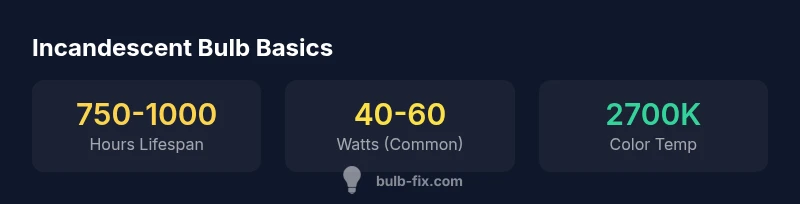
Incandescent bulbs operate by passing electricity through a tungsten filament, which resists the current and heats up to emit light. The glass envelope protects the filament and helps maintain vacuum or low-pressure gas to maximize light output for a given wattage. Color warmth is a natural byproduct of the filament's temperature, typically yielding warm white tones around 2700 Kelvin. When shopping for an incandescent light bulb for sale, you can expect standard base types (e.g., E26 in North America) and various shapes designed for lamps, fixtures, and decorative applications. Reliability is highly consistent, but efficiency is low compared with modern lighting technologies.
Practical buying tips for incandescent light bulb for sale
If you are hunting for an incandescent light bulb for sale, start with the fixture compatibility. Check the base type (E26/E27 is the most common in homes, while candelabra bases like E12 are used in chandeliers), and confirm the bulb length will fit the fixture. For color, most incandescent bulbs deliver warm white (~2700K) to soft white (~3000K), which many homeowners find cozy. Consider the lumen output relative to the wattage—more lumens don’t always mean brighter ambience in small spaces. Also review dimmer compatibility and whether the bulb is suitable for enclosed fixtures, as temperature buildup can shorten life.
Base types and fixture compatibility
Understanding base types is essential when buying an incandescent bulb for sale. The most common is the Edison screw base (E26/E27), widely used across North America and many other regions. Smaller bases like E12 (candelabra) or BA15d are common in decorative fixtures. Always verify that the base matches your fixture’s socket, and note that some antique or specialty lamps may require bayonet bases or intermediate sizes. If unsure, take the old bulb to the store or compare it to the fixture’s socket. This reduces the risk of purchasing an incompatible bulb.
Safety, handling, and disposal considerations
Safety should govern every purchase decision. Handle bulbs gently to avoid filament breakage, especially during replacement. When a bulb breaks, carefully clean shards with stiff paper, avoid sweeping, and ventilate the room to minimize dust exposure. For disposal, incandescent bulbs are typically accepted in household recycling programs, but check local guidelines as some facilities require dedicated drop-off points. Keep bulbs away from heat sources and never force a bulb into a socket. Using bulbs with proper wattage ratings minimizes overheating risk.
Cost of ownership and energy use
Because incandescent bulbs consume more energy per lumen than modern LED or CFL options, the long-term operating cost tends to be higher. The upfront price is low, but electricity usage accumulates, especially in frequently lit areas. If you’re evaluating a space with heavy daily use, calculate annual energy costs based on the bulb’s wattage, hours of use, and local electricity rates. While not the most energy-efficient choice, incandescent bulbs for sale can be appropriate for decorative lamps or controlled lighting where warm color and dimming performance are priority.
How to identify genuine incandescent bulbs
Counterfeit or misleading packaging can appear in some markets, so verify labeling on the bulb and box. Look for the wattage, voltage, base type, and any certification marks. Genuine incandescent bulbs emphasize a simple construction: a tungsten filament, glass envelope, and a robust base. If a product claims energy efficiency beyond typical incandescent performance, that may indicate a mislabel or a different technology. Buy from reputable retailers and compare packaging details with the original bulbs you’re replacing.
Alternatives and the future of incandescent lighting
LED and CFL technologies offer superior efficiency and longer lifespans, but incandescent bulbs for sale still hold niche appeal for color rendering and heat characteristics that some crafts, designers, and specialty fixtures demand. Expect a gradual shift toward hybrid approaches—using incandescent bulbs in decorative accents while relying on LEDs for primary lighting. For eco-conscious households, consider LED alternatives that mimic the warm glow of incandescent light while delivering substantial energy savings over time.
Where to buy incandescent light bulb for sale
Retailers—from local hardware stores to online marketplaces—continue to stock incandescent bulbs because of demand in specific applications. When shopping, compare warranty terms, delivery options, and bulk pricing for larger projects. If energy efficiency is a priority, you can filter for bulbs that emphasize consistent warm color temperature and dimmability. Always review return policies in case a bulb fails prematurely or does not meet fixture compatibility expectations.
Common incandescent bulb base types and specs
| Base Type | Common Wattage | Color Temp | Typical Lifespan | Notes |
|---|---|---|---|---|
| E26 / E27 (Standard screw) | 40W-60W | 2700K | 750-1000 hours | Most common in household fixtures |
| E12 (Candelabra) | 25W-40W | 2700K | 750-1000 hours | Used in chandeliers and decorative lamps |
| BA15d / G9 (Bi-pin / Capsule) | 40W-60W | 2700K | 750-1000 hours | Specialty fixtures and vintage lamps |
Got Questions?
Is it still practical to buy incandescent bulbs in 2026?
Yes, for decorative or specialty uses where warm light and dimming are crucial, incandescent bulbs remain available. For general lighting, LEDs offer significantly better energy efficiency and longer life. Bulb Fix recommends weighing the context of use before buying incandescent for sale.
Yes, for decorative or specialty uses, incandescent bulbs are still practical. For most rooms, LEDs are the better choice for energy savings.
How long do incandescent bulbs typically last?
Most incandescent bulbs last about 750 to 1000 hours, depending on wattage and usage patterns. In high-usage rooms, expect shorter lifespans. Always check the package for the rated life and handle bulbs carefully to avoid filament damage.
Most last around three to four months with everyday use; check the label for exact life rating.
Can incandescent bulbs be used with dimmer switches?
Many incandescent bulbs are fully dimmable, but you should verify that the specific bulb supports dimming and that your dimmer is compatible. Using an incompatible dimmer can cause flicker or shortened life. Bulb Fix suggests testing with a single bulb before broader deployment.
Most are dimmable, but confirm the bulb’s rating and dimmer compatibility before installation.
What about disposal or recycling?
Incandescent bulbs are typically accepted by household recycling programs, but local rules vary. Do not place broken glass in general trash; use a sturdy container for safe disposal. Check with your municipality for handling recommendations.
Dispose of bulbs according to local guidelines; don’t recycle broken glass with regular trash.
Are there safety concerns with high-wattage incandescent bulbs?
High-wattage incandescent bulbs can generate significant heat. Ensure fixtures are rated for the bulb’s wattage, maintain adequate ventilation, and avoid touching the bulb when hot. Always follow manufacturer guidelines to reduce risk of fire.
Yes—watch heat and fixture ratings; always follow the label.
“"Incandescent bulbs for sale remain useful for specialty lighting, where warm color and dimming feel matter. For everyday spaces, consider LEDs for long-term energy savings."”
Key Points
- Consider base type first to ensure fixture compatibility
- Incandescent bulbs offer warm light but higher operating costs
- Color temperature around 2700K delivers traditional ambience
- Dimmability and enclosed-fixture ratings affect performance
- Evaluate the total cost of ownership, not just price