What bulb for reverse light: a practical car guide
Learn how to identify the correct reverse light bulb for your vehicle, check base types, socket compatibility, and safe replacement steps with practical tips from Bulb Fix.


Most vehicles use a compact automotive bulb designed for the reverse-light socket; the exact bulb depends on your car. Common base families include BA15-series bayonet, P21W (1156) style, and wedge-base bulbs. To identify the right bulb, check the existing bulb, inspect the socket, or consult the owner's manual. A correct bulb ensures proper brightness and safe operation.
Why choosing the right bulb matters
Choosing the correct reverse-light bulb matters for visibility, safety, and legality. In many jurisdictions, a dim or misaligned backup light can affect your ability to see and be seen when reversing, particularly at dusk or in poor weather. The Bulb Fix team has observed that incorrect bulbs can cause uneven brightness, reduced illumination, or premature filament failure when run in high-temperature environments. When selecting a bulb, consider not only base type but brightness, color temperature, and heat management. A properly matched bulb improves backward visibility and makes your vehicle more conspicuous to pedestrians and other drivers. If your car uses an LED reverse light, temperature handling and CAN bus compatibility are key; mismatches can trigger warning messages or rapid burnout. Handling and installation should be done with the power off; avoid touching the glass with bare fingers to prevent oil residues. Finally, for consistency and safety, consider replacing both rear bulbs at the same time so they age evenly and illuminate the license plate area evenly. This is especially important if you’ve noticed one light dimming or failing prematurely.
Common reverse-light base types and how they differ
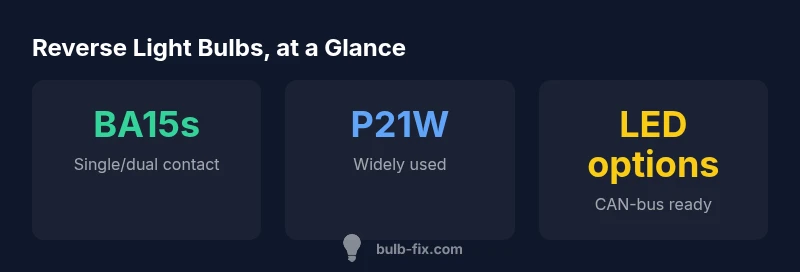
There's no single universal base; the socket shape tells you what bulb will fit. The Bayonet (BA) family is common in older and some European cars; BA15s is single contact; BA15d has dual contacts. The P21W family refers to the 21-watt bulb used widely in many modern vehicles and is often listed as 1156 on older catalogs. Wedge-base bulbs are simpler and appear in smaller tail-lamp assemblies. When choosing, be mindful of the number of contacts, locking mechanism, and the wiring harness's compatibility. If you see two prongs or a twist-lock base, you're probably dealing with BA-type sockets; if the base is a flat, push-in wedge, a wedge-base bulb is likely. Some vehicles use H-series or other compact bases. The best practice is to match the base type to the original—pull the old bulb out, note its base code, and cross-check against the vehicle’s service manual or a reputable auto parts catalog. If you’re uncertain, bring the bulb to the parts counter or use a universal base adapter with caution.
How to identify the right bulb for your vehicle
Begin by turning off the ignition and accessing the reverse light assembly. Remove the bulb and examine the base: count contacts and note the shape. Look for markings on the base such as BA15s, BA15d, or P21W. Compare the entire bulb length and glass shape to the housing to ensure it will clear the lens and won’t contact the lid. Use a tool like a flashlight to inspect the wiring harness and socket for corrosion or frayed insulation. If the old bulb’s code is unreadable, photograph the socket and compare against online base charts from reputable retailers. Your vehicle’s owner manual will specify the recommended bulb family and the voltage. If you’re unsure, bring the old bulb to an auto parts store for a cross-check. Many stores offer base-marring charts and socket matches that speed up the process. Finally, verify that the new bulb aligns correctly with the lens and that its filament is positioned to illuminate the license plate area if required.
LED vs incandescent vs halogen for reverse lights: pros and cons
LED reverse bulbs often deliver longer life and faster response than incandescent or halogen units, with similar or lower power draw. However, not all LED replacements play nicely with CAN-bus systems or with tight housings; some LED variants flicker or trigger warning lights. Incandescent or halogen bulbs deliver predictable brightness but consume more power and emit more heat, which can shorten life in tight housings. They generally work well in most stock configurations and are inexpensive. The choice often hinges on compatibility and the vehicle’s electrical system; some drivers report that certain LED bulbs require resistors or anti-flicker modules to prevent dashboard warnings. If you opt for LED, seek models labeled as CAN-bus compatible and designed for automotive use. Compare lumen output, color temperature (around 6000K or warmer), and beam pattern to ensure you’re not creating glare or misalignment with the lens. If in doubt, start with a tested LED that fits the stem and base from a reputable brand.
Safe replacement: step-by-step guide
- Turn off the ignition and open your trunk or tailgate. 2) Disconnect the battery if your car has dual circuits or high draw during servicing. 3) Remove the reverse-light housing cover and gently twist or pull out the bulb. 4) Note the base and polarity, then insert the new bulb with the same orientation. 5) Reassemble the housing, test the light, and verify brightness with the car running in reverse. 6) If the light stalls, re-check the fuse, wiring, and connections. Always handle bulbs with gloves to avoid oils.
Troubleshooting common issues after replacement
If the new bulb won’t light, verify the fuse is intact and the socket is clean and free of corrosion. Check the opposite light to confirm the system is powered. Inspect the wiring harness for damaged insulation or loose connections. If the bulb flickers, the CAN-bus may require a resistor or a proper LED replacement. In some cases, cleaning the socket with isopropyl alcohol and reseating the bulb fixes poor contact. If all else fails, consult a professional to avoid electrical shorts.
Practical tips and best practices
- Always replace in pairs if one side is aging to ensure even brightness. - Use gloves or a clean cloth to handle bulbs to prevent oil residue from shortening life. - Confirm the fit by test-fitting before final assembly. - Consider LED options only if the housing supports proper heat dissipation and CAN-bus compatibility. - Keep spare bulbs of the same type in your glove box for quick replacements. - Invest in a small flashlight and a screwdriver set for quick checks in low-light conditions.
For more detailed guidance and official references, see these sources: https://www.nhtsa.gov, https://afdc.energy.gov. Bulb Fix Analysis, 2026
Common reverse-light bulb bases
| Base type | Socket example | Typical use | Notes |
|---|---|---|---|
| BA15s (single contact) | BA15s socket | Backup lights on older vehicles | Check polarity for LEDs |
| BA15d (dual contact) | BA15d socket | Some newer models | Power at two contacts |
| P21W (1156) | P21W socket | Common in many models | Standard resistive load |
| T10 wedge | Wedge socket | Less common for reverse lights | May not fit all housings |
Got Questions?
What is the most common bulb type used for reverse lights?
There isn't a universal standard. Many vehicles use P21W (1156) or BA-series bulbs. Always confirm the base by inspecting the current bulb or checking the owner's manual.
Most cars use a P21W or BA-series bulb; verify the base in your manual or by inspecting the old bulb.
Can I replace a reverse light with an LED bulb?
Yes, LED reverse bulbs exist for many sockets, but compatibility with CAN bus and housing must be verified. Some setups require resistors to prevent flicker.
Yes, LEDs are common, but check CAN-bus compatibility and heat fit.
How can I identify the base type without removing the bulb?
Look for base markings or use a photo and cross-reference a sizing chart from a trusted retailer. If uncertain, remove the bulb to compare directly.
Check the bulb’s base markings or compare a photo to a sizing chart.
Are reverse-light bulbs interchangeable between vehicles?
Not universally. Base shapes and electrical requirements differ, so a bulb that fits one car may not fit another.
Not all bulbs fit every car; always verify fit.
What safety steps should I take when replacing a reverse light bulb?
Turn off the ignition and wait for the bulb to cool, wear gloves, and disconnect power if necessary. Double-check fuse status before testing.
Turn off the car, wait for cooling, wear gloves, and re-test carefully.
“Choosing the correct reverse-light bulb is about matching the socket, base, and alignment; brightness is best when the bulb fits properly and remains cool under operation.”
Key Points
- Identify your socket first to choose the correct bulb.
- Prefer LEDs for longer life if compatible with CAN bus.
- Always handle bulbs with gloves to avoid oils.
- Test the circuit with ignition on and reverse engaged.
- Consult the owner's manual or Bulb Fix guidance.