What Size Bulb for Christmas Village: A Practical Guide
Learn how to choose the right bulb size for your Christmas village display, including common sizes, bases, LED vs incandescent options, safety tips, and a buying checklist from Bulb Fix.


Most Christmas village displays use tiny 2mm to 3mm micro bulbs, typically with an E12 candelabra base or E10 miniature screw base. For LED strings, look for bulbs labeled '2mm' or '3mm' and match the base to your sockets. Always verify voltage and wattage on the product label before purchase.
Why bulb size matters for Christmas village displays
Choosing the right bulb size is essential for a balanced, safe, and visually appealing display. For the search query what size bulb for christmas village, the practical answer is that most hobbyists lean toward tiny 2mm to 3mm micro bulbs. These sizes fit the common miniature fixtures in village sets and pair well with warm white or colored LED strings. Bulb size affects not only fit but also brightness, color rendition, and heat output. In practice, starting with 2mm or 3mm bulbs gives you flexibility to layer lights at windows, doors, and rooflines without overpowering tiny, detailed houses. According to Bulb Fix, matching bulb size to socket type is the quickest way to avoid loose connections or flicker.
Typical bulb sizes used in Christmas village setups
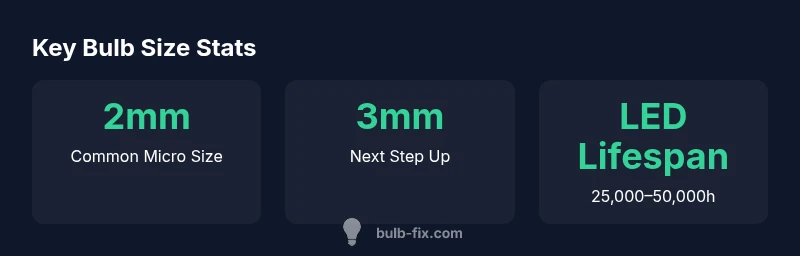
In most village displays, 2mm and 3mm micro bulbs are the go-to options because they strike a balance between scale and brightness. The 2mm bulbs are especially popular for very small windows or path lights, while 3mm bulbs offer a slightly stronger glow for larger focal points. These sizes come in both incandescent and LED variants. For authentic realism, many builders favor warm white LEDs in these sizes to mimic traditional incandescent glow, while LEDs provide longer life and cooler operation. When choosing bulbs, confirm the size label on the packaging and compare it to the socket you’ll be using.
Base types and socket compatibility you should know
Bulbs for Christmas village sets commonly use E12 candelabra bases or E10 miniature screw bases. Some modern sets also employ G4 bi-pin LED bulbs, especially in tight spaces. The key is to verify the base diameter and socket type before purchasing. If your display came with a fixed strand, count the number of lamps per socket and map it to the base types you see on replacement bulbs. If you must mix bases, use adapters designed for miniature lighting systems and test each connection for heat buildup and flicker.
LED vs incandescent: trade-offs for realism and maintenance
Incandescent bulbs offer a classic warm glow that some builders feel is more authentic for holiday villages. However, LEDs deliver cooler operation, lower heat, and dramatically longer lifespans, which reduces maintenance during the season. In 2mm–3mm sizes, LED micro bulbs are available in warm white, amber, and color-changing options, enabling realistic night scenes without frequent replacements. Consider dimmable LED strings if your display includes delicate houses or color-curtains that require subtle lighting shifts.
Replacing bulbs safely and matching voltage
Before replacing bulbs, turn off power and unplug the display. Check the product label to confirm voltage, base, and wattage. For a typical village string, use bulbs within the same voltage range and ensure that all bulbs share compatible bases. If you have a mix of LEDs and incandescent bulbs on the same strand, ensure the wattage distribution is within the strand’s rating. Handling bulbs with care minimizes breakage and potential electrical faults.
Practical tips: measuring, testing, and organizing spare bulbs
Measure socket diameter with a caliper or a ruler to identify base type (common options are E12 and E10). Create a simple labeling system for spare bulbs by size (2mm vs 3mm) and base (E12 vs E10). When testing, rotate bulbs one at a time to isolate flicker or hotspot issues, and record which bulbs were the problem so you can replace them in one go. Keeping a small kit with a handful of spare bulbs in the exact sizes you use helps you avoid mid-show outages.
Buying guide: what to look for when shopping
When shopping for Christmas village bulbs, start by listing your base types and sizes and then compare LED vs incandescent options. Prioritize warm white color temperature for a cozy village feel, check lumen output to ensure visibility without glare, and verify manufacturer compatibility with your voltage. Always buy a small stock of extra bulbs in 2mm and 3mm sizes, as replacements are often limited to specific bases. Buying from reputable vendors with clear return policies reduces risk.
Quick-start checklist for your next village display
- Identify socket types (E12, E10, G4) and confirm bulb size (2mm or 3mm)
- Decide between LED or incandescent based on heat concerns and longevity
- Check voltage rating and ensure compatibility across your strands
- Purchase a few spare bulbs of the exact sizes and bases used
- Test each section separately before staging your display for guests
- Label spare bulbs for easy reordering later
Comparison of common bulb types for Christmas village displays
| Bulb Type | Common Base | Typical Size | Voltage Range | Pros |
|---|---|---|---|---|
| Incandescent Mini Bulbs | E12 | 2mm | 6V–24V | Warm glow; easy to replace; affordable upfront |
| LED Micro Bulbs | E12 or G4 | 2mm–3mm | 2V–24V | Low heat; long life; energy-efficient |
| LED Mini Bulbs (SMD style) | G4 or similar pin | 3mm | 2V–24V | Slim profile; very efficient; good for tight spaces |
Got Questions?
What size bulb is best for a Christmas village?
For most village displays, 2mm and 3mm micro bulbs are the most versatile options. They fit common miniature sockets and provide a balanced glow. Always verify base type and voltage before purchasing.
For most village setups, go with 2mm or 3mm bulbs and check the socket type and voltage.
Can I use LED bulbs instead of incandescent in a Christmas village?
Yes. LEDs run cooler, last longer, and are more energy-efficient, but some builders prefer the warmer tone of incandescent bulbs for authenticity. Match the base and voltage when mixing types.
Yes—LEDs are energy-efficient and long-lasting; pick the same base and voltage when mixing with incandescents.
How do I know what base my bulb needs?
Check the socket markings, measure the base diameter, and reference your display’s manual. Common miniature bases include E12 and E10, with G4 as a pin-type alternative for some LED strings.
Look at the socket, measure the base, and refer to your manual.
Is it safe to mix bulb sizes in a village display?
Mixing sizes is possible but can create brightness imbalances. Ensure all bulbs share compatible voltage and base types, and test as a group before final setup.
You can mix sizes, but test first to avoid uneven brightness.
Where can I buy replacement bulbs for small village sets?
Look for 2mm and 3mm micro bulbs and the corresponding bases (E12, E10, G4) from hardware stores or reputable online retailers. Keep a small spare kit for future needs.
You can find 2mm and 3mm bulbs at hardware stores and online retailers.
How should I replace bulbs safely?
Always unplug the display before replacing bulbs. Use the correct base and voltage, and handle bulbs carefully to avoid damage or injury.
Unplug first, then replace with the right base and voltage.
“The right bulb size is not just about fitting a socket; it's about matching base, voltage, and light quality to your village layout.”
Key Points
- Identify your socket type before shopping
- 2mm–3mm bulbs are the most common for village sets
- LEDs reduce heat and extend lamp life
- Check voltage and base compatibility
- Keep spares in the exact sizes and bases used