Can You Use a Lamp for Plants? Practical Indoor Growth Guide
Discover if a lamp can boost indoor plant growth, learn about spectrum, brightness, distance, and photoperiod, and follow a practical setup guide for healthy houseplants.


Yes, you can use a lamp to support plant growth indoors, but not all lamps work equally well. The critical factors are spectrum, intensity, and duration. Use a true grow light or broad-spectrum LED with adequate PAR, position it at the proper distance, and supply a consistent daily photoperiod to avoid stretch or stress.
The science of plant light: why spectrum and PAR matter
Can you use a lamp for plants? The short answer is yes, under the right conditions. Light is the energy that drives photosynthesis, but plants don’t use all wavelengths equally. The useful portion of light is called PAR, and it sits in the blue and red parts of the spectrum. When you choose a lamp, you want a spectrum that provides steady blue-enriched light for vegetative growth and red-enriched light as plants begin to flower or fruit. According to Bulb Fix, the best indoor setups balance spectrum with distance to the canopy to avoid burnout or etiolated growth. Temperature and airflow also matter; heat buildup near a lamp can stress leaves and accelerate drying. By combining a quality lamp with careful placement and a consistent daily photoperiod, you can produce healthy, compact plants in a small space.
Lamp types and whether they work for plants
Not all lamps are created equal for plant growth. Incandescent bulbs emit a warm spectrum that is generally inefficient for most greens and herbs, while compact fluorescent lamps (CFLs) offer broader spectra but limited intensity. LED grow lights and full-spectrum LEDs are the most practical options today because they deliver targeted wavelengths with high efficiency and low heat. When evaluating lamps, look for terms like full spectrum, PAR, PPFD, and DLI estimates. Bulb Fix consistently recommends LEDs with a balanced spectrum and a daylight color temperature range that matches your plant type. If you already own a lamp, you can still see benefits by adding a supplemental lamp designed for plants, or by adjusting your existing fixture to better approximate a grow light. Always check fixture heat output and ensure safe clearance from walls and curtains.
How to choose a grow-friendly lamp: spectrum, intensity, distance, and duration
Choosing the right lamp involves several factors that interact. Spectrum: blue light supports vegetative growth; red light supports flowering. Intensity: higher PAR at the leaf level promotes faster growth but can burn tender leaves if the lamp sits too close. Distance: a lamp's distance from the canopy should vary with wattage and lens design; starting around 6-12 inches for compact LEDs is a good baseline, then adjusting as needed. Duration: most houseplants benefit from 12-16 hours of light per day during active growth, broken into a morning and afternoon cycle to mimic natural sunlight. For seedlings, aim for a gentler start—shorter days and gradual increases. With any lamp, monitor leaves for signs of stretching or bleaching, and adjust height or exposure accordingly. The goal is a steady, uniform light field across the plant.
Practical room setups: small herbs vs. leafy greens
Herbs like basil, thyme, and parsley do well under moderate to bright light. Leafy greens such as lettuce or spinach may require a bit longer exposure or higher intensity to maintain a compact form. In a bright kitchen, position the lamp to provide even coverage across a compact bed or a shelf with several pots. If you’re space-limited, consider a vertical rack with a single high-quality LED panel that covers multiple shelves. A reflective surface, such as light-colored walls or a whiteboard behind the plants, helps maximize usable light. Secure the lamp with a simple arm or adjustable clamp to keep it stable as plants grow.
Troubleshooting common issues
Stretching toward the light is a common sign of insufficient intensity. If you notice tall, leggy stems, raise the lamp only slightly or increase the fixture’s brightness, while ensuring leaves don’t burn. Yellowing or browning leaf tips may indicate heat stress, dry air, or nutrient imbalance—check humidity and consider rotating pots to prevent shading. If a lamp runs too hot, add ventilation or move it farther away and reduce the exposure duration. Finally, use a timer to keep a consistent day length; erratic cycles confuse plants and slow growth.
Safety and maintenance tips
Always unplug gear before adjusting fixtures. Keep lamps away from flammable materials and ensure cords don’t pose a trip hazard. Use a surge-protected outlet or power strip, and never overload circuits. Clean the lamp’s lens or cover periodically to avoid reduced light transmission. If you notice flickering lights or odd smells, replace the lamp and inspect wiring. Regularly check humidity and airflow to prevent mold and disease; a modest fan to circulate air improves plant health without drying leaves.
Tools & Materials
- Grow light (LED, full-spectrum)(Prefer lamp with adjustable spectrum or PAR measurement for the plant canopy)
- Power strip with surge protection(Safely power the lamp and timer)
- Ruler or measuring tape(To measure distance from leaf tips and canopy)
- Thermometer and hygrometer(Monitor heat, humidity, and leaf health)
- Timer(Automate photoperiod and ensure consistency)
- Lamp mounting arm or adjustable fixture(Stabilize position as plants grow)
- Extra bulbs/LEDs or replacement parts(Have spares for quick swaps)
Steps
Estimated time: 30-60 minutes
- 1
Assess plant needs
Identify species, growth stage, and light tolerance. Decide if supplemental lighting is necessary based on current indoor light levels and seasonal changes.
Tip: Record growth goals and reference species-specific light requirements. - 2
Choose the right lamp
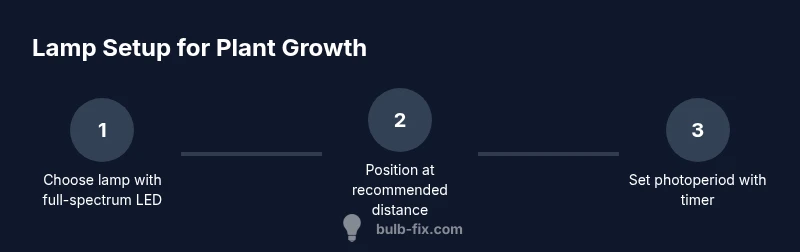
Select a lamp with full-spectrum LED and a verified PAR rating. Avoid low-CRI bulbs and check wattage and heat output to prevent scorch.
Tip: Prefer lamps with adjustable spectrum or dimming to tailor light quality. - 3
Plan placement and distance
Measure canopy height and set an initial distance. For compact LEDs, start around 6-12 inches and adjust based on plant response.
Tip: Use a ruler to confirm exact distances and watch for leaf tip burn or stretch. - 4
Set photoperiod and timer
Program a timer to deliver a consistent daily light cycle. Keep the light on during the plant’s active growth period and avoid long gaps.
Tip: Synchronize with your plant’s growth stage; seedlings may start with shorter days. - 5
Test and observe
Run the setup for a week, observe growth, leaf color, and stem strength. Record outcomes to refine distance and duration.
Tip: Take weekly photos to quantify progress and adjust accordingly. - 6
Safety and maintenance
Inspect cords and fixtures for wear, keep heat away from plastics, and clean lenses to maintain light transmission.
Tip: Always unplug before adjustments and avoid water exposure near electrical components.
Got Questions?
Can any lamp help plants grow?
Not every lamp provides the right spectrum or intensity. For reliable growth, choose a lamp labeled full-spectrum or a dedicated plant grow light.
Not every lamp will help plants grow; look for full-spectrum or plant grow lights.
What is PAR and why does it matter?
PAR is the portion of light plants use for photosynthesis. Lamps with higher PAR at the plant level generally support better growth.
PAR is the light spectrum plants use for growth.
How close should the lamp be to leafy greens?
Distance depends on lamp type and wattage. Start at 6-12 inches for compact LEDs and adjust based on plant response to avoid bleaching.
Keep the lamp at a careful distance and adjust as needed.
Do plants need UV light?
Most indoor plant lighting does not require UV; excessive UV can stress plants. Focus on blue/red spectrum for growth.
UV is not usually necessary for most houseplants.
Can I use a regular lamp for seedlings?
A standard incandescent or non-specialized LED often lacks reliable spectrum and intensity. Use a grow light or a high-quality full-spectrum LED.
Regular lamps can be risky for seedlings; use a grow light.
What safety concerns exist?
Avoid overheating, keep lamps away from flammable materials, and use a timer to prevent overexposure.
Watch for heat and electrical safety.
Watch Video
Key Points
- Use a timer to keep light cycles consistent
- Choose full-spectrum LEDs with adequate PAR
- Place lamp at the correct distance to prevent burn
- Monitor plant response and adjust as needed
- Prioritize safety and electrical cleanliness