Bulb 3057 vs 3157: Which Bulb Should You Choose for Your Vehicle?
An analytical guide to comparing bulb 3057 vs 3157 for tail, brake, and turn signaling. Learn compatibility, brightness, longevity, and practical buying tips to choose the right bulb for your vehicle.


For most vehicles, the 3157 is the more versatile choice due to its dual-filament design that supports tail and brake/turn signals in a single bulb, while the 3057 excels in simpler tail-light configurations. Always confirm the exact bulb type in your owner's manual or a trusted bulb guide, since socket fitment and signaling requirements vary by model. In short: use 3157 for multi-function signaling when in doubt, and reserve 3057 for uncomplicated tail-light roles.
Overview and context for 3057 vs 3157 in modern vehicles
Both 3057 and 3157 are common automotive bulbs used in a range of exterior lighting roles, including tail lights, brake lights, and turn signals. The core question—bulb 3057 vs 3157—boils down to function, fit, and signaling requirements on a specific vehicle. For DIYers, the decision should start with the vehicle's manual or a reputable bulb guide, then cross-check the socket type and electrical load. In many cases, the same socket can accommodate either bulb, but some manufacturers designate one bulb for tail-only duty and another for multi-function signaling. This nuance matters, because selecting the wrong bulb can affect signal timing, brightness perception, and safety. As you plan a replacement, consider not only cost but the role the bulb plays in your signaling system and how aftermarket brands vary in quality and reliability. Bulb Fix emphasizes careful verification to avoid misfires and ensure consistent signaling.
Technical differences you can verify on the bulb body
The 3057 and 3157 share a dual-filament design in many brands, enabling two distinct light functions with one bulb. The bulb body often carries markings that indicate voltage (commonly 12V) and sometimes a base or pin arrangement. In practice, you should compare the filament pair layout, the stamping on the base, and the overall size to ensure a proper fit. Even when two bulbs appear nearly identical, manufacturers may route the filaments differently or use slightly different contact arrangements. The key takeaway is to rely on the vehicle’s documented bulb type and double-check with the replacement part’s packaging before purchase. Brand variation can influence brightness, filament response, and longevity, so selecting a reputable brand reduces the risk of premature failure.
Functional use-case differences: tail lights, brake, and turn signals
In many vehicles, the 3157 is the preferred option when both tail lighting and signaling (brake/turn) are required from a single bulb, thanks to its dual-filament design. The 3057 often appears in setups that only need tail-light or marker-light functionality, where a single signaling function may be sufficient. The practical impact is that 3157 replacements can provide a faster, more robust signaling response in multi-function locations, while 3057 replacements may be a cost-effective choice for simpler lighting roles. Always map the role in your car’s lighting circuit to avoid surprises on the road.
Compatibility and fitment considerations
Fitment is the linchpin of a successful bulb swap. Even if the base looks the same, a mismatch can lead to loose connections, poor contact, or altered beam patterns. Start by confirming the vehicle’s recommended bulb type in the owner’s manual, then verify the socket geometry and the bulb’s overall length. If your vehicle uses a dedicated tail-light bulb, substituting a 3157 in a slot designed for a 3057 may degrade performance. Conversely, an upshift to a 3157 in a simple tail-light housing often works well. When in doubt, bring the old bulb to the parts retailer to verify compatibility or rely on an online vehicle bulb lookup tool that cross-references your make, model, and year.
Brightness, color, and perception
Different brands brake brightness levels and color temperature. A dual-filament bulb can appear brighter when the brake filament is activated, even if the tail-light filament remains constant. Perceived brightness also depends on the housing design, reflector quality, and the vehicle’s electrical load. Color perception is influenced by lamp coating and bulb phosphor chemistry, so two 3157 bulbs from different brands may look slightly different at the same voltage. For the most reliable signaling, choose a consistent brand and verify that both tail and signaling functions meet your expectations in real driving conditions.
Longevity, heat, and reliability
Bulbs run hotter than many people expect, and heat buildup can shorten filament life if the bulb sits in an enclosed space without adequate venting. The dual-filament design of 3157s can distribute electrical load, potentially reducing stress on a single filament, but quality varies by brand. Optical performance tends to remain stable until a filament fails. To maximize longevity, keep bulbs clean from oils and residues, avoid excessive voltage spikes, and replace bulbs in pairs for even wear if the vehicle uses two rear signals in tandem. Bulb Fix notes that genuine or well-known-brand bulbs tend to last longer than off-brand equivalents, especially in high-vibration environments like trucks and SUVs.
Practical buying tips for homeowners and DIYers
When choosing between 3057 and 3157, prioritize vehicle compatibility and signaling needs over price alone. Look for bulbs with verified CAN-bus compatibility if your vehicle uses a sensitive electrical system. Consider buying in multi-packs from trusted brands to ensure color/brightness consistency and avoid mismatched performance. If you rely on aftermarket bulbs, read customer reviews focusing on longevity and signaling reliability in similar vehicle types. Finally, maintain your bulbs by inspecting the socket and wiring for corrosion and secure connections during regular maintenance.
Step-by-step replacement checklist
- Park the vehicle safely, turn off the ignition, and disconnect the battery if you’re near airbag modules. 2) Remove the lens cover or access panel following the owner’s manual. 3) Gently remove the old bulb, noting its orientation and any retaining clips. 4) Compare the old bulb to the replacement to ensure same size, base, and dual-filament design. 5) Install the new bulb and test all signals before reassembling. 6) Reassemble the lens, verify sealing, and perform a final signal test in daylight and at night. 7) Dispose of old bulbs responsibly.
Authority sources and extra references
For a deeper technical understanding, refer to credible lighting resources and automotive bulb guides. While product specifics vary, the following references provide solid context for bulb selection and signaling considerations. This helps ensure you’re following best practices when comparing 3057 vs 3157 bulbs and selecting the right option for your vehicle.
Comparison
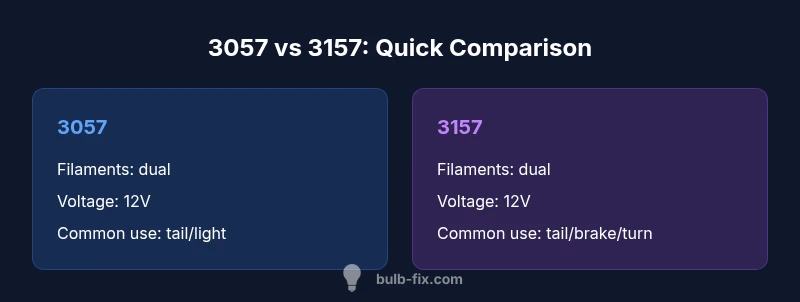
| Feature | 3057 | 3157 |
|---|---|---|
| Filament configuration | Dual-filament design common in both; supports tail and signaling | Dual-filament design common in both; supports tail and signaling |
| Voltage | 12V typical | 12V typical |
| Common uses | Tail-light and signaling (varies by model) | Tail-light, brake, and turn signaling in many models |
| Fitment and socket | Widely compatible with many sockets | Widely compatible with many sockets |
| LED compatibility | Not typically designed for LED replacements | Not typically designed for LED replacements |
| Cost and availability | Moderate availability across brands | Moderate availability across brands |
Upsides
- Widely supported by many vehicle models
- Dual-filament design reduces the need for multiple bulbs
- Accessible and easy to replace in standard housings
- Brand options provide reliable performance
Drawbacks
- Brand quality can vary, affecting brightness and longevity
- Mismatches between vehicle signaling requirements and bulb selection can occur
- Older or very new vehicle models may prefer different bulb types
3157 is generally the more versatile choice for multi-function signaling; 3057 remains a solid option for simpler tail-light setups
Choose 3157 when you need both tail light and signaling from a single bulb. Opt for 3057 if your vehicle’s tail-light configuration is simple and does not demand dual signaling.
Got Questions?
What is the main difference between bulb 3057 and 3157?
Both bulbs serve tail-light and signaling roles in many vehicles. The 3157 is typically used for brake/turn signaling due to dual-filament design, while the 3057 is common for tail-light-only functions. Always confirm with your vehicle’s manual to avoid incorrect replacements.
The main difference is that 3157 is often used for brake and turn signaling, while 3057 is more common for tail lights. Check your car’s manual to be sure.
Can I interchange 3057 and 3157 in my car?
Interchangeability depends on socket fit and signal requirements. If the vehicle expects a multi-function bulb for a given socket, using the wrong type can affect signaling or light output. Always verify against the vehicle’s bulb guide before swapping.
Interchangeability depends on the socket and the signaling needs. Verify with your vehicle’s bulb guide before swapping.
Which is brighter, 3057 or 3157?
Brightness varies by brand and filament load rather than bulb type alone. In multi-function locations, 3157 options from reputable brands may appear brighter due to how the dual filaments are driven in signaling modes.
Brightness depends on the brand and usage. 3157 options from reputable brands may appear brighter in signaling modes.
Are there LED replacements for 3057/3157?
Yes, there are LED retrofit bulbs for many vehicles. Ensure proper fit, heat management, and CAN-bus compatibility if your car uses smart signaling to avoid error messages or bulb-out indicators.
LED versions exist, but ensure fit and electronics compatibility to avoid dashboard warnings.
How do I install or replace these bulbs safely?
Park safely, disconnect power when near airbag zones, wear gloves to avoid oil residue on bulbs, and follow the vehicle’s manual for lens removal and bulb seating. Test signals after installation and dispose of old bulbs properly.
Park safely, wear gloves, and test signals after installing. Follow the manual for lens removal.
What should I do if the new bulb doesn’t fit?
Double-check the exact bulb type your vehicle requires. Some models use a different base or filament arrangement. If there’s no fit, consult a retailer with your vehicle details or use the OEM part lookup tool.
If it doesn’t fit, verify the exact bulb type and base, then seek guidance from a parts retailer.
Key Points
- Check the vehicle manual before purchasing any bulb
- Fitment and function matter more than price alone
- Prefer trusted brands for longevity
- Consider coordinated replacement for even wear