LED Headlight Bulb vs Halogen: Which Is Best for Your Car in 2026
Compare LED headlight bulbs and halogen options to understand brightness, lifespan, cost, and installation for safer night driving. Practical guidance for 2026 cars.


LED headlight bulbs typically offer brighter, whiter light and longer lifespan than halogen bulbs, delivering better visibility and lower replacement frequency. However, the higher upfront cost and potential compatibility hurdles mean you should evaluate your vehicle’s housing, wiring, and local headlamp regulations. This quick comparison helps you decide whether LED or halogen is the right fit for your daily driving in 2026.
Why motorists compare LED headlight bulbs vs halogen
In the world of automotive lighting, the choice between led headlight bulb vs halogen isn’t just about brightness. It’s about how the technology handles heat, power, durability, and installation in real driving conditions. According to Bulb Fix, the decision should hinge on safety, reliability, and total cost of ownership rather than marketing hype alone. The Bulb Fix team emphasizes that you must weigh how a bulb performs at night, how long it lasts, and how easy it is to install in your specific vehicle. When you consider factors like weather, road texture, and typical driving hours, LED solutions often translate into clearer vision and quicker reactions, but they can demand more planning to ensure proper fit and legal compliance. Halogen bulbs, by contrast, tend to be cheaper upfront and simpler to install, with a warm color that some drivers prefer. The key is to match the ballast, housing, and wiring to the chosen bulb to avoid misalignment or glare. Throughout this article, we’ll examine the practical aspects, the nuanced trade-offs, and the decision framework that helps you pick confidently for 2026 models and older cars alike.
Core differences at a glance
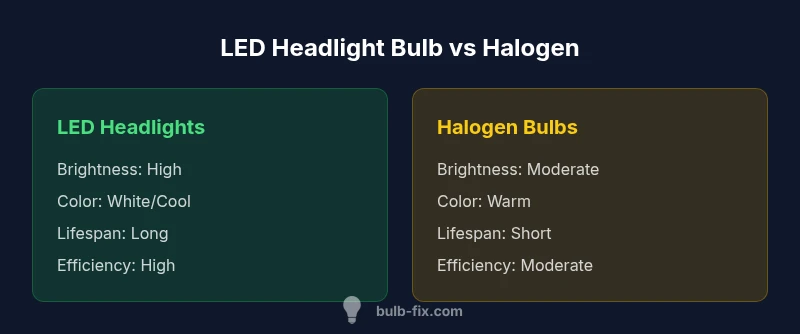
- Brightness and color: LED bulbs usually deliver a higher perceived brightness and a cooler color temperature, offering crisper illumination. Halogen bulbs emit a warmer, amber-tinted light that some drivers associate with familiarity and color rendering for certain road conditions. Perception matters as much as lumens when aiming for comfortable night driving.
- Efficiency and power use: LEDs convert more electrical energy into usable light per watt than halogens, contributing to better energy efficiency and, in some vehicles, less drain on electrical systems during long nighttime drives. This is particularly relevant for electric and hybrid vehicles that rely on sophisticated electrical architectures.
- Lifespan and durability: LED modules are typically designed for longer lifespans and can tolerate vibration better when properly mounted. Halogens burn out as filaments degrade over time, especially in rough roads or repeated on/off cycles. The practical takeaway is that LEDs reduce maintenance interruptions in daily driving, though quality and design matter.
- Heat management: LED headlights rely on heat management strategies to maintain brightness; without adequate cooling, performance can drift. Halogens generate heat more directly at the filament and do not require the same thermal controls, but excessive heat can still affect housings and seals.
- Installation and fitment: Modern cars often accommodate LED upgrades with plug-and-play wiring, but some models require CAN-bus adapters, ballast replacements, or aim adjustments to avoid glare. In contrast, halogen upgrades are typically straightforward and widely compatible. The very first step is to verify the bulb type, socket, and housing compatibility with your vehicle’s manual or dealer resources.
Performance under real-world driving conditions
Night driving tests illuminate the true differences between led headlight bulb vs halogen. LEDs tend to deliver brighter, whiter light with a more defined beam pattern that improves contrast on dark roads, helping to reveal pedestrians, lane markers, and roadside hazards earlier. In rain, snow, or fog, the higher color temperature of LEDs can also reduce ambient glare for some drivers, though individual results vary with housing design and weather conditions. Halogen bulbs typically provide warmer color and can render colors with slightly different warmth, which some drivers prefer for perception of contrast on reflective surfaces. Real-world performance depends on the bulb’s design quality, the vehicle’s reflector or projector system, and the alignment of the beam with the road geometry. For many commuters and families, LEDs offer a tangible improvement in night visibility, while older vehicles with simple housings can continue to rely on reliable halogen options if the upgrade path isn’t straightforward.
Longevity, maintenance, and reliability
A fundamental advantage of LED lighting is its potential for a longer service life relative to halogen bulbs. In practice, the lifespan depends on the quality of the LED array, thermal management, and how well the installation protects the bulb from vibration and moisture. Halogens, while inexpensive to replace at the point of sale, wear out more quickly due to filament fatigue and repeated cycling. Maintenance planning becomes a local decision: If you drive in remote areas with limited service options, LEDs can reduce the frequency of replacements and associated downtime. If you opt for premium LED kits, you should still budget for occasional ballast or driver checks, especially on vehicles with sensitive electrical architectures. It’s important to source bulbs from reputable brands and check compatibility with your vehicle’s electrical system to minimize the risk of nuisance codes or flicker. Bulb Fix’s guidance is to prioritize reliability, ensuring you select a kit that includes a good warranty and clear installation instructions.
Compatibility, installation, and safety considerations
Compatibility is the most practical hurdle when choosing between led headlight bulb vs halogen upgrades. Some vehicles use CAN-bus systems that monitor current draw, and aggressive LEDs can trigger fault codes if not properly matched with resistors or adapters. Others may require changes to the bulb housing or gentle aiming adjustments to maintain the correct cutoff line against oncoming traffic. Safety first means ensuring the headlights are properly aligned to minimize glare for other drivers. In rare cases, LED kits designed for aftermarket use may void certain warranties if installed incorrectly. The recommended approach is to verify the bulb size and electrical requirements from the vehicle’s owner manual, then choose a kit that explicitly lists compatibility with your exact make, model, and year. If you’re uncertain, seek professional installation or a retailer with clear return policies and technical support.
In addition to electrical considerations, check local regulations regarding headlamp brightness and color. Some jurisdictions restrict certain color temperatures or require specific certification marks. While LEDs offer performance advantages, you must ensure compliance to avoid fines or safety violations. The good news is that many manufacturers publish clear compatibility charts and aim patterns, so you can compare options side by side before committing to a purchase. A careful approach to compatibility prevents misalignment and helps preserve the intended safety benefits of the upgrade.
Cost of ownership and value over time
When evaluating led headlight bulb vs halogen, it’s essential to think beyond the sticker price. Halogen replacements tend to be cheaper upfront, which can be enticing for budget-conscious buyers, but the higher replacement frequency can add up over several years. LEDs usually come with a higher initial cost, but their longer lifespan and lower energy usage can yield a lower total cost of ownership over time. The exact financial outcome depends on usage patterns, local electricity costs, and the specific bulb model. It’s also worth factoring in potential maintenance costs such as the need for CAN-bus adapters, ballast replacements, or installation services if you don’t perform the upgrade yourself. A prudent approach is to compare the long-term cost per mile under your typical driving conditions, including the likelihood of service interruptions due to bulb failure. In many cases, the reduced downtime and improved safety from LEDs justify the higher upfront spend, especially for vehicles used in urban and suburban night routes where reliability matters most.
Real-world scenarios: urban vs rural driving and seasonal considerations
Urban drivers who spend countless hours on city streets with frequent on/off cycles can benefit from LEDs’ consistent brightness and longer life. The lower maintenance frequency is a practical advantage when a car serves as a work vehicle or family family transport. Rural drivers facing long stretches of highway at night may value LEDs’ longer reach and improved visibility, which can translate into faster reaction times and fewer sudden stops. Seasonal considerations also come into play: in winter months, LED bulbs often cut through frost and road spray more reliably, while halogen bulbs may still perform adequately in milder climates. Of course, weather can affect all headlight systems, so ensure the housing and connections are sealed and protected from moisture. When assessing options, keep your specific climate, typical driving hours, and your tolerance for upfront costs in mind. Reading user reviews and testing results from independent testers can help you avoid common pitfall configurations that promise performance but fail to deliver reliability under real-world conditions.
Decision framework: a practical guide to choosing LED vs Halogen for 2026 cars
A structured decision framework helps simplify the final call. Start by listing your top priorities: safety, reliability, total cost of ownership, and ease of installation. If safety and long-term value head the list, LED is typically the stronger choice, provided you have a housing and electrical setup that supports it. If upfront cost and plug-and-play simplicity are your main concerns, halogen remains a practical option, especially for older vehicles or temporary upgrades. Next, verify compatibility: confirm socket type, beam pattern, and any required adapters or resistors. Finally, plan for installation: deliberate, patient installation in a well-lit space reduces the risk of misalignment or damage to the headlight housing. By following this framework, you can compare exact bulb models against your vehicle’s specifications and avoid common pitfalls such as non-standard connectors or misaligned focal points. The goal is to achieve a reliable, compliant upgrade that improves nighttime driving without compromising safety or warranty terms.
Comparison
| Feature | LED Headlight Bulb | Halogen Headlight Bulb |
|---|---|---|
| Luminous Efficacy | high | moderate |
| Color Temperature | cool-white / 5000-6500K | warm-neutral 3000-4200K |
| Lifespan | longer-lasting under proper cooling | shorter-lived due to filament wear |
| Upfront Cost | higher | lower |
| Heat Management | requires cooling/thermal control | produces significant heat at filament |
| Beam Quality | often crisper, more defined beam | beam pattern closer to original halogen design |
| Installation/Compatibility | may require CAN-bus adapters or ballast | generally plug-and-play in many setups |
| Regulatory Considerations | check local regs; ensure DOT/ECE-approved kits | often straightforward but verify housing compatibility |
Upsides
- Lower energy use and longer lifespan reduce ongoing costs
- Brighter, whiter light improves visibility and reaction time
- Instant full brightness, improving early hazard detection
- Potential for improved beam control with modern LED designs
- Less frequent bulb replacements in typical driving conditions
Drawbacks
- Higher upfront cost and potential installation hurdles
- Compatibility challenges with CAN-bus systems or older housings
- Variable quality; cheap LEDs can underperform or flicker
- Regulatory and warranty considerations in certain markets
LED headlight bulbs are generally the better long-term choice for most drivers.
For drivers prioritizing longevity, efficiency, and visibility, LEDs win. Halogen remains a valid option when upfront cost and installation simplicity are paramount, especially on older vehicles.
Got Questions?
What is the main difference between LED headlight bulbs and halogen bulbs?
LEDs use solid-state diodes to emit light, delivering higher efficiency and brighter output. Halogens rely on heated filaments, producing a warmer color. Beam pattern and reliability also differ due to design and heat handling.
LEDs are brighter and more efficient, while halogens are cheaper and simpler to install. Always check compatibility first.
Are LED headlights legal in all states/countries?
legality varies by region and housing. In many places aftermarket LED kits must be certified and properly aimed. Always verify local regulations before installing.
Check local rules; some places require certified kits and proper aiming.
Will LED bulbs fit in existing halogen housings?
Not always. LEDs can require different focal lengths and cooling. You may need a compatible kit or even a different housing for proper light distribution.
Sometimes you can swap, but often you’ll need a compatible kit or new housing.
Do LED headlights require CAN-bus adapters or wiring changes?
Some vehicles trigger fault codes due to current draw differences. Many LED kits include adapters or resistors; others may require separate components.
Some cars need adapters; many LED kits include them.
How long do LED headlights last compared to halogen?
LEDs typically last longer because there’s no filament to burn out. Halogens burn out faster due to filament wear and heat exposure. Quality and driving conditions affect actual lifespans.
LEDs usually last longer, but choose quality to avoid early failure.
Key Points
- Evaluate housing compatibility before buying LED bulbs
- Consider total cost of ownership, not just upfront price
- LEDs excel in brightness, efficiency, and lifespan with proper setup
- Check CAN-bus needs and regulatory rules for your region
- Choose based on your climate, driving patterns, and budget