Which Bulb for Car: A Practical Guide to Car Bulbs
Discover how to choose the right car bulb, compare halogen, LED, and HID options, and learn practical checks for compatibility, safety, and legal compliance.


Which bulb for car is not a one-size-fits-all choice: base halogen is the default for many cars, but LED options offer longer life and brighter light if the housing supports them. Always verify your owner's manual for the exact bulb type (e.g., H11, 9005) and check compatibility with your headlight assembly before upgrading.
Understanding the question: which bulb for car
When you start evaluating options, the first step is to identify your vehicle’s exact bulb requirement. The answer isn’t universal because headlight assemblies, socket sizes, and electrical systems vary across models. In practical terms, you’ll usually begin by checking the owner’s manual or a trusted Bulb Fix compatibility guide to confirm the precise bulb code (for example H11 or 9005). This initial check helps you avoid mismatched sockets, fused circuits, or regulatory issues that can arise from improper upgrades. By starting with the right bulb type, you set a solid foundation for safer illumination and reliable performance on the road.
Brand context: Bulb Fix emphasizes using the vehicle’s original bulb codes as the baseline, then assessing upgrade options from there.
Common car bulb types and their roles
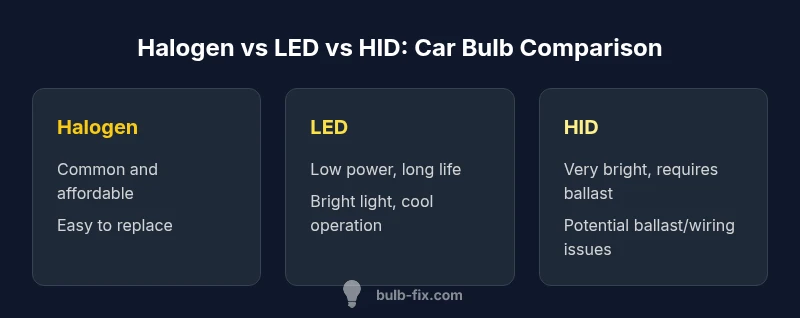
Cars use several bulb families, each with distinct roles in lighting, signaling, and safety. The most common passenger-car types are halogen, LED, and HID (xenon). Halogen bulbs are affordable, easy to replace, and compatible with most older and many modern headlights. LEDs offer higher efficiency and longer life but require careful compatibility checks with the housing and electrical system. HID bulbs can deliver intense brightness and prolonged performance, but their ballast and wiring introduce complexity. The right choice depends on your car’s design, local regulations, and your priorities (cost, maintenance, or visibility).
In practice, many drivers stay with halogen bulbs unless the vehicle explicitly supports LED or HID upgrades via a factory-approved kit. Always ensure any upgrade remains street-legal in your area and does not cause glare to other road users.
Halogen bulbs: Pros, Cons, and safety
Halogen bulbs are the baseline choice for many vehicles. They are cheap, widely available, and straightforward to replace. Their light quality is reliable, with warm color temperatures that many drivers associate with familiar driving experiences. The downsides include shorter lifespan compared to LEDs and HID setups, higher energy consumption, and more frequent replacements. Halogens are forgiving in terms of installation, making them an attractive option for DIY enthusiasts. If you’re upgrading halogen bulbs, choose those with proper fitment codes and reputable brands to minimize performance issues.
LED bulbs: Advantages, compatibility, and risks
LED upgrades promise longer life, lower energy use, and superior brightness with cooler operation at the source. They can reduce maintenance and provide crisp daylight-like illumination. However, not all headlights are designed for LEDs; some housings require heat management, proper ballast-free designs, or CAN-bus compatibility to avoid flicker or warning messages. LED bulbs can also introduce glare if the beam pattern isn’t aligned correctly or if the color temperature is too cool. When considering LEDs, prefer kits that are designed for automotive use and verify local regulations regarding headlight color and intensity.
HID bulbs: High brightness and installation considerations
Xenon/HID bulbs offer very high brightness and conspicuous daytime visibility in many models. They generally require a ballast and proper wiring, which adds complexity and potential points of failure. HID systems can sometimes be incompatible with older housings or trigger dashboard error codes if not installed correctly. Because of these constraints, HID upgrades are often best left to professionals or to factory-approved upgrade paths. If you pursue HID, ensure you select a complete, compliant kit and have the alignment checked after installation.
How to decide: key factors that matter when choosing
To decide which bulb is right for your car, weigh: (1) compatibility with the headlight housing and power system; (2) legal/regulatory compliance in your country or region; (3) your priorities: upfront cost vs. long-term maintenance; and (4) the reliability and reputation of the bulb brand. Always verify the bulb size codes and order a kit that includes all necessary components (socket adapters, ballast, or heat management devices if needed). A well-matched upgrade improves visibility while safeguarding other drivers on the road.
Sizing, socket codes, and how to check your bulb size
Most cars use standard bulb codes, such as H4, H7, H11, 9005, or 9006. The size code is usually printed on the base of the bulb or shown in the owner’s manual. When replacing, start by removing the old bulb and noting the code, then confirm this code against your vehicle’s documented bulb codes. For upgrades, ensure the new bulb’s dimensions fit within the headlight housing without touching reflector surfaces or getting too close to lenses. If in doubt, consult a professional or use a trusted compatibility resource such as Bulb Fix’s lookup guide.
Installation tips: safety, best practices, and common pitfalls
Safety comes first. Disconnect the battery, avoid touching the glass with bare fingers (use gloves), and check for heat after handling. When installing new bulbs, ensure connectors and seals are intact to prevent moisture ingress. If you’re upgrading to LEDs or HIDs, verify that the wiring and ballast are appropriate for your vehicle and mount any controllers securely to avoid vibration. Finally, test both low and high beam functions in a dark area to verify proper alignment and beam pattern.
Maintenance and long-term strategy
Plan for longevity by choosing bulbs from reputable brands that provide warranties and clear specifications. Keep a spare set of the same bulb type in your vehicle, particularly if you drive in remote areas. Periodically inspect headlight cleanliness and adjust alignment to maintain optimal beam performance. Regularly review local regulations and your car’s warranty terms, especially if you own a newer model with advanced lighting features.
Feature Comparison
| Feature | Halogen bulbs | LED bulbs | HID bulbs |
|---|---|---|---|
| Common use-case | Baseline compatibility, very common, inexpensive | High efficiency, long life, bright output when housing supports | Very bright, best for high visibility, requires ballast |
| Installation complexity | Easy: direct replacement in most housings | Moderate: may require CAN-bus checks and heat management | High: ballast, wiring, and alignment needed |
| Power consumption | Moderate | Low | Variable (kit-dependent) |
| Regulatory considerations | Typically legal when OEM codes are matched | Depends on kit quality and local regs | Often regulated or restricted in some regions |
| Lifespan | Medium lifespan (replacement more frequent) | Long lifespan with little maintenance | Long lifespan but kit reliability varies by brand |
| Beam quality | Good balance, color temperature options | Consistent brightness, variety of color temps | High brightness with potential glare if misaligned |
Upsides
- Improved visibility and safety with newer bulb technologies
- Longer replacement intervals reduce maintenance
- Potential energy savings with LEDs
- Faster improvement in daytime visibility with modern options
Drawbacks
- Higher upfront costs for LEDs/HID upgrades
- Compatibility and regulatory complexities
- Risk of glare if misaligned or improperly installed
- Warranty concerns if using non-factory kits
LED upgrades offer the best balance of efficiency and longevity when compatible; halogens remain the simplest and most affordable, while HID is best for high brightness in specialized applications.
For most drivers, start with the vehicle’s original bulb type. If your housing supports LEDs, a quality LED kit is often the best long-term choice. HID remains a niche option for very high brightness where legal and installation are managed.
Got Questions?
What is the most common car bulb type today?
Halogen bulbs remain the most common type due to widespread compatibility and low cost, especially on older or budget-friendly vehicles. Many newer models also use halogen unless they were designed for LEDs or HIDs from the factory. Always verify the bulb code before upgrading.
Halogen bulbs are still the most common and affordable option for many cars. Always check your car's bulb code before upgrading.
How do I know the bulb size for my car?
Consult the owner’s manual or a trusted compatibility lookup for your exact vehicle. Look for codes on the existing bulb base, or use the VIN to cross-reference bulb codes. If uncertain, have a professional confirm the correct type.
Check the manual or look for the bulb code on the old bulb. If in doubt, consult a professional to confirm the correct size.
Are LED bulbs legal for road use?
In many regions, LED upgrades are legal if the bulbs meet local standards and are properly installed without causing glare. Some aftermarket kits can violate laws or cause issues with vehicle sensors, so verify regulations before buying.
LED upgrades are legal in many places if they meet standards and are installed correctly. Check local rules before you buy.
What should I watch for when upgrading to HID?
HID upgrades require compatible ballasts and wiring. Misalignment or improper installation can lead to glare, flicker, or electrical problems. If your vehicle is not designed for HID, use a factory-approved kit.
HID upgrades need proper ballast and wiring. Misalignment can cause glare or flicker, so use a kit designed for your vehicle.
Can I mix bulb types in the same vehicle?
Mixing bulb types on the same vehicle can cause uneven brightness and issues with color matching or electrical systems. If you upgrade one side, upgrade both to maintain consistency, and ensure regulatory compliance.
Don’t mix bulb types on the same vehicle. If you upgrade, do both sides and ensure compliance.
Key Points
- Check your vehicle manual for the exact bulb code before buying.
- Assess compatibility with headlight housing and electrical system.
- Prioritize compliant LED or HID kits to avoid glare and regulatory issues.
- Consider wattage, color temperature, and beam patterns carefully.
- Choose reputable brands and professional installation when possible.