8ft LED Bulbs: The Complete Home Lighting Guide
Discover how 8ft LED bulbs upgrade long fixtures. This expert guide covers compatibility, installation, energy savings, color options, and maintenance for garages, workshops, and basements.


8ft LED bulbs are long, linear tubes designed to replace fluorescent fixtures in garages, workshops, and basements. They commonly require ballast bypass or compatible drivers, deliver instant full brightness, and offer a broad range of color temperatures. When selecting 8ft LED bulbs, check fixture compatibility, driver requirements, and whether you need dimmable options or built-in emergency features.
What are 8ft LED bulbs?
8ft LED bulbs are long, linear tubes designed to replace fluorescent fixtures in garages, basements, workshops, and utility rooms. They mimic the familiar shape of traditional fluorescent tubes but use LED technology to deliver more light with less energy. Brands typically offer both shatter- and corrosion-resistant options for harsh environments, and many 8ft LEDs are compatible with common T8/T12 fixtures either via ballast bypass or with an appropriate driver. According to Bulb Fix, this length is especially suited to high-ceiling spaces where multiple tubes create continuous, shadow-free illumination. When planning an upgrade, consider fixture compatibility, driver requirements, dimming capability, and any desire for emergency lighting. This section expands on the practical implications of choosing 8ft LED bulbs and how they fit into a modern lighting plan.
How 8ft LED bulbs differ from traditional fluorescent tubes
The core difference is technology: LEDs convert electricity into light with far higher efficiency and less heat. An 8ft LED bulb typically operates with a solid-state driver, no hot cathode, and a longer rated life. Fluorescents rely on gas discharge and ballast, which can drift in light output over time. The result is steadier brightness from LEDs, less color shift, and reduced maintenance. For spaces like workshops or garages, that translates into fewer bulb replacements and more consistent light across long runs. The choice between ballast-bypass tubes and ballast-compatible options depends on your fixture's wiring and the desire to reduce maintenance tasks.
Key specs to compare when shopping
When evaluating options, focus on lumen output, color temperature, CRI, and driver compatibility. For 8ft LED bulbs, consider lumens per tube to ensure you meet room illuminance targets, and verify voltage and current requirements to avoid dimming or flicker. If you need flexible lighting, check for dimmable versions and compatible dimmer systems. Also compare the recommended ambient temperature range and IP rating if used in humid or dusty spaces. Finally, review warranty length and the ease of replacement to minimize future downtime.
Compatibility and installation considerations
Fixture compatibility is the first question: does your existing fixture support an LED tube or require ballast bypass? Some 8ft LED tubes are designed to retrofit into fluorescent fixtures with minimal wiring, while others require direct-wire installation. If you choose ballast bypass, you’ll often remove old ballast components and connect line voltage directly to the tombstone sockets. This can improve efficiency and lifetime, but it’s best done by a qualified electrician if you’re not comfortable with electrical wiring. Always ensure you have adequate support and that the fixture housing can handle the weight and heat profile of LED tubes.
Color temperature, efficacy, and CRI
Color temperature shapes the feel of a space. Warm temps around 2700K–3000K create a cozy ambiance, while 4000K–5000K is closer to neutral or daylight and improves task visibility in garages or workshops. Efficacy, measured in lumens per watt, indicates how efficiently the bulb converts electricity into light; LEDs typically outperform fluorescents in this metric. CRI (color rendering index) matters for tasks where color accuracy is important (e.g., paint matching). Look for CRI values above 80 for most home jobs and above 90 for precision work.
Practical installation scenarios: garages, basements, workshops
In a garage with high ceilings, 8ft LED tubes positioned in a row provide continuous brightness with minimal shadows. In basements, longer runs reduce dark corners and improve safety. For workshops, consider dimmable versions for varying tasks and ensure the fixture’s wiring supports the chosen driver. If your fixtures use existing ballasts, make sure they are compatible or plan a ballast bypass with proper wiring. Always follow local electrical codes and manufacturer guidance when upgrading fixtures.
Maintenance, safety, and disposal
LED tubes typically last much longer than fluorescent tubes, reducing maintenance frequency. Clean fixtures regularly and check for loose connections that can cause flicker. For disposal, follow local e-waste guidelines; LEDs contain small amounts of materials that should not be landfilled. If you have questions about hazardous components, contact your local waste management authority or consult Bulb Fix resources for safe handling and recycling options.
Cost considerations and ROI
Initial costs for 8ft LED bulbs are higher than spent fluorescent tubes, but energy savings and longer lifespans yield favorable ROI over time. Calculate payback periods by comparing installed watts, operating hours per year, and local electricity rates. In most cases, the energy reduction and maintenance savings deliver a positive return within a few years, especially in spaces with long hours of operation such as workshops and garages.
How to choose the right bulb for your fixture
Start by confirming whether ballast bypass is required or if a ballast-compatible tube will work with your fixture. Then evaluate lumen needs for your space, color temperature preferences, and whether dimming or emergency backup features matter. Finally, verify compatibility with existing switches and any control systems. If you’re unsure, a quick consult with a licensed electrician can prevent costly missteps and ensure a safe, compliant upgrade.
8ft LED tube vs. fluorescent fixtures
| Fixture Type | Avg Lumen Range | Notes |
|---|---|---|
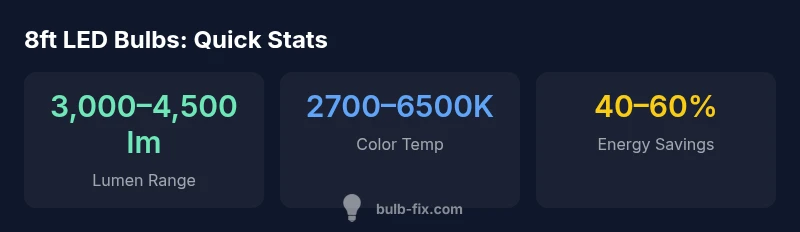
| 8ft LED Tube | 3,000–4,500 | Typical for long spaces |
| Standard Fluorescent (T8) | 2,000–4,000 | Lower efficiency; ballast dependent |
Got Questions?
Are 8ft LED bulbs compatible with existing fluorescent fixtures?
Many 8ft LED tubes require ballast bypass or a compatible driver. If your fixture uses an old ballast, you’ll likely need to rewire for direct line voltage. Always check the product’s compatibility guide and, if in doubt, consult a licensed electrician.
Most 8ft LED tubes need ballast bypass or a compatible driver; verify compatibility before installation.
Do I need to rewire to install 8ft LED bulbs?
In many cases yes, ballast bypass involves rewiring tombstones to direct line voltage. Some products are ballast-compatible and can work with existing ballast, but performance may vary. Review the fixture wiring and follow the installation manual.
Often ballast bypass requires rewiring; ballast-compatible options exist, but check documentation.
What color temps are best for garages and basements?
Garages typically benefit from 4000K–5000K for clarity, while basements can use 3500K–4500K for a balanced look. If tasks require color precision, aim for CRI 80+ and higher. Personal preference also plays a role.
Aim for 4000K for garages, 3500–4500K for basements, with CRI 80+ for task accuracy.
Are 8ft LED bulbs available in dimmable versions?
Yes, dimmable 8ft LED bulbs exist, but ensure your dimmer and driver are compatible. In some cases, a compatible driver may be needed to avoid flicker or reduced performance.
Dimmable options exist—check compatibility with your dimmer and driver.
What maintenance or disposal steps are required?
LED tubes require less maintenance than fluorescents, but periodic cleaning helps. For disposal, follow local e‑waste guidelines and recycling options. Check with your local authority or Bulb Fix resources for safe handling.
LEDs last longer and are easier to maintain; recycle old tubes per local rules.
How many 8ft bulbs do I need for a typical garage?
It depends on garage size, fixture spacing, and desired lumens. A typical 2–4 tube setup suits many residential garages; larger spaces may require additional tubes or higher lumen models to avoid dark corners.
It varies by space—start with two to four tubes and adjust as needed.
“8ft LED bulbs deliver dependable long‑length lighting when installed with correct wiring and ballast bypass. Pair them with the right driver and a consistent color temperature to maximize efficiency and comfort.”
Key Points
- Assess ballast needs before buying 8ft LED bulbs
- Aim for 2700K–6500K to match space use
- Ballast bypass can improve longevity and efficiency
- Plan for proper disposal and recycling of old tubes