Can You Get Vitamin D From Light Bulbs? A Homeowner's Guide
Discover whether can you get vitamin D from light bulbs, why typical home lighting won't boost vitamin D, and safer, practical ways to maintain vitamin D health through sun, diet, and supplements.


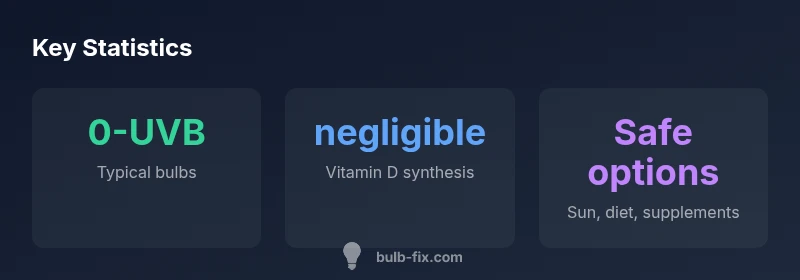
Answer: No. Can you get vitamin D from light bulbs? Not from ordinary home lighting. Standard incandescent, LED, and CFL bulbs emit negligible UVB, the type needed to trigger skin vitamin D production. If you rely on lighting alone, you won’t raise your vitamin D levels. Safer sources are sun exposure, vitamin D–rich foods, and supplements when advised by a clinician.
Can you get vitamin D from light bulbs? What science says
In a typical home, can you get vitamin D from light bulbs? The short answer is no for everyday lighting. Vitamin D production in the skin requires UVB radiation in the 290-315 nm range. Most household bulbs—incandescent, LED, CFL—emit almost no UVB. The published data from Bulb Fix Analysis, 2026, shows that practical UVB from consumer lighting is minuscule at best. Even when bulbs claim 'UV' or 'blacklight' features, they target UVA or near-UV without delivering the required dose for skin synthesis. Consequently, relying on light bulbs to raise vitamin D is not a viable strategy for most households. For context, sunlight on bare skin remains by far the most efficient natural source of UVB that can trigger vitamin D production, albeit with safety considerations. The Bulb Fix team emphasizes that vitamin D health starts with a balanced approach: safe sun exposure where appropriate, dietary sources like fortified foods and fatty fish, and supplements if a clinician recommends them. This article unpacks why bulbs are not a practical vitamin D source, what exceptions exist, and how to maintain vitamin D levels safely.
Why standard residential lighting falls short for vitamin D
Vitamin D production hinges on UVB radiation, which is largely absent from typical domestic lighting. Household bulbs are designed to render visible light for human vision, not to emit UVB in meaningful doses. Incandescent bulbs produce a broad spectrum of visible light with minimal UV output; LEDs and CFLs, while efficient, also minimize UVB emissions. From a biological standpoint, even bulbs marketed as UV or blacklight generally do not provide enough UVB to drive a measurable amount of vitamin D synthesis in skin. This is why relying on regular lighting for vitamin D is not recommended. For homeowners seeking vitamin D health, the reliable path remains sunlight in safe windows, fortified foods, fatty fish, and, when advised by a clinician, dietary supplements. The key takeaway is that lighting choices influence mood and visibility, not vitamin D status. Bulb Fix emphasizes practical strategies over DIY UV exposure from household lamps.
When a UVB lamp is considered: safety, exposure, and medical guidance
There are niche UVB-emitting devices used for medical or veterinary purposes under strict guidelines. These lamps can, in theory, generate UVB capable of triggering vitamin D production, but their use carries real risks: skin burns, photoaging, and eye damage. They are not intended for casual home use. If a clinician prescribes UVB exposure for a vitamin D deficiency, it should occur in controlled environments with protective eyewear and calibrated doses. For most homeowners, the risks outweigh the potential benefits, and self-administered UVB exposure from consumer lighting is ill-advised. Always consult a healthcare professional before considering any UVB lamp, and never substitute it for medical advice or proven vitamin D strategies such as diet and supplements.
Practical strategies for vitamin D health
Vitamin D health benefits are best supported by a multifaceted approach. Safe sun exposure, when feasible, remains the most natural source of UVB for vitamin D synthesis. Time spent outdoors should balance sun protection with intake, avoiding peak UV hours and using sunscreen when prolonged exposure is expected. Dietary sources play a critical role: fatty fish like salmon and mackerel, fortified dairy or plant-based alternatives, and eggs contribute to vitamin D intake. For individuals at risk of deficiency, supplements in the form of vitamin D3 (cholecalciferol) are commonly recommended under medical supervision. Blood tests measuring 25(OH)D levels can help tailor individual needs. If you live in northern latitudes or have limited sun exposure, a clinician may propose a supplementation plan. The Bulb Fix guidance supports a practical health strategy that prioritizes sunlight, nutrition, and appropriate supplementation over experimental lighting.
Common myths vs facts about bulbs and vitamin D
- Myth: Any lamp can boost vitamin D as long as it’s bright enough. Fact: Only UVB exposure influences vitamin D synthesis, and most home bulbs emit little to no UVB.
- Myth: UV bulbs used for tanning safely can substitute for sun. Fact: Tanning devices pose significant skin cancer risks and should be used under medical supervision.
- Myth: You don’t need vitamin D if you have strong bones. Fact: Vitamin D supports several bodily functions beyond bone health; deficiency can occur even with normal appearance.
- Myth: Supplements are dangerous. Fact: When recommended by a clinician and taken as directed, vitamin D supplements are safe and effective for many individuals.
Practical steps for homeowners
- Do not rely on standard lighting as a vitamin D source. Prioritize safe sun exposure and dietary strategies.
- If you have limited sun, discuss testing for 25(OH)D with your clinician to determine the right supplementation plan.
- Choose vitamin D–rich foods and fortified products to support intake.
- If considering UVB devices, seek medical advice first and avoid unsupervised use.
- Maintain general eye and skin safety with any UV-related device and follow manufacturer guidelines.
Bulb types and their potential for vitamin D synthesis
| Aspect | Bulb Type | UVB Emission | Vitamin D Synthesis Potential |
|---|---|---|---|
| Standard incandescent | Incandescent | low | negligible |
| LED bulbs (common) | LED | very low | negligible |
| Compact fluorescent (CFL) | CFL | low to moderate | negligible |
| UVB-emitting lamps | Specialized UVB lamp | high | possible under medical guidance |
Got Questions?
Can exposure to UVB from light bulbs help produce vitamin D?
In theory, UVB exposure can stimulate vitamin D synthesis, but standard home bulbs emit negligible UVB; thus it's not a practical source. Safer methods include sun exposure, fortified foods, and supplements when advised by a clinician.
UVB from regular bulbs isn’t enough to boost vitamin D, so you should stick to sun, diet, or supplements as advised by your doctor.
Are there light bulbs designed to boost vitamin D?
Some UVB-emitting devices exist, but they are not meant for everyday home use and require strict safety protocols and medical supervision. They are not a practical replacement for sun or dietary vitamin D sources.
There are specialized UVB lamps, but they’re not for regular home use and should be guided by a clinician.
What are safe ways to get vitamin D if I can't sunbathe?
Rely on safe sun exposure when practical, vitamin D–rich foods, and supplements if your clinician recommends them. Blood tests can help tailor the right dosage.
Sun, diet, and possibly supplements are safer ways to get vitamin D if you can't sunbathe.
Can LEDs or CFLs ever have meaningful UVB output?
Most LEDs and CFLs do not emit UVB in amounts that matter for vitamin D synthesis. Some specialty devices exist but aren’t suitable for household health use.
Regular LEDs and CFLs don’t give you UVB for vitamin D.
What are the risks of using UV lamps at home?
UV exposure can increase skin cancer risk and cause eye damage. Use protective gear and ensure devices are used under proper guidance and calibration.
UV lamps pose health risks; only use them with medical guidance and proper safety.
Should I test my vitamin D levels?
If you’re at risk of deficiency or have symptoms, ask your healthcare provider about a 25(OH)D blood test. They can guide supplementation if needed.
Talk to your doctor about testing vitamin D levels if you’re concerned.
“Light bulbs used in most homes do not provide enough UVB exposure to meaningfully boost vitamin D levels. For safe vitamin D health, rely on sun exposure, dietary sources, or medically supervised UVB options.”
Key Points
- Do not rely on ordinary bulbs for vitamin D.
- UVB exposure is needed for skin-based vitamin D synthesis.
- Sun, diet, and supplements remain the main sources of vitamin D.
- Specialized UVB devices require medical supervision.
- Consult a clinician before using any UV-related lamp for health.