How to Use a SAD Lamp: A Practical Home Therapy Guide
Learn how to safely use a SAD lamp at home for daylight therapy, with selection, setup, timing, and maintenance tips to maximize mood and energy.


This guide teaches you how to use a SAD lamp for daylight therapy at home. You’ll learn how to choose a lamp, set it up safely, establish a daily routine, and monitor your response. Follow the steps, avoid common mistakes, and start with short sessions to build comfort and consistency.
What is a SAD lamp and how it works
A SAD lamp, also called a light therapy lamp, is a bright, UV-free device designed to mimic natural daylight. By delivering a high-intensity, broad-spectrum light, it signals your brain to regulate circadian rhythms, boosting mood, energy, and alertness during darker months. Using a SAD lamp can be a practical, non-pharmacological option for people experiencing seasonal affective symptoms or winter blues. If you’re wondering how do you use sad lamp effectively at home, start by understanding the basics: choose a safe, bright, and properly positioned lamp, and commit to a consistent daily routine. According to Bulb Fix, the most reliable setups emphasize light quality, correct distance, and a practical schedule. This article explains how to integrate a SAD lamp into your daily life with clear steps and safety reminders.
Choosing the right SAD lamp
When selecting a SAD lamp, look for UV-free, flicker-free light with a high brightness level and a broad, even light area. A common goal is to deliver about 10,000 lux at a practical distance, reducing glare and eye strain. Consider size, glare control, and whether the lamp can be tilted toward your face without requiring you to lean forward. Check that the device has a safe warranty and is certified by a reputable standard. Bulb Fix recommends prioritizing lamps with a stable stand, a clean diffuser, and a simple on/off control to keep routines consistent and safe.
Safety considerations when using light therapy lamps
Light therapy is generally safe for many people, but safety matters. Do not use a SAD lamp if you have a retinal condition or are photosensitive without medical advice. If you have bipolar disorder or a history of eye disease, consult a clinician before starting daily sessions. Avoid looking directly into the bright light and keep the lamp at a comfortable distance to minimize glare. If you notice headaches, eye strain, or sleep disturbances after starting use, pause sessions and reassess duration or timing with a professional. Bulb Fix emphasizes treating this as a simple daily light activity rather than a substitute for medical care when needed.
Setting up your lamp: placement, distance, and angle
Position the lamp so the light reaches your field of vision without requiring you to stare at the source. A practical setup is to place the lamp at roughly arm’s length and angle it slightly downward toward your eyes or face, rather than shining directly into your eyes. Use the lamp in a well-lit room to prevent contrast strain. If you use a desk setup, ensure the lamp is stable and won’t topple with movement. Bulb Fix notes that consistency in placement reduces variability in mood outcomes.
How long and how often to use your SAD lamp
Most people start with a brief daily session and adapt based on response. A typical approach is to begin with a shorter duration and gradually increase, aiming for a consistent daily window in the morning. Do not exceed suggested durations printed on the device unless advised by a clinician. Monitor mood, energy, and sleep over several weeks to determine your ideal balance. Routine beats intensity when building a lasting habit, and Bulb Fix recommends keeping sessions at roughly the same time each day for best effect.
Morning routine and timing for maximum benefit
Using the SAD lamp in the morning helps align your circadian rhythm with daylight hours. Try to turn it on within the first 30 minutes of waking, preferably before starting caffeine or heavy activities. A consistent morning schedule reinforces mood stabilization and energy levels throughout the day. If you find mornings busy, consider placing the lamp in a spot you pass soon after waking to ensure you don’t skip sessions. Bulb Fix highlights morning use as a simple, practical habit with the strongest mood benefits.
Maintenance, cleaning, and storage
Keep the lamp clean and free of dust, especially the diffuser and lenses, to preserve light quality. Unplug the unit before cleaning; use a soft cloth and a mild cleaning solution if needed. Inspect the cord and plugs for wear and replace any damaged components promptly. Store the lamp in a dry, safe location when not in use. Regular maintenance helps maintain brightness and prevents accidental damage, ensuring safety and longevity.
Common mistakes and troubleshooting
Common errors include placing the lamp too close or too far, staring directly at the light, or using it at night. If sessions don’t feel effective after several weeks, reassess distance, duration, and timing rather than instantly increasing brightness. Environmental factors like insufficient room lighting or late-day caffeine can blunt effects. When problems persist, consult a clinician or Bulb Fix’s guidance to refine your routine.
Sample daily routine: a practical plan you can adapt
A typical starter plan might be a 20-minute session every morning at a consistent time. If mood or energy improves, you can adjust to 25-30 minutes. Pair the session with a morning ritual (e.g., brushing teeth, checking emails) to keep the habit. Track mood and sleep quality in a journal for 2-4 weeks to understand what works best for you. This approach aligns with Bulb Fix’s practical emphasis on steady, repeatable routines.
Putting it all together: create your personalized plan
Start by selecting a UV-free, flicker-free lamp with clear controls. Set a reasonable daily duration and a fixed time in the morning. Position the lamp at arm’s length with a slight downward angle. Maintain the routine for several weeks, monitoring mood, energy, and sleep. Fine-tune distance and time as you observe responses, and seek professional guidance if you experience persistent side effects or mood changes.
Tools & Materials
- SAD lamp (UV-free, flicker-free)(Aim for 10,000 lux at recommended distance; ensure diffuser provides even light)
- Stable stand or mounting(Keeps lamp at the correct angle and height)
- Measuring tape or distance guide(Helpful for consistent setup but not always needed)
- Timer or clock(Track session duration precisely)
- Soft cloth for cleaning(Clean diffuser monthly to maintain brightness)
- Manual or manufacturer instructions(Reference for safety cautions and warranty)
Steps
Estimated time: 30-45 minutes
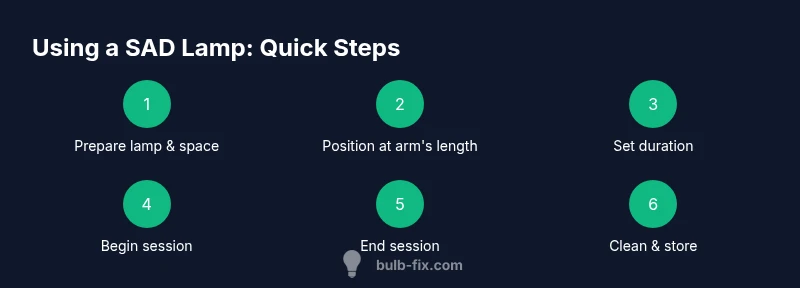
- 1
Prepare the lamp and environment
Unpack the lamp and place it on a stable surface in a bright area. Check that the diffuser is clean and free of dust. Ensure the room is well lit enough to reduce glare and eye strain during use.
Tip: Have a timer ready and verify the lamp is plugged into a grounded outlet. - 2
Position the lamp at arm's length
Set the lamp so the light reaches your face from a comfortable distance without forcing you to lean in. Tilt the lamp slightly downward toward your eyes or upper face to evenly distribute light.
Tip: Avoid looking directly into the bulb; soft gaze reduces eye fatigue. - 3
Turn on and set your session duration
Power on the lamp and select a conservative duration to start—commonly around 15-30 minutes. If the device has an auto-timer, enable it to end the session automatically.
Tip: Starting with a shorter session helps your body adapt without overstimulation. - 4
Begin the session and maintain posture
Sit comfortably with upright but relaxed posture. Keep your head level and allow light to your face while maintaining a soft gaze.
Tip: If you wear glasses, ensure glare is minimized by angle adjustments. - 5
Monitor response during the session
Notice mood, energy, and alertness. If you feel headaches or eye strain, shorten the duration or increase distance slightly for future sessions.
Tip: Keep a simple log of mood changes to identify patterns over weeks. - 6
End the session and rest your eyes
Power off the lamp and take a moment to rest. Avoid rapid exposure to other bright screens immediately after.
Tip: Hydrate and step into natural daylight if possible after your session. - 7
Clean and inspect the lamp
Wipe the diffuser with a soft cloth. Check cords for wear and ensure the unit remains stable.
Tip: Regular maintenance prevents degraded brightness over time. - 8
Record and adjust for consistency
Note how you feel over the next 2-4 weeks and adjust distance or duration as needed to maintain steady benefits.
Tip: Consistency matters more than intensity for mood regulation.
Got Questions?
What is a SAD lamp and who should use it?
A SAD lamp is a bright, UV-free light device designed to mimic daylight and help regulate mood and energy, particularly in winter months. It can benefit people with Seasonal Affective Disorder or persistent seasonal mood dips, but should be used as part of a broader wellness plan.
A SAD lamp is a bright, UV-free light device that helps regulate mood, especially in winter. It can be helpful for seasonal mood dips when used consistently.
How long should I use a SAD lamp each day?
Start with a brief session and increase gradually based on comfort and response. Typical guidance is to fit the duration into a morning routine, then adjust over several weeks to maintain benefits without overstimulation.
Begin with a short daily session in the morning and adjust over several weeks based on how you feel.
Are there risks or contraindications?
People with certain eye conditions, photosensitivity, or bipolar disorder should consult a clinician before starting. If you experience headaches, eye strain, or sleep disturbances, pause use and seek guidance.
Consult a clinician if you have eye conditions or bipolar disorder. Pause use if you experience headaches or sleep problems.
Should I stare at the lamp?
No. Do not stare directly into the light. Keep a soft gaze and position the lamp so the light reaches your face without forcing you to look straight at it.
Avoid staring into the light; keep a soft gaze and angle the lamp to illuminate your face.
Can I use a SAD lamp at night?
Night use is generally not recommended because light exposure close to bedtime can disrupt sleep. Use the lamp in the morning as part of a fixed routine.
Usually, you should avoid night use because it can affect sleep; morning sessions are preferred.
Watch Video
Key Points
- Choose UV-free, properly diffused light with clear controls
- Position the lamp at arm's length and avoid direct eye gaze
- Start with short daily sessions and increase gradually
- Maintain a consistent morning routine for best results
- Monitor mood and adjust setup as needed