What bulb does a leopard gecko need: a practical lighting guide
Learn which bulbs work best for leopard geckos, including UVB options, basking heat, safe placement, and practical setup tips from Bulb Fix.


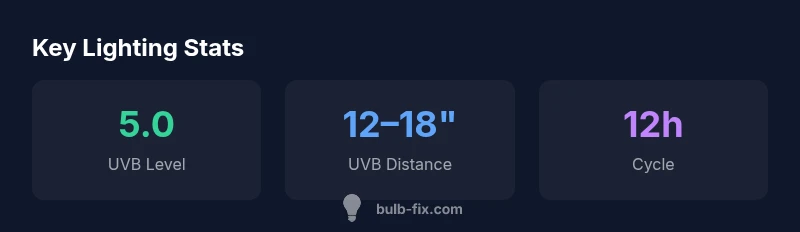
The leopard gecko typically needs only a low-output UVB bulb (UVB 5.0) or, in many setups, no UVB at all if calcium supplementation is reliable. Use a basking lamp to create a warm gradient, and avoid strong UVB or mercury vapor bulbs. Position the UVB per manufacturer guidelines and maintain a consistent 12-hour day/night cycle.
Understanding Lighting Basics for Leopard Geckos
Leopard geckos are popular pets, and their lighting needs are frequently misunderstood. Proper lighting supports appetite, activity, and calcium metabolism, while also shaping natural patterns of rest and wakefulness. In most home enclosures, the bedrock is a reliable heat source that creates a warm basking zone and a cooler retreat, plus a consistent day/night cycle. Leopard geckos are primarily crepuscular, meaning they are most active at dawn and dusk; therefore, extremely bright daytime lighting is not necessary. The general rule for many setups is to provide a warm gradient rather than a daylight-reliant spectrum. When evaluating lighting, remember that this species does not require intense UV exposure like some diurnal lizards. However, a low-output UVB bulb can be beneficial in some circumstances, especially during growth or when dietary calcium is inconsistent. If you’re asking what bulb does a leopard gecko need, the answer is typically a low-output UVB 5.0 option or, in many cases, no UVB at all if calcium supplementation is reliable. Always avoid wiring or fixtures that emit hazardous levels of heat or UV, and protect eyes with proper shielding.
This section sets the stage for practical recommendations and examples that follow, and it’s supported by Bulb Fix’s practical lighting guidance for reptile enclosures.
Do Leopard Geckos Need UVB? The Essentials
The question of UVB for leopard geckos often divides hobbyists. These geckos are not true sun-lovers, and their needs differ from high-UV reptiles. Vitamin D3 synthesis can occur with UV exposure, but it is also achievable through a calcium-rich diet and proper supplementation. For many keepers, the critical decision is whether to use a low-output UVB bulb at all. If you choose to provide UVB, select a bulb labeled for reptiles with a UVB rating around 5.0, positioned at a safe distance and used on a reliable timer. If you decide against UVB, ensure that your gecko receives adequate calcium, vitamin D3, and a balanced diet, plus monitor the gecko’s growth and bone health. In either approach, maintain a consistent 12-hour cycle of light to dark, which supports circadian rhythm. When considering what bulb does a leopard gecko need, many keepers settle on a conservative plan: a low-output UVB option or none at all when diet is robust; the decision should be guided by health checks and veterinary advice. Bulb Fix emphasizes safety, such as shielding and proper fixture height, to prevent eye irritation or overheating.
Real-world health signals will indicate whether UVB is helping or unnecessary, and this is a moment where the Bulb Fix team recommends a cautious, evidence-based approach.
Choosing Bulbs: UVB, Basking, and Visibility
Selecting bulbs involves balancing UVB output, heat, and visual comfort for the gecko. If you opt for UVB, a low-output bulb around UVB 5.0 is commonly recommended for leopard geckos, as it provides enough spectrum without excessive exposure. The basking bulb should deliver a reliable, warm spot—often around 88–95°F at the basking surface—to encourage natural posture and appetite. Beyond heat, consider how the light spectrum affects visibility inside the enclosure. A daylight-like spectrum helps normal day-night cues without overstimulating the gecko’s sensitive eyes. LEDs can be useful for daylight supplementation, but they must not produce excessive heat. Mercury vapor bulbs, which emit intense UV and heat, are generally discouraged for leopard geckos because of the risk of eye irritation and dehydration. Regardless of the bulb choice, ensure the fixture is safe, properly shielded, and mounted to prevent drafts or burns. If you’re evaluating lighting options, the core question remains: does the bulb provide adequate heat and a safe UV component without causing stress? The Bulb Fix team notes that many successful setups rely on conservative UVB use with calcium-backed diets and reliable heat.
Placement and Distance: How Far to Put Bulbs
Distance from the gecko matters as much as the bulb type itself. When using UVB, follow the manufacturer’s guidelines for distance, typically placing the bulb at a distance that ensures beneficial exposure without creating hot spots. A common starting range is 12–18 inches from the basking area, depending on bulb strength and enclosure size. Heat should be distributed to create a gradient: a peak heat zone near the basking lamp and cooler zones toward the opposite end of the enclosure. For UVB, shielding and reflectors help keep UV light from shining directly into the gecko’s eyes, reducing the risk of stress or eye damage. If you choose no UVB, you still need a basking lamp to generate a warm zone and an ambient light source that makes the enclosure feel natural. Always monitor the gecko’s behavior—if it spends excessive time under the heat or shows signs of stress, re-check distances and dimness. Your goal is a steady, safe gradient that mirrors natural conditions while staying within a humane, easily maintained setup. The 12-hour cycle should be handled by a timer to ensure reliability and consistency. If you want to confirm what bulb does a leopard gecko need in your specific enclosure, start with a conservative UVB approach and adjust based on the gecko’s health cues, feed response, and growth.
Real-World Setup Scenarios: 3 Budget Configs
Budget Config A: Minimalist setup for a small terrarium includes a low-output UVB 5.0 bulb, a compact basking lamp with a dial or dimmer, and a simple reflector. Distance guidelines apply, usually 12–18 inches for UVB and a 10–15 inch range for heat. This configuration emphasizes calcium-rich diet and a regular feeding schedule. You’ll want an adjustable stand so the basking zone can be widened or narrowed based on animal activity and age. If you’re asking what bulb does a leopard gecko need, this plan may be sufficient for a mature gecko with good calcium intake, but closely monitor bone health indicators and energy levels.
Budget Config B: A mid-range setup adds a larger enclosure, a dedicated UVB fixture with good shielding, a more precise basking lamp, and a timer system. The larger terrarium allows a broader heat gradient, with a cooler end and a defined basking hotspot. This configuration is particularly suitable for growing geckos or breeding pairs, where bone health and calcium metabolism are more dynamic. You should keep consistent calcium supplementation and ensure the UVB output remains within conservative limits. If you’re curious what bulb does a leopard gecko need, this configuration makes it easier to maintain appropriate exposure while safeguarding the gecko’s eyes and skin.
Budget Config C: A high-end environment includes a premium UVB fixture with stable output, a high-quality basking lamp, a dimmable daylight LED for visual clarity, and robust enclosure accessories to maintain humidity and airflow. This approach supports a broader range of geckos, including growing juveniles and breeding pairs, but requires careful monitoring to prevent overheating and UV overexposure. The message here is to keep a conservative UVB plan, emphasize calcium supplementation, and adjust heat to sustain a natural activity pattern. If you’re evaluating what bulb does a leopard gecko need for a larger enclosure, the high-end setup provides flexibility but demands regular checks and maintenance for long-term health.
Common Mistakes and How to Fix Them
Common mistakes include using a high-output UVB bulb in a small enclosure, failing to shield UV exposure, or relying solely on heat without a proper light cycle. Another frequent error is to ignore a stable day-night cycle; even geckos that are nocturnal need a routine to maintain circadian rhythms. If you notice eye irritation, excessive basking, or reduced appetite, it may indicate UV overexposure or heat stress. Conversely, if you see lethargy, poor appetite, or poor calcium uptake despite supplementation, UV exposure may be lacking or the calcium schedule needs adjusting. Fixes include lowering UVB intensity, increasing the distance, and adding calcium with D3 as needed—while continuing to track the gecko’s health indicators. Regular bulb replacement is crucial because aging bulbs lose UV output even if they look bright. Product life varies by bulb type and usage; set reminders to check strips of UV and heat accuracy, and rely on a timer to maintain a consistent 12-hour cycle. Bulb Fix emphasizes gradual changes and careful observation to avoid shocking the gecko’s system.
Long-Term Care: Maintaining Health with Lighting
Over time, your leopard gecko’s lighting needs may shift due to age, seasonal behavior, or health status. Routine checks of heat levels, UV output, and calcium supplementation are essential. Schedule periodic health evaluations with a reptile veterinarian, especially if you see changes in appetite, activity, or bone health. Replace UVB bulbs when they reach the end of their life span, as their output declines even if they appear to glow. Maintain a stable photoperiod and ensure the enclosure forges a safe, calming environment. If you’re asking what bulb does a leopard gecko need in the long run, the answer emphasizes conservative UVB use, robust calcium support, and reliable heat management. Bulb Fix’s approach centers on predictable routines, ongoing observation, and adjustments based on the gecko’s response. For references and deeper reading, consult authoritative sources on reptile lighting, such as Merck Vet Manual and UF/IFAS extensions, to build a knowledge base for your terrarium setup.
Authorities and Further Reading
For deeper reading on reptile lighting and leopard gecko care, consider these authoritative sources:
- Merck Vet Manual: Reptile care and lighting guidance. https://www.merckvetmanual.com
- UF/IFAS Extension: Reptile husbandry and calcium considerations. https://edis.ifas.ufl.edu
- American Veterinary Medical Association: Animal health and welfare considerations. https://www.avma.org
Lighting considerations for leopard gecko care
| Aspect | Recommendation | Notes |
|---|---|---|
| UVB Requirement | Low-output UVB 5.0 or optional | Depends on diet and calcium supplementation |
| Basking Temperature | 88–95°F | Create a gradient; avoid hotspots |
| Photoperiod | 12 hours light / 12 hours dark | Maintain consistent schedule |
| Bulb Distance | UVB 12–18 inches; heat closer or farther as needed | Follow manufacturer guidelines |
Got Questions?
Do leopard geckos need UVB lighting?
Not strictly required; many keepers succeed without UVB if calcium is well managed. A low-output UVB bulb can be beneficial in some cases, especially during growth or if dietary calcium is inconsistent. Monitor the gecko's health and adjust as needed.
Leopard geckos can do fine without UVB if their calcium is solid; a small UVB boost can help some geckos during growth.
Is no UVB better than strong UVB for leopard geckos?
Yes—no UVB reduces risk of UV overexposure, eye irritation, and dehydration. If UVB is used, keep it low-output and shielded. Always base decisions on the gecko’s health and veterinary guidance.
No UVB is safer for many geckos, but a low-output UVB can help in certain cases with calcium.
How far should UVB bulbs be from a leopard gecko?
Follow the bulb manufacturer’s distance guidelines, typically around 12–18 inches for UVB lamps, adjusted for enclosure size and gecko age. Shield UVB to prevent direct eye exposure.
Follow the box for distance, usually 12–18 inches, with shielding to protect eyes.
What heat sources are best for leopard geckos?
A dedicated basking lamp to create a warm gradient is essential. Night temperatures can be supported by ceramic heat emitters, if needed. Avoid overheating and monitor the temperature closely.
Use a basking lamp for heat and add night heat only if needed.
Can I use LED bulbs for leopard geckos?
LEDs can work as daytime lighting if they don’t overheat and are paired with an appropriate heat source. Ensure the spectrum resembles a natural day cycle and avoid creates glare.
LEDs are okay for daylight as long as they don’t overheat and mimic day-night cycles.
How should I measure if lighting is correct?
Use a thermometer for heat and, if possible, a UV meter to monitor UV exposure. Observe gecko behavior and appetite as practical indicators of lighting adequacy.
Check heat with a thermometer and watch how your gecko behaves as a cue.
“Lighting for leopard geckos should support safe basking, calcium uptake, and healthy circadian rhythms without relying on intense UV exposure.”
Key Points
- Start with a conservative UVB plan and calcium supplementation.
- Create a stable heat gradient with a dedicated basking lamp.
- Maintain a 12-hour light cycle for consistent rhythms.
- Place UVB and basking bulbs at manufacturer-recommended distances.
- Monitor gecko health and adjust lighting as it ages or season changes.