Bulb Base Sizes: Understanding Socket Compatibility
Learn how bulb base sizes affect compatibility, safety, and performance. This Bulb Fix guide covers common bases like E26/E27, B22, GU10, plus tips to identify, replace, and work with adapters for accurate, safe lighting.


Base size compatibility is the first hurdle in any lighting project. The base size defines the socket fit and the electrical characteristics you can safely use. In most homes, the three most common base types are E26/E27, B22, and GU10, with smaller miniatures like G4/G9 in specialty fixtures. Matching base size ensures safe operation and easy replacements.
What bulb base sizes mean for your fixtures
Bulb base sizes are more than a label on the bulb; they are a guarantee of fit, electrical safety, and performance. The base is the interface between bulb and fixture, so a mismatch can lead to poor contact, overheating, or even damage to the socket. When homeowners investigate bulb base sizes, they should start by listing the base types most commonly encountered in their home, then check the fixture’s socket markings. In practice, you will likely encounter E26/E27 (the standard in North America and many parts of the world), B22 (the bayonet base common in several regions), and GU-type bases (twist-lock for halogen and LED fixtures). By knowing these base sizes, you can quickly verify compatibility before purchasing new bulbs.
For the DIY homeowner, this knowledge is a practical bridge between a wishlist and a working light. When you see a bulb with a certain base size, you should immediately compare it to your fixture’s socket, look for the voltage rating on the label, and confirm that the bulb’s wattage falls within the fixture’s safe operating range. Overall, understanding bulb base sizes helps you avoid mismatches, reduces the need for returns, and keeps lighting projects on track.
Common base sizes you’ll see at home
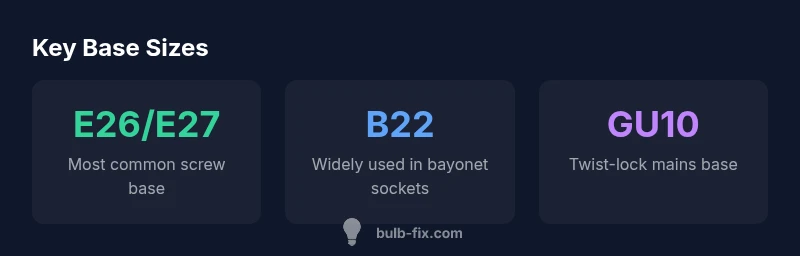
Most households are powered by a handful of base sizes that cover a wide range of lamps, ceiling fixtures, and lampshades. The most ubiquitous is the E26/E27 screw base, a versatile option used by many household bulbs and fixtures. The B22 bayonet base is widely used in Europe and parts of Asia, requiring a push-and-tull design rather than a screw-in approach. GU10 bases are common for accent lighting and spot lamps, featuring a twist-lock mechanism rather than a threaded base. There are also miniature bases like G4 and G9 used in desk lamps and decorative fixtures, with some variants operating at 12V or higher voltages depending on the circuit. When evaluating base sizes, keep in mind that the base type must align with the fixture’s socket shape, the bulb’s voltage, and the total load of the circuit.
The takeaway is simple: the base size is the primary determinant of compatibility. If you are unsure, check the fixture’s label or the bulb packaging, or bring a photo of the socket to a hardware store for expert guidance. This approach minimizes trial-and-error purchases and helps you build a reliable lighting setup.
How to identify base sizes on bulbs and fixtures
Identifying the base size is easier than it sounds if you use a systematic approach. First, inspect the bulb head for any labeling—most bulbs will indicate base type and voltage on the glass or metal base. If labeling isn’t visible, measure the base with a ruler or calipers: screw bases like E26/E27 have a roughly 26-27 mm diameter, while bayonet bases such as B22 rely on a vertical pin layout. For twist-lock bases like GU10, you’ll look for two short pins and a bi-pin design. If you’re unsure, remove the bulb with care, compare the base with a reference image, or take the bulb to a lighting shop for confirmation. Finally, verify the fixture’s socket size and voltage rating on the label inside the fixture or the user manual. A quick cross-check between socket and bulb is the best preventive measure against incompatibility.
Safety and performance implications of base size choices
Choosing the correct bulb base size protects both people and fixtures. An incompatible base can create a loose connection, leading to arcing, heat buildup, and potential socket damage. It can also void warranties or create compliance issues for certain lighting installations. Voltage compatibility is another critical factor: some bases are used for low-voltage products (such as G4 in 12V systems), while others are designed for mains voltage (like E26/E27 and B22). When pairing bulbs with dimmers or smart lighting systems, ensure that the base type works with the dimming mechanism and control protocol. In short, base size is a foundational safety and performance checkpoint, not a low-priority detail.
To reduce risk, always use bulbs with the same base size as the original fixture, or consult the manufacturer’s documentation before purchasing adapters or replacements.
Replacing bulbs: a practical size-check checklist
Use this quick size-check checklist before buying a replacement bulb: 1) Identify the base size on the existing bulb or fixture label. 2) Confirm the voltage range the fixture supports (120V or 230V, or a specific range). 3) Compare the base type with the socket shape to ensure a proper fit. 4) Check the wattage and LED compatibility. 5) If you must replace an older or unusual base, consult the fixture’s manual or the retailer’s compatibility chart. 6) After installing, test with a gentle switch to ensure a stable, flicker-free light. This routine minimizes waste and increases fixture reliability.
Adapters, dimmers, and vintage fixtures: base-size considerations
Adapters exist to convert between certain base types, but they are not universal. Before buying an adapter, verify that the adapter supports the bulb’s voltage and wattage, and note that some adapters may affect dimming performance. Vintage fixtures may use bases that are no longer common, requiring special order bulbs or custom solutions. Always prioritize matching the base size to the socket over forcing a fit with an adapter. If an adapter is the only option, choose a brand with good warranty coverage and documented compatibility with your fixture. For most homeowners, replacing the socket with a standard base type is a safer, longer-term solution.
Common mistakes and quick fixes when matching base sizes
Common mistakes include assuming a base size by looks alone, ignoring voltage ratings, or using mismatched wattage in LED replacements. A quick fix is to double-check the labeling on both the bulb and the fixture before purchase, and to carry a small base-size reference card when shopping. If you encounter a base that doesn’t match any standard type, contact the fixture’s manufacturer or hire a licensed electrician for an assessment. By adopting a disciplined approach to base sizes, you’ll avoid common frustrations and ensure safe, reliable illumination.
Organizing base-size information for future projects
Create a simple home reference kit that lists: fixture location, socket type, base size, voltage, and recommended bulb types. Keep it near your main electrical panel or a central storage area for quick access when remodeling or replacing fixtures. Use color-coded labels for quick identification (for example, red for mains voltage sockets, blue for low-voltage bases, and green for specialty bases). For more complex homes, consider photographing sockets and saving the documentation in a cloud folder that you can share with contractors or family members. A well-organized system makes future upgrades faster and reduces the risk of mismatches.
Quick-reference guide: glossary of base sizes
Below is a concise glossary to help you recall common base sizes and their socket types: - E26/E27: Medium screw base used in many residential fixtures (North America/intl). - B22: Bayonet base common in Europe/Asia. - GU10: Twist-lock mains base used for spotlights and some LED modules. - G4/G9: Miniature bi-pin bases used in decorative or low-Voltage fixtures. Remember, the exact base you need depends on socket shape, voltage, and fixture design.
Overview of common bulb base sizes and sockets
| Base Size | Common Socket Type | Voltage Range |
|---|---|---|
| E26/E27 | Medium screw base | 120V-277V |
| B22 | Bayonet base | 120V-277V |
| GU10 | Twist-lock mains | 120V-277V |
| G4 | Bi-pin low voltage | 12V |
Got Questions?
What are the most common bulb base sizes in households?
The most common are E26/E27 screws, B22 bayonet, and GU10 twist-lock bases. Smaller bases like G4 and G9 appear in specialty fixtures. Always verify socket type before purchasing a bulb.
Most homes use E26/E27, B22, and GU10 bases. Check your fixture label to confirm before buying.
How can I identify the base size on a bulb?
Look for labeling on the bulb or socket. If unclear, measure the base diameter and compare with standard sizes: screw bases around 26-27 mm, bayonet bases with rails, twist-lock bases with pins. When in doubt, bring the bulb to a store for comparison.
Check the labeling, or compare the base with standard reference sizes at a shop.
Can I use adapters to fit different base sizes?
Adapters exist for limited base-size conversions but may affect performance and warranty. Prefer matching the base to the socket or replacing the socket with a common base.
Adapters can work in some cases, but they’re not always ideal.
Do base sizes affect LED compatibility?
Yes. Base size determines whether the LED bulb can physically fit and whether the fixture’s electronics support the LED’s wattage and dimming. Always verify base type, voltage, and dimmer compatibility.
Base size affects fit and performance with LEDs, so check base, voltage, and dimming.
What should I do if the base size isn’t listed on the bulb?
Refer to the fixture label, compare to standard base sizes, or contact the manufacturer. If needed, take the bulb to a lighting shop for identification.
If the base isn’t listed, compare to standard sizes or seek expert help.
Are there safety concerns with replacing bulbs if the base size is wrong?
Yes. A mismatched base can cause overheating, arcing, or electrical damage. Always power off, verify socket type, and use bulbs with the correct base and voltage.
Mismatched bases can cause overheating or damage; always verify before installation.
“Choosing the right base size is the single most important factor for safe and reliable lighting. A correct match prevents overheating, flicker, and warranty issues.”
Key Points
- Match base size to socket to ensure safety
- Know the three most common bases: E26/E27, B22, GU10
- Check voltage and wattage before replacing bulbs
- Avoid adapters when possible; replace sockets for long-term safety
- Keep a quick reference of base sizes for future projects