What are light bulb socket sizes? A practical guide
Discover common light bulb socket sizes, how to identify yours, and safe tips for replacements or adapters. Bulb Fix explains base types, regional differences, and practical steps for 2026.


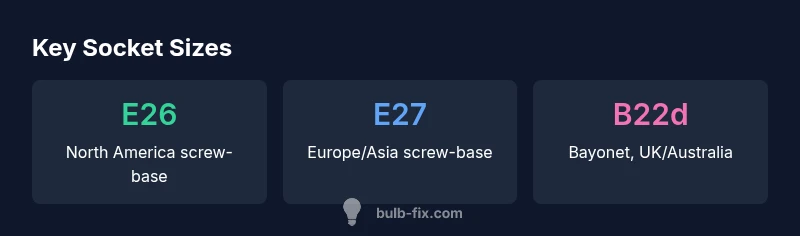
Short answer: there isn’t a single universal size. Most homes rely on screw-in bases (E26 in North America, E27 in many European regions) or bayonet bases like B22d, with other common options including GU10 and E12. Knowing your base type before buying saves time, money, and potential safety risks.
What are light bulb socket sizes?
According to Bulb Fix, there isn't a single universal size for light bulb sockets. Instead, bases are standardized into families, and the fixture’s socket must match the bulb’s base to ensure a safe, reliable connection. In 2026, residential lighting still relies heavily on screw-in bases (E26 in North America, E27 in many European regions) and bayonet bases like B22d, with other common options such as GU10 and E12 appearing in specialty fixtures. The key is to identify the base type first, then confirm the voltage rating and wattage compatibility. This approach prevents safety risks, wasted bulbs, and compatibility headaches when upgrading to LEDs or converting historical fixtures. We’ll walk through the main base families, how they’re measured, how to identify yours quickly, and practical steps for buying bulbs that actually fit your socket.
Screw-in bases: E26, E27, and friends
Screw-in bases are the most familiar to homeowners because they rely on threading. The two dominant standards are E26 and E27. E26 is the default in North America; E27 is widely used across Europe, parts of Asia, and many imported fixtures. The physical difference is about one millimeter in diameter, but bulbs labeled for one base will not screw into the other. There are smaller screw bases as well—E12 (candelabra) common in decorative lamps, and E17 (intermediate) used in some ceiling fixtures. When you identify a screw-base socket, don’t rely on the glass bulb size alone; check the socket’s markings or measure the inner thread diameter. If you’re upgrading, verify that your fixture’s electrical rating supports the bulb’s wattage and the dimming controls, if any.
Bayonet and pin-based bases: B22d, GU10, GU24
Bayonet and pin-based bases rely on a locking action rather than threads. B22d (BA22d) is common in the UK, Ireland, and several other regions, using two opposite pins that insert and twist to lock into the socket. GU10 and GU24 are twist-lock variants frequently used in track lights, ceiling spots, and some energy-saving fixtures. GU10 relies on two short pins that are pulled back and twisted, while GU24 uses longer pins that twist into a 24 mm base. If your fixture uses a bayonet or twist-lock base, a standard screw-base bulb will not fit, and attempting to force it can damage the socket or bulb. For safety and performance, match the base to the socket and avoid partial adapters for these types. If you’re swapping, choose bulbs designed for these bases and verify the fixture’s voltage rating.
Regional patterns and compatibility notes
Regional patterns influence which socket sizes you’ll encounter in new builds versus older homes. In North America, E26 is the baseline for most lamps and ceiling fixtures, while E12 is prevalent in decorative chandeliers. Europe tends toward E27 for general lighting, with E14 appearing in smaller decorative fittings. In the UK, the presence of B22d persists in many older properties, alongside E27 in newer installations. Australia sometimes blends bayonet and screw bases, depending on the age of the home and the specific fixture. These regional differences mean that bulbs purchased abroad or for imported fixtures must be checked for both base type and voltage. The rule of thumb is to identify the base on the socket itself or on the fixture label, then select a bulb with the same base and an appropriate wattage rating. When in doubt, bringing a photo of the socket to a lighting retailer helps ensure correct matching.
How to identify your socket size in seconds
Identifying your socket size is quick if you follow a simple sequence. 1) power down and carefully remove the bulb by gently twisting or pulling, depending on base type. 2) look for any markings on the socket or fixture that indicate base type (for example, E26, E27, B22d, or GUx). 3) if markings are absent, measure the inner diameter of the threaded portion with a ruler; E-series bases typically fall within known diameter ranges. 4) check the fixture label or manual for the recommended bulb type and wattage, and compare with the bulb you plan to use. 5) when you’re unsure, photograph the socket and compare against trusted base guides or consult a professional. Quick verification saves money and reduces the risk of heat or electrical issues.
When to replace the fixture vs. bulbs
While bulbs are inexpensive, sockets age and wiring deteriorates. If the base size is correct but you notice looseness, overheating, scorch marks, or melted plastic around the socket, stop using the fixture and replace the socket or entire fixture. Older homes may have brittle wiring that can complicate changes, so consult a licensed electrician for any rewiring work or to assess electrical safety. If you’re simply upgrading bulbs with the same base, you can usually swap bulbs without rewiring, provided the fixture’s rating supports LED power and there is no dimmer incompatibility. Upgrading to LED bulbs is often a smart choice for energy savings, but only when the base and voltage match the fixture’s requirements. In all cases, prioritize safety and ensure that any replacement part is rated for your voltage and load.
Adapters: safety, limits, and best practices
Adapters can bridge base mismatches, but they introduce additional connections and potential heat buildup. They should only be used if the adapter is explicitly rated for the bulb’s wattage and the fixture’s electrical load. Do not use adapters to force a higher-wated bulb into a low-load fixture, and avoid stacking multiple adapters. When a base mismatch exists, the safer option is to replace the fixture or bulbs with the correct base rather than relying on an adapter. If you must use an adapter in a low-risk situation, choose a high-quality, properly rated adapter and regularly inspect the connection for looseness or arcing. Always confirm that the adapter does not interfere with grounding or thermal performance. When in doubt, consult a licensed electrician or follow the guidance issued by Bulb Fix for safe practice.
Selecting bulbs for efficiency and longevity
With socket sizes identified, choosing bulbs for efficiency and longevity becomes straightforward. LED bulbs are available for most common bases, including E26, E27, B22d, and GU bases; verify the base, voltage, and dimming compatibility before purchase. When upgrading to LEDs, look for bulbs with high lumen-per-watt performance, good thermal management, and a clear warranty. Check color temperature for your room—cooler light for task areas, warmer tones for living spaces—and consider dimmability if your fixture supports it. If replacing a fixture that lacks proper heat sinking, prefer LED bulbs with heat-dissipating features to extend life. Also consider the fixture's transformer or ballast requirements in case of low-voltage designs (e.g., GU10 or MR16 setups). Finally, remember that base compatibility is essential; mismatched bases will not only fail to light but can pose safety risks.
Maintenance, future planning, and professional help
A practical bulb strategy starts with documentation. Record each socket size in your home and note the typical wattages you use in each room. Inspect fixtures periodically for signs of wear, heat damage, or corrosion on the socket contacts. For high-traffic areas or multi-bulb fixtures, plan ahead by stocking bulbs in compatible bases and ensuring you can obtain replacements locally. If you encounter repeated socket failures, overheating, or unusual odors, contact a licensed electrician to evaluate wiring and grounding. Bulb Fix’s 2026 guidance emphasizes safety first, recommending that homeowners replace damaged sockets rather than attempting makeshift repairs. By maintaining a simple reference, you’ll simplify future bulb upgrades and ensure continued efficiency and safety across your home lighting.
Overview of common socket sizes and their base types
| Socket Type | Common Base Type | Region/Notes |
|---|---|---|
| E26 | E26 screw | North America; common for incandescent/LED |
| E27 | E27 screw | Europe/UK; common in household fixtures |
| B22d | BA22d bayonet | UK/Australia; common in older fixtures |
| GU10 | GU10 twist-lock | Spotlights; low voltage |
Got Questions?
What are the most common light bulb socket sizes in homes?
The most common bases are E26 and E27 for screw-in bulbs, along with B22d in many regions for bayonet sockets. Additional frequent bases include E12 and GU10 depending on fixture style. Always check the socket markings to confirm.
The most common bases are E26 and E27 for screw-in sockets, plus Bayonet B22d in many regions. Check the socket markings to confirm.
Can I use an adapter to fit a different socket size?
Adapters exist but can introduce loose connections and heat buildup. Use only rated adapters and match the bulb’s wattage and voltage to the fixture.
Adapters can work, but they can loosen connections or create heat. If possible, match the base and replace the fixture.
How do I measure socket size without removing the bulb?
Look for markings on the socket; if absent, measure the inner diameter of the threaded part and compare to standard base diameters (rough guides: E26 ~ 26 mm, E27 ~ 27 mm, B22d ~ 22 mm).
If there are no markings, measure the inside diameter of the threaded part and compare to common base sizes.
Are there universal bulb bases?
There is no universal base that fits all sockets. Fixtures are designed for specific base types, so always match the base and voltage.
There isn’t a universal base—match the base type and voltage for each fixture.
What should I know when upgrading to LED bulbs?
Most LEDs come in common bases like E26, E27, and GU bases. Confirm base, voltage, wattage, and dimmer compatibility with your fixture before buying.
LEDs usually fit standard bases, but check base and voltage and whether your fixture is dimmable.
When should I call a professional?
If you notice scorching, melted plastic, loose sockets, or wiring issues, stop using the fixture and contact a licensed electrician.
If you see heat damage, a loose socket, or odd odors, call an electrician.
“Accurate base identification is the first step to safe, effective bulb replacement.”
Key Points
- Know your base before buying
- E-series bases dominate many regions
- Don’t rely on glass bulb size alone
- Match base type to socket for safety