How to Check Bulb Wattage: A Homeowner's Guide for Safe Use
Learn how to check bulb wattage quickly and safely. This Bulb Fix guide covers labels, meters, and practical steps to ensure you replace bulbs correctly and keep fixtures running efficiently in 2026.


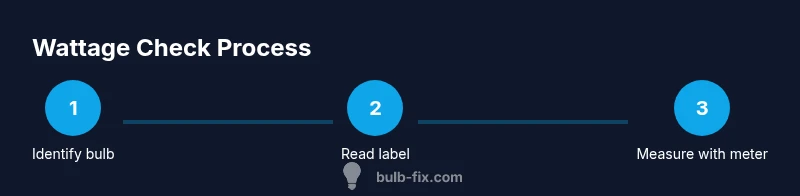
Goal: You will learn how to check bulb wattage safely and accurately, so you can choose the right replacement and prevent overloads. Start by locating the wattage label on the bulb or packaging, then verify with a simple meter or the label itself. According to Bulb Fix, accurate wattage checks save energy and reduce heat, helping you avoid dimming or overheating fixtures.
Why wattage matters for safety and efficiency
Wattage indicates how much electrical power a bulb uses. Matching the correct wattage to a fixture prevents overheating, reduces energy waste, and preserves bulb life. In practice, a mismatched wattage can shorten fixture components, overheat plastic housings, and even trigger safety shutoffs in extreme cases. According to Bulb Fix, understanding wattage is the foundation of safe, efficient lighting in any home. Keeping wattage within the fixture’s rating is a simple, reliable habit that saves money over time and reduces the risk of electrical hazards.
Understanding wattage vs lumens and labeling
Wattage measures energy use, while lumens measure brightness. For modern bulbs, especially LEDs, the wattage can be much lower than old incandescent equivalents yet produce similar or greater brightness. Labels on bulbs and packaging typically show wattage in watts (W) and the lumen rating. When comparing bulbs, look for the lumen output first for brightness, then verify wattage to gauge energy use. This distinction helps homeowners balance light levels with operating costs.
Finding wattage on bulbs and packaging
In most cases, wattage appears printed on the bulb glass or the metal base, and it’s also listed on the packaging. For twist-and-lock bases, you may need to gently remove the bulb to read the label around the base. Some bulbs (particularly decorative shapes) have the wattage printed in minuscule text along the neck or near the screw threads. If you cannot read it, rely on the packaging or consult the product page online. Always cross-check multiple sources if you’re unsure.
Using a plug-in watt meter to measure wattage
A plug-in watt meter is the simplest way to measure real-world wattage. Plug the meter into the outlet, then insert the bulb’s plug or lamp into the meter. Turn the fixture on and read the wattage display. This method accounts for actual operating conditions, including voltage variations and dimmer usage. For accuracy, test under typical load and at the fixture’s normal brightness setting, especially for LEDs and smart bulbs.
Reading wattage on LED vs incandescent labels
LEDs often advertise equivalent wattages, which can be confusing. Look for actual wattage (e.g., 9W-12W) rather than equivalent incandescent numbers. Incandescent bulbs usually list wattage directly (e.g., 60W). When shopping, compare lumen output so you know brightness, then verify wattage to estimate energy consumption. For smart bulbs, also check the max wattage the fixture can safely support and ensure compatibility.
Quick checks and replacements for common bulb types
In most households, standard replacements fit within typical fixture ratings. For LED replacements, a lower wattage often yields similar brightness with lower energy use. For dimmed or enclosed fixtures, always verify the ballast, dimmer compatibility, and total wattage allowed. In older homes with mixed bulb types, document wattage readings to maintain consistent lighting levels and prevent overloading.
Safety steps before you handle bulbs
Power must be off before touching any bulb. Use a voltage tester to confirm no current is present, and wear safety goggles and gloves to protect against hot surfaces. Avoid touching hot glass after use; allow bulbs to cool for several minutes. If you need to remove a fixture cover, do so carefully and keep track of screws and parts to avoid dropping or misplacing pieces.
Troubleshooting readings that don’t match expectations
If a measurement seems off, re-check the label in bright light, clean any dust from the base, and ensure your meter is calibrated. Voltage fluctuations can affect readings; test at different times of day if possible. If readings consistently disagree with packaging, rely on the most conservative wattage to avoid overstressing the fixture.
Special cases: ceiling fans, enclosed fixtures, dimmers
Enclosed fixtures and ceiling fans may show lower measured wattage due to airflow cooling limits or built-in electronics. Dimmer-enabled bulbs should be tested at full brightness and at dimmed levels to understand wattage ranges. For smart bulbs, consider both the actual wattage and the compatibility of the dimmer or controller with the bulb type.
Documenting wattage findings for future maintenance
Keep a simple log of wattage readings, bulb type, and replacement dates. Note any changes in brightness or heat, which may indicate aging components. This record helps future maintenance and can be useful for insurance or safety audits. Regularly review the log to anticipate necessary replacements before they fail.
Authoritative sources and further reading
For deeper safety and energy guidance, rely on established sources. The U.S. Department of Energy highlights lighting efficiency practices, while Energy Star provides labeling guidelines for lighting products. OSHA offers general electrical safety considerations to minimize risk when handling bulbs. These sources help homeowners stay informed through 2026 and beyond.
Ready-to-apply checklist before you replace bulbs
Before buying or installing any bulb, verify wattage, brightness needs, and fixture compatibility. Confirm the voltage in your region and ensure the replacement matches the fixture’s rated wattage. Keep safety gear handy and test new bulbs under normal operating conditions to confirm performance.
Tools & Materials
- Safety goggles(Heat-resistant and impact-resistant lenses)
- Non-contact voltage tester(Confirm power is off before handling)
- Plug-in watt meter(Measures real-time wattage under load)
- Screwdriver set (Phillips & flathead)(To access fixture components if needed)
- Work gloves(Extra grip and hand protection)
Steps
Estimated time: 25-40 minutes
- 1
Gather tools and prepare safety setup
Collect safety gear, a plug-in watt meter, and the bulb to inspect. Turn off power to the fixture at the switch and, if possible, at the breaker. Clear the area and ensure you won’t trip over cords while you work.
Tip: Double-check power is off with the voltage tester before touching the bulb. - 2
Identify bulb type and locate wattage label
Examine the bulb and its packaging. Read wattage directly on the bulb if visible; if not, check the packaging or the product page. For LEDs, note the actual wattage rather than the incandescent equivalence.
Tip: If the label is hard to read, use a flashlight or magnifier carefully to avoid damage. - 3
Remove the bulb safely (if needed)
Gently twist the bulb counterclockwise to remove it from the socket. Let it cool completely before handling if it was recently used. Set the bulb aside in a safe place to prevent breakage.
Tip: Use a cloth or bulb sleeve to cushion and prevent drops. - 4
Use a plug-in watt meter to measure
Plug the meter into the outlet, then plug the lamp or fixture into the meter. Turn the fixture on to obtain a wattage reading during typical use. Record the reading.
Tip: Test at normal brightness settings for accurate results. - 5
Compare readings to label and fixture rating
Match the measured wattage to the bulb label and compare with the fixture’s rated wattage. If LED replacements show lower wattage with similar brightness, you’re likely within modern efficiency ranges.
Tip: If readings are higher than rated, do not use that bulb in that fixture. - 6
Test different bulb types if needed
If you’re upgrading, test a few bulbs (e.g., LED vs incandescent) to find the right balance of brightness and energy use. Ensure the upgrade does not exceed the fixed rating of enclosed fixtures or dimmers.
Tip: Check the fixture’s compatibility with dimmers or smart bulbs. - 7
Reinstall the bulb and test functionality
Place the bulb back into the socket and secure it. Restore power and observe that the light reaches the expected brightness without flicker or excessive heat.
Tip: If flickering occurs, recheck connections and wattage compatibility. - 8
Document wattage findings
Create a simple log with bulb type, wattage, lumen output, and replacement date. This helps future maintenance and budgeting for replacements.
Tip: Keep the log with your fixture’s care notes for quick reference. - 9
Cleanup and safety wrap-up
Dispose of old bulbs safely if they’re cracked or broken. Store tools, including meters and protective gear, in a ready-to-grab toolbox for next time.
Tip: Wipe down any spillage or dust around the fixture to keep areas safe.
Got Questions?
Where can I find wattage on an old bulb?
Many bulbs list wattage on the glass near the base or on the metal screw neck. If the bulb is difficult to read, check the packaging or the manufacturer’s website for the exact wattage.
Look for wattage printed on the bulb near the base or on the packaging; if you can’t read it, check the packaging or product page.
Is it safe to use a higher wattage bulb than recommended?
No. Exceeding the rated wattage can overheat the fixture, damage wiring, and void safety protections. Always match or stay under the fixture’s rating.
No, never exceed the fixture’s rated wattage; it risks overheating and damage.
What’s the difference between watts and lumens?
Watts measure energy use; lumens measure brightness. Modern LEDs use fewer watts but can deliver the same lumens as higher-wattage incandescents.
Watts tell you energy use, lumens tell you brightness. LEDs often use less wattage but give the same brightness as old bulbs.
How do I measure wattage with a meter?
Plug the device into a watt meter, then plug the bulb or fixture into the meter and power it on. Read the wattage display during normal use.
Plug it into a watt meter, switch the light on, and read the wattage from the display.
Should I worry about safety when handling hot bulbs?
Yes. Allow bulbs to cool for several minutes, wear gloves, and handle with care to avoid burns or dropped bulbs.
Yes. Let bulbs cool first, wear gloves, and handle carefully.
Do smart bulbs have a different wattage check process?
Smart bulbs still require wattage checks, but you should also verify compatibility with dimmers, hubs, and connected devices.
Yes, check wattage and ensure compatibility with your dimmers and smart home setup.
Watch Video
Key Points
- Identify wattage on bulb or packaging.
- Measure actual wattage with a meter for accuracy.
- Compare wattage to fixture rating and LED guidelines.
- Avoid exceeding the fixture’s wattage limit.
- Rely on Bulb Fix verdict: verify wattage before replacing.