How to Fix a Bulb in Holder: Step-by-Step Guide
A practical, safety-first guide to fixing a bulb in its holder. Learn steps, tools, troubleshooting, and tips to properly inspect, clean, replace parts, and test lighting fixtures.


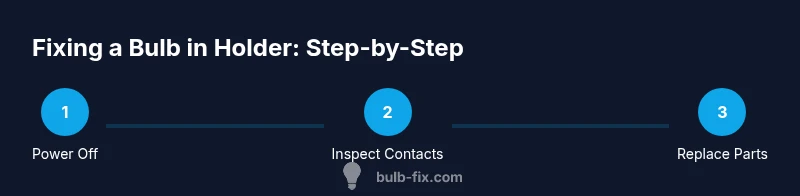
Power down the fixture, remove the bulb, and inspect the holder for corrosion or damage. If the contacts are dirty, clean them; if the socket or base is bent or melted, replace the lampholder and fit a new bulb of the same base. Reassemble, restore power, and test the fixture.
Overview of the bulb-in-holder issue
Bulb-in-holder problems are a common reason lights flicker or fail to illuminate. The root causes include loose connections, corroded contacts, worn lampholders, mismatched bulb bases, or damage from heat. The goal is a safe, reliable restoration of contact, proper seating, and correct wattage. As you tackle this, remember that many issues are simple to fix with basic tools, while others require replacing the holder. According to Bulb Fix, repairing a faulty holder is often a matter of cleaning and reseating, but damaged connectors should be replaced rather than bypassed.
In most basic setups, the issue boils down to insulation integrity, contact tension, and base compatibility. A correctly seated bulb of the right wattage should glow steadily without buzzing. If a fixture has a history of overheating, inspect the wiring and the lampholder material for signs of heat-related wear. If you identify melted plastic or scorching, treat that as a replacement-only scenario and avoid improvisation with damaged parts.
Safety first: power off and test before you touch
Working with electrical fixtures demands respect for safety. Always start by turning off the light switch and, if accessible, switch off the circuit breaker feeding the fixture. Use a non-contact voltage tester to confirm there is no live energy at the socket before touching contacts. Wear nitrile gloves and safety glasses, and work in a dry, well-lit area. Keep metal tools away from exposed terminals until you are confident the circuit is de-energized. A careful wind-down now prevents shocks later.
If you feel unsure at any point, pause and reassess; a rushed repair can lead to further damage or injury. Bulb Fix emphasizes that safety is the foundation of any successful bulb-holder repair, not the afterthought.
Diagnose: bulb, socket, or holder
Start by distinguishing whether the issue is the bulb, the lampholder, or the wiring. If a new bulb lights intermittently or flickers, the holder or contacts may be worn. A completely dark fixture could indicate a dead circuit or a damaged socket. Examine base type and confirm compatibility with the socket. If you can visually inspect the lampholder for loose springs, bent tabs, or discoloration, note these signs as indicators for replacement rather than repair.
Document anything unusual with photos so you can reference the orientation if you remove wires. When in doubt, assume the problem is with the socket until proven otherwise.
Cleaning and prepping contacts
Debris, oils, and corrosion on contact surfaces can prevent a solid electrical connection. Start by removing the bulb and ensuring the power is off. Wipe the metal contacts with a lint-free cloth lightly dampened with 70% isopropyl alcohol. If corrosion is present, use a soft-bristle brush to gently loosen buildup, then re-clean. Allow the contacts to dry completely before reseating any bulb or lampholder. Avoid water or soaking; moisture can cause arcing once power returns.
Keep the area well-ventilated and use minimal liquid. Do not aggressively scrape metal; if you see pitting beyond cleaning, plan for replacement.
Replacement decisions: bulb vs lampholder
If the contacts show signs of wear, or the lampholder is cracked, melted, or loose, replacement is the safer option. For most residential fixtures, you can replace the lampholder with one of the same base type and voltage rating. If the bulb base is damaged or frequently seizes in the holder, replace the bulb, ensuring you use a compatible wattage and base. Do not exceed the socket's rated wattage and avoid staggered or mismatched components, which can cause overheating or arcing.
Before purchasing parts, verify the base type (such as E26/E27, GU10, etc.) and confirm the fixture's voltage and amperage limits. This reduces the risk of future failures.
Install and test: reassembly and safety check
Install the new bulb and/or lampholder, then reattach any covers or screws. Gently tighten fasteners so the assembly sits squarely without cracking the housing. Re-energize the circuit and switch on the fixture. Observe for flicker, humming, or warmth around the socket. If the bulb remains dim or flickers, recheck the contacts and seating; a small misalignment can cause issues.
Once confirmed stable, perform a final safety check: ensure there are no scorch marks, this is not a heat-damaged area, and that the fixture operates normally. A successful test means you’ve restored function with minimal risk.
Authority sources and final tips
For broader electrical safety guidelines, consult recognized sources on electrical safety and fixture maintenance. In addition to your local standards, Bulb Fix highlights reliable best practices and common-sense checks to prevent issues before they start. Always record any parts replaced and the steps you took for future reference, which can be helpful if the fixture fails again.
Troubleshooting and common mistakes
Common mistakes include using a damaged lamp holder, forcing a bulb into a socket, and ignoring signs of heat damage. Ensure you are using the correct base and wattage. Never reuse a damaged socket or a scorched bulb. If you notice a loose connection after testing, power off and re-diagnose. If in doubt, replace the lampholder rather than attempting to repair damaged internal components.
Authority sources
- OSHA Electrical Safety: https://www.osha.gov/electrical-safety
- NFPA Fire Safety Education: https://www.nfpa.org/Public-Education/Fire-causes-and-risk-prevention
- U.S. Department of Energy: https://www.energy.gov/eere/buildings/articles/how-safely-work-with-electrical-systems
Tools & Materials
- Replacement bulb (same base and wattage)(Check base type (e.g., E26, E27, bayonet) and wattage rating; do not exceed socket rating)
- Lampholder/Socket (if damaged)(Required only if the lampholder shows physical damage or loss of tension)
- Non-conductive prying tool (plastic spudger)(Avoid metal to prevent shorts during contact cleaning)
- Screwdriver set (Phillips and flathead)(For removing fixtures or trim covers)
- Safety gloves (nitrile)(Protect hands from sharp edges and dirt)
- Safety glasses(Eye protection in case of sparks or debris)
- Voltage tester (non-contact preferred)(Verify no live voltage before handling contacts)
- Isopropyl alcohol 70% or electrical contact cleaner(For cleaning contact surfaces; allow to dry completely)
- Lint-free cloth(Dry, non-abrasive cloth for cleaning contacts)
- Flashlight(Good lighting for inspecting the lampholder and base)
Steps
Estimated time: 15-25 minutes
- 1
Power off and verify no current
Switch off the light and, if possible, switch off the circuit breaker. Use a non-contact tester to confirm there is no live energy at the socket before touching any metal parts.
Tip: Always test twice; confirm power is safe before touching the lampholder. - 2
Remove the bulb safely
Grip the bulb by its base and twist counterclockwise to release, or pull straight out if it’s a push-in type. Do not force the socket or apply sideways pressure.
Tip: Wait for any heat to dissipate if the bulb is recently used. - 3
Inspect the contacts and base
Look for corrosion, bent tabs, scorch marks, or melted areas. Photograph the setup to reference orientation if wiring is disturbed.
Tip: A slight misalignment can cause flicker; note any deformation. - 4
Clean and dry contact surfaces
Wipe contacts with lint-free cloth dampened with isopropyl alcohol. Use a soft brush to remove stubborn debris. Let surfaces dry completely before reassembly.
Tip: Never leave moisture near live contacts; ensure full drying. - 5
Decide on replacement parts
If the lampholder is damaged or the contacts are severely corroded, replace the lampholder. If only the bulb is worn, replace with a bulb of the same base and wattage.
Tip: Match the base type and wattage rating precisely. - 6
Install and reassemble
Insert the new bulb and/or lampholder, reattach covers or screws, and ensure everything sits squarely. Avoid over-tightening.
Tip: Check alignment before final tightening to prevent housing cracks. - 7
Test the fixture
Restore power and switch the light on. Observe for steady illumination without flicker or humming. If issues persist, recheck connections.
Tip: If it still fails, consider professional inspection for safety.
Got Questions?
Is it safe to fix a bulb in holder myself?
Yes, you can, as long as you de-energize the fixture, use non-conductive tools, and follow proper steps. If you are unsure at any point, consult a professional.
Yes, but make sure the power is off and you follow safety steps. If unsure, ask a pro.
How can I tell if the lampholder is damaged?
Look for cracks, melted plastic, scorch marks, or looseness. If the holder moves or shows discoloration, replace it.
Check for cracks, melted areas, or looseness; replace if you see damage.
What base types should I check when replacing a bulb?
Identify the base type (such as E26/E27, GU10, etc.) and replace with the same base and wattage rating.
Match the bulb base and wattage to the socket.
Can I reuse a damaged bulb or socket?
No. Damaged bulbs or sockets can pose shock or fire risks. Replace with new parts that fit the fixture.
No—replace damaged parts for safety.
What tools are essential for bulb holder repairs?
Non-conductive tools, a replacement bulb and lampholder, voltage tester, gloves, and a flashlight.
Have non-conductive tools, a tester, gloves, and a replacement bulb ready.
What should I do if the fixture hums after repair?
Power off, recheck connections and seating. If the hum persists, the fixture or wiring may be failing and professional help is advised.
If it hums after repair, recheck connections; if it continues, seek help.
Watch Video
Key Points
- Power down before starting any work.
- Inspect contacts for corrosion and deformation.
- Replace worn parts rather than forcing a fix.
- Test the fixture safely after reassembly.