How to Use a Bulb Syringe Ear Safely
Learn a safe, step-by-step method to use a bulb syringe for ear care. This guide covers preparation, technique, warnings, and aftercare to help you manage earwax safely at home. Bulb Fix provides practical, safe guidance.


With the bulb syringe, you can gently flush soft earwax from the outer ear canal. This guide shows safe preparation, a gentle irrigation technique, and when to stop. Important: Do not insert the tip deep into the ear, avoid if you have a perforated eardrum, ear infection, or tubes, and stop if you experience pain.
What a bulb syringe ear is and when to use it
A bulb syringe ear is a small, squeezable bulb with a soft tip designed to gently flush the outer ear canal to remove soft earwax buildup. It should only address material near the ear opening, not deep in the canal or near the eardrum. Use this method only when recommended by a clinician or when ear wax is causing mild discomfort and there is no infection or perforation. Before starting, verify there is no history of a perforated eardrum, tube in the ear, or ongoing ear infection. Prepare a clean device, warm saline or clean water, and a dry towel to catch drips. The goal is to create a gentle, controlled flow that loosens debris without injuring the delicate ear skin. Avoid using the syringe if there is swelling or pain that suggests a possible infection, and never reuse a damaged or cracked bulb.
Safety prerequisites before you begin
Ear health varies by person; never use a bulb syringe if you have ear pain, drainage, fever, or a known ear condition. Do not use if you have tubes, a ruptured eardrum, or signs of an active infection. If you recently had ear surgery or have a compromised immune system, consult a clinician first. Keep the environment calm, ensure clean hands, and inspect the syringe for cracks or worn tips. If at any point you feel dizziness, increased pain, or hearing changes, stop immediately and seek medical advice. This is not a substitute for professional cleaning in cases of stubborn wax or suspected infection.
Preparing the tool and your space
Rinse the bulb syringe with warm water and a mild soap, then rinse again. Fill the syringe with warm water or sterile saline to a small, comfortable amount. Lay a towel on the surface and tilt the head to minimize mess. Have a bowl or sink ready to catch the runoff. Dry your hands thoroughly and have a clean cloth ready to gently pat the outer ear after flushing. Test the pressure by lightly squeezing the bulb over a tissue before using it near the ear. The aim is a gentle, not jet-like, flow. Keep liquids at body temperature to avoid dizziness or discomfort.
What to expect and what not to do
During use, you should feel only a gentle pressure as the solution flows into the outer ear and out. Never insert the tip into the ear canal or push wax deeper; if resistance is felt, stop. Do not reuse a damaged bulb. If you notice sudden pain, hearing loss, or discharge, stop and seek care. After flushing, dry the outer ear with a clean towel and lie on the side for a minute if needed to let moisture escape. If wax remains blocked or there is persistent discomfort after several attempts, consult a clinician. Remember, patience matters—rushing can injure the canal.
Authority sources
- MedlinePlus: Earwax cleaning and home care guidance: https://medlineplus.gov/ency/patientinstructions/000049.htm
- NHS: Ear wax information and home care tips: https://www.nhs.uk/conditions/ear-wax/
- Mayo Clinic: Earwax symptoms and causes (general guidance): https://www.mayoclinic.org/diseases-conditions/earwax/symptoms-causes/syc-20342462
Tools & Materials
- Bulb syringe(Tip must be intact, free from cracks, and clean before use.)
- Warm water or saline solution(Body-temperature water (~37°C/98.6°F) to reduce discomfort.)
- Towel or protective mat(Place under head to catch drips and keep area clean.)
- Cotton balls or soft cloth(Use to gently dry the outer ear after flushing.)
- Optional clinician-approved ear drops(Only if advised by a healthcare professional.)
Steps
Estimated time: 10-15 minutes
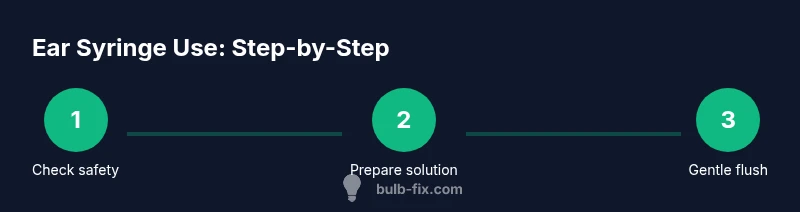
- 1
Check contraindications
Review any ear symptoms, infection, tube presence, or a history of perforated eardrums. If any apply, do not proceed until you’ve consulted a clinician.
Tip: If unsure, pause and seek medical guidance before attempting at home. - 2
Prepare the solution and device
Wash your hands, inspect the bulb for cracks, and fill with warm water or saline to a small, comfortable amount. Do not overfill; you want a gentle squeeze, not a spray.
Tip: Test squeeze on a tissue first to ensure a gentle flow. - 3
Position the head
Tilt the head to the side with the ear you’re cleaning facing upward. Gently pull the outer ear upward and backward to straighten the canal.
Tip: Keep the motion slow; sudden movements can cause discomfort. - 4
Flush gently
Place the bulb near the outer ear opening and slowly squeeze to release a light stream toward the entrance of the ear. Do not aim deep into the ear canal.
Tip: If you feel resistance, stop and avoid forcing fluid. - 5
Drain and assess
Let the liquid drain, then pat the outer ear with a clean cloth. Inspect for remaining wax near the opening, and repeat only once if needed.
Tip: Avoid repeated flushing in one session to reduce irritation. - 6
Dry and monitor
Dry the area and observe for signs of dizziness, redness, or ongoing discomfort. If symptoms persist more than a day, contact a clinician.
Tip: Keep ear dry for 24 hours after flushing and avoid swimming.
Got Questions?
Can a bulb syringe be used on adults?
Yes, adults can use a bulb syringe for outer-ear cleansing when there are no contraindications. Proceed with caution and avoid deep insertion. If you have a history of ear problems, consult a clinician first.
Adults can use it cautiously, but avoid deep insertion and seek medical advice if you have ear problems.
Is it safe for children?
Child use should be supervised and guided by a clinician. Avoid use if the child has ear pain, fever, or drainage; mild wax removal should be done under medical advice.
Only with clinician guidance and close supervision for kids.
What temperature should the water be?
Use body-temperature water (about 37°C/98.6°F). Water that's too hot or too cold can cause dizziness or discomfort.
Use warm, body-temperature water to keep the ear comfortable.
What if water remains in the ear after flushing?
Tilt the head to drain, gently dry the outer ear, and avoid repeated flushing for the same session. If discomfort continues, seek medical advice.
Tilt the head to drain and dry the ear; see a clinician if it doesn’t improve.
When should I avoid using a bulb syringe altogether?
If you have a perforated eardrum, active infection, tubes in the ear, or severe pain, avoid flushing and consult a clinician.
Avoid use if there’s a known ear perforation or active infection.
Are there safer alternatives to bulb syringes?
A clinician may recommend ear drops, irrigation performed by a professional, or other wax-softening methods. Do not rely on home remedies without professional guidance.
There are safer options when in doubt; get professional advice.
Key Points
- Check safety first before attempting
- Use warm saline and gentle pressure
- Avoid deep insertion and overuse
- Dry outer ear after flushing
- Consult a clinician if symptoms persist