What to Do When Onions Start to Bulb: A Practical Guide
Learn how to identify onion bolting, salvage edible bulbs or seeds, and prevent bolting next season with practical steps and expert tips from Bulb Fix.


This guide shows you how to spot onion bolting, decide whether to harvest, salvage seeds, or replant for a fall crop, and implement prevention strategies. You’ll need basic garden tools, clean storage space, and a plan to choose bolt-resistant varieties for next season.
What bolting looks like for onions
Bolting occurs when an onion plant prematurely switches from forming a bulb to producing a long flowering stalk (a seed stalk). This change typically starts with a tall, thin stem emerging from the center of the bulb, followed by small blossoms along the stalk. The bulb itself often becomes woody or splits rather than swelling into a flavorful storage onion. Recognizing bolting early helps you decide whether to harvest immediately, salvage seeds, or adjust your nearby planting plan. According to Bulb Fix, bolting is more common in warm soils and long daylight conditions, which trigger the plant to prioritize reproductive growth. This knowledge helps gardeners plan for next season and reduce waste.
Why onions bolt: main causes and timing
Onions bolt in response to environmental cues, not just age. Key factors include extended day length (photo period), soil temperature, and nutrient balance. Planting onions in overly warm soils, especially in late spring, increases bolting risk. Planting time, variety selection, and crowding also influence bolting likelihood. Bulb Fix analysis shows that regions with hot afternoons and cool nights tend to see higher bolt rates, especially with long-season varieties. To minimize bolting, choose early-molting or bolt-resistant varieties, stagger planting dates, and ensure consistent moisture without waterlogging. Understanding these causes helps you tailor your garden plan and reduce wasted crops.
How to identify bolting signs early in the season
Early bolting signs include a rapid vertical growth spike before bulb formation, pale or thin leaves, and a sudden shift in growth rate. If you notice a central stalk developing in several onions, you’re likely witnessing bolting. Keep a garden log noting variety, planting date, and weather patterns to identify patterns over seasons. Early detection lets you decide whether to leave the plant for seed production, harvest immature bulbs, or remove the bolt if you’re aiming for storage onions this season.
]] ,
Tools & Materials
- Garden gloves(Protection from sharp stalks and soil; flexible fit for precision work.)
- Pruning shears or sharp scissors(Clean blades; used to trim flower stalks and harvest bulbs.)
- Sharp knife or hori-hori knife(For clean cuts and bulb extraction; ensure sterilization between plants.)
- Labels and markers(Track varieties, planting dates, and bolt status for each bed.)
- Notebook or garden journal(Record observations, dates, and results for future seasons.)
- Storage containers or mesh bags(Drying and storing salvaged bulbs or seeds.)
Steps
Estimated time: 60-90 minutes
- 1
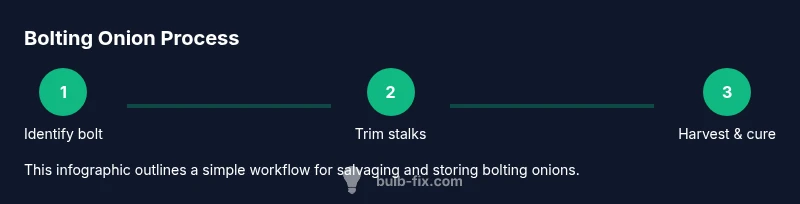
Inspect plants for bolting indicators
Walk your onion patch and look for tall, flowering stalks or early seed formation. Check a sample of 5–10 plants to confirm a trend rather than a single anomaly. Document dates and weather conditions. Pro tip: tag affected beds so you can monitor seed production and adjust harvesting strategies.
Tip: Early detection reduces loss; don’t wait for all plants to bolt before taking action. - 2
Decide whether to harvest now or manage bolts
If bulbs are still developing, you can harvest immature bulbs to use fresh, or cut bolts to slow seed production. If the bulbs are tough or woody, remove the bolt and allow remaining plants to mature, then dry and store what’s left. Seed-saving options exist if you want to propagate bolting plants for breeding or future crops.
Tip: Harvesting immature bulbs yields edible greens and reduces waste. - 3
Remove or trim the bolt stalks
Carefully cut the flowering stalks as close to the bulb as possible without damaging the leaves you’ll still use. Repeat on all affected plants. Removing stalks slows energy drain into seed production and can help the bulbs finish maturing.
Tip: Use clean blades to minimize disease risk and avoid spreading pathogens. - 4
Harvest timing and bulb handling
If bulbs show good size and you plan to store them, harvest on a dry day when the tops have fallen. Lift bulbs with a gentle tug to avoid skin damage, then cure in a warm, airy location for 2–3 weeks before storage in a cool, dry space.
Tip: Curing is essential for long-term storage; never store damp bulbs. - 5
Salvage seeds if you want to save for next season
Bolt-stem flowers can produce seed pods. Allow them to mature fully if you want to collect seeds for future planting, then dry seeds thoroughly before storage. Label seeds with variety and year.
Tip: Seed saving can help diversify future plantings and improve resilience. - 6
Replanting strategy after a bolt event
Consider planting a fall crop or selecting bolt-resistant varieties for the next season. Adjust spacing to reduce crowding, which can stress plants and trigger bolting. Mulch to regulate soil moisture and temperature.
Tip: Controlled spacing reduces competition and bolting tendency. - 7
Assess soil and moisture management
Ensure soil remains evenly moist but not waterlogged. Inconsistent moisture triggers stress and can promote bolting. Add organic matter and a balanced fertilizer schedule to support bulb development.
Tip: Mulching helps maintain consistent soil moisture and temperature. - 8
Document outcomes and plan for next season
Record which strategies worked, which varieties performed best, and how weather affected bolting. Use this data to refine sowing dates, variety selection, and soil management for future onion beds.
Tip: A clear plan reduces repeated bolting in subsequent seasons.
Got Questions?
What causes my onions to bolt, and can I prevent it this season?
Bolting is triggered by long day lengths, warm soils, and crowding. You can reduce the risk by choosing bolt-resistant varieties, planting at optimal times for your region, and keeping soil evenly moist without sogginess. Some bolting may still occur in hot years, but proactive management lowers the chances.
Bolting happens when days get long and soil conditions push the plant to flower. Pick bolt-resistant varieties and stagger plantings to reduce risk.
Should I harvest bolting onions for immediate use or wait?
If bulbs are still maturing, you can harvest green tops or immature bulbs for immediate use. If bulbs have formed well, harvest and cure as soon as possible to maximize storage life. Avoid long delays, as shelflife drops when bulbs are stressed.
Harvest when bulbs look solid; cured bulbs store longer.
Can I save seeds from bolting onions for next season?
Yes, you can save seeds from bolting stalks. Allow the flower stalk to fully mature and dry, then collect the seeds in a labeled container. Store in a cool, dry place for planting next season.
You can save seeds from bolting onions, just be sure they dry fully.
Will I get a decent onion harvest after bolting?
Often bolting signals a lower-yielding bulb crop, but you can still recover greens, seeds, or select bulbs for immediate use. In many cases, planting a new batch later in the season yields a better harvest.
Bolting can reduce bulb yield, but you can still use greens and seeds or replant.
How can I prevent bolting in the next season?
Use bolt-resistant varieties, plant at the right time for your climate, ensure even moisture, and avoid overcrowding. Rotate beds and mulch to regulate soil temperature and moisture.
Plant bolt-resistant varieties and keep soil condition steady to prevent bolting.
Are there varieties more prone to bolting in warm climates?
Some long-day varieties are more prone to bolting in warm climates. Talk to local extension services or seed suppliers about bolt-resistant or short-day options suited to your region.
Some varieties bolt more in warm climates; seek regional recommendations.
Watch Video
Key Points
- Identify bolting early to guide actions
- Remove bolts to save immature bulbs or allow seed saving
- Harvest and cure properly for storage and flavor
- Plan future plantings with bolt-resistant varieties and proper spacing