Why Bulb Fuse Fails: A Homeowners Troubleshooting Guide
Learn why bulb fuse trips occur and how to safely diagnose and fix common faults at home. Bulb Fix provides practical, safe guidance for homeowners and DIY enthusiasts.


Most bulb fuse problems come from a blown fuse or circuit overload. Start by checking the main fuse or circuit breaker, then inspect the light fixture wiring and replace with a bulb of the correct wattage. If the fuse trips again, avoid further resets and contact a licensed electrician for safety.
Understanding why bulb fuse failures happen
Why bulb fuse failures happen is often tied to safety mechanisms rather than a faulty bulb alone. According to Bulb Fix, people frequently search for the phrase "why bulb fuse" when a fuse trips or a breaker flips after turning on lighting. In practical terms, a fuse or breaker is acting to prevent overheating and potential fire; this means the issue is rooted in protection devices, loads, or wiring rather than a single bulb. This section explains the core ideas behind fuse protection, common symptoms, and how a homeowner can approach safe, initial checks without rushing to replace components. By clarifying how circuits are wired, you’ll know where to look first and how to document what you find for a professional.
The core takeaway is not to blame the bulb alone. Even a healthy lamp can trip a circuit if the surrounding wiring or panel protection has a fault. As you work through this guide, remember that safety is the top priority. Before touching any fixtures, switch off power at the appropriate switch or the main panel. If you feel unsure at any point, pause and seek professional help. Bulb Fix emphasizes that a methodical approach reduces risk and leads to faster, safer resolution.
Common causes you can check first
There are several root causes behind a bulb fuse trip, and most homeowners can identify these with a calm, systematic check. The most common cause is a blown fuse or a tripped circuit breaker that protects the entire lighting circuit. On the panel, a blown fuse or a flipped breaker is often visible and audible as a pop or click when the fault occurs. Other frequent culprits include an overloaded circuit (too many devices sharing the same line), a short in the fixture wiring, or loose connections at the socket. In residential rooms, an oversized bulb (higher wattage than the fixture is rated for) can push the circuit past its limit and trigger a trip. Bulb Fix analysis shows that overload and wiring faults are leading causes in many homes. If you’ve recently added appliances or lamps to the same circuit, consider relocating one or more loads to a different circuit to test if the problem resolves.
How to verify the fuse and wiring safely
Safety comes first. Begin with the simplest checks and work toward more detailed inspections only if the basic steps don’t resolve the issue. Start by turning off power at the main breaker before removing any fixture covers. Use a non-contact voltage tester to confirm the circuit is dead before you touch wires. Inspect the fixture’s socket for corrosion, burn marks, or melted insulation, and replace the socket if you see damage. Swap in a known-good bulb (same base and wattage rating) to rule out a faulty bulb. If the breaker or fuse still trips after a single bulb test, look at the line side connections in the fixture, outlet box, and switch, ensuring all conductors are firmly connected and not damaged. Keep a log of observed conditions to share with a data sheet for a professional review.
Step-by-step diagnostic flow you can follow
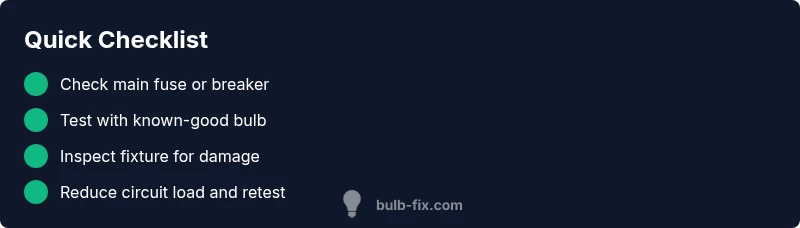
- Watch for symptoms: does the breaker trip immediately, or only when a specific light is used? 2) Check the main power: reset the breaker and replace any blown fuses. 3) Test with a known-good bulb in a safe, accessible fixture. 4) Isolate loads: unplug other devices on the same circuit and retest the light. 5) Inspect fixture wiring: look for scorch marks, frayed insulation, or loose screws. 6) Decide next steps: if trips persist, plan a professional inspection. This flow helps you determine whether the issue is a simple overload or a more serious wiring fault. 7) Document findings: take photos of the panel, outlet boxes, and damaged components to share with an electrician.
Safety reminders and when to call a professional
Electrical work carries risk, and a fuse trip can indicate a problem that could cause a fire if mishandled. If you notice a burning smell, melted insulation, scorch marks, buzzing sounds, or if the panel feels warm to the touch, stop immediately and call a licensed electrician. Do not attempt to bypass safety devices or repeatedly reset a tripped breaker; repeated resets can cause wiring damage and serious fire risk. When in doubt, scheduling a professional inspection is the safest course. Bulb Fix recommends erring on the side of caution and using a qualified electrician for complex faults or if the residence is older and uses outdated wiring.
Following a careful diagnostic process now helps prevent future fuse trips and keeps your home safer.
Prevention tips to keep bulbs and circuits reliable
Prevention starts with smart planning and wiring checks. Use bulbs that match the fixture’s rating, and avoid adding multiple high-wattage lamps on a single circuit. Regularly inspect sockets for corrosion and replace any damaged fixtures promptly. Install arc fault or residual current devices where appropriate, and keep a clean, well-labeled electrical panel so you know exactly which circuits control which rooms. Finally, maintain a simple maintenance schedule: yearly checks of connections, a quick panel test, and a shared log of any sparking or unusual behavior. This proactive approach reduces the chance of unexpected fuse trips and prolongs the life of lighting circuits.
Steps
Estimated time: 30-60 minutes
- 1
Power down and prepare
Shut off power at the main panel and confirm that the area is safe to inspect. Gather a flashlight, non-contact tester, and a replacement bulb that matches the fixture rating.
Tip: Always assume wires are live until proven otherwise with testing tools. - 2
Check the main fuse and breaker
Inspect the main fuse or circuit breaker for signs of a trip or a blown fuse. Reset the breaker once and replace a blown fuse if present. Restore power briefly to observe whether it trips again.
Tip: Replace only with the same amperage rating; do not oversize the fuse. - 3
Test with a known-good bulb
Insert a bulb that you know works into the fixture; observe whether the circuit still trips. If the new bulb operates normally, the issue may be a faulty bulb or socket.
Tip: Use a bulb with the correct base and wattage rating to avoid overload. - 4
Isolate circuit loads
Unplug or switch off other devices on the same circuit to see if the trip is load-related. Reconnect devices one by one to identify a potential overload.
Tip: Keep a simple log of what was connected when the trip occurred. - 5
Inspect fixture and wiring
Look for signs of damage: melted insulation, scorch marks, or frayed wires. Tighten loose connections in the socket and switch; replace damaged parts.
Tip: If you see damage, do not reuse the fixture; replace it or call a pro. - 6
Decide on next steps
If the circuit trips again after tests, stop and contact a licensed electrician. For persistent issues, professional evaluation is the safest choice.
Tip: Document your findings with photos to help the electrician diagnose faster.
Diagnosis: Main lighting circuit trips when turning on lights.
Possible Causes
- highBlown fuse or tripped circuit breaker
- mediumOverloaded circuit due to multiple devices on the same line
- lowFaulty fixture wiring or damaged cord
Fixes
- easyReset the breaker or replace the blown fuse and observe
- easyUnplug other devices on the same circuit and test with a single light
- mediumInspect fixture wiring and replace damaged components
- mediumSchedule professional electrical inspection if trips persist
Got Questions?
What is a bulb fuse and how does it relate to lighting circuits?
A bulb fuse is part of the circuit protection that safeguards wiring and devices. It trips or blows to prevent overheating when something draws excess current or when a fault is detected. Understanding its role helps you diagnose whether the issue lies with the protection device, the fixture, or the circuit load.
A bulb fuse protects the wiring by tripping if something draws too much current. If it trips, check the protection device, fixture, and circuit load.
Why does a fuse trip when I turn on a light?
Trips occur when the circuit detects overload, a short, or a faulty fixture. It’s a safety mechanism to prevent overheating and fire. Start with the main breaker, then test the light with a known-good bulb to isolate the issue.
A trip happens when the circuit overloads or detects a short. Reset the breaker and test with a good bulb to isolate the problem.
Can a burnt smell come from a bulb fuse?
Yes, a burnt smell can indicate overheated wiring or a damaged component in the fixture. If you smell burning, turn off power at the panel and consult a professional to avoid fire hazards.
A burnt smell usually means overheated wiring or a damaged part. Turn off power and call a professional.
Is it safe to reset a breaker after a trip?
Resetting a breaker after a trip is acceptable if you’ve confirmed there’s no ongoing overload or hazard. If the breaker trips again, stop and seek professional help. Do not override the protection device.
You can reset once when you’ve checked for overload, but don’t reset repeatedly if it trips again.
When should I call a professional for bulb fuse issues?
Call a licensed electrician if trips persist after basic checks, you notice heat, scorch marks, or if the panel is aging. Professional inspection ensures safe wiring and code-compliant fixes.
If trips keep happening or you see heat or scorch marks, call a licensed electrician.
Can upgrading to LED bulbs prevent fuse trips?
LED bulbs draw less current than many incandescent lamps, potentially reducing overload risk. However, trips can still occur due to wiring faults or panel issues, so verify the entire circuit remains safe.
LEDs use less current, but if wiring or breakers are faulty, trips can still happen.
What basic safety gear should I use during inspection?
Wear insulated gloves and use insulated tools. Stand on a non-conductive surface and ensure hands are dry. Always work with the power off at the main panel when possible.
Wear gloves and use insulated tools, and keep power off when inspecting.
Watch Video
Key Points
- Identify the fault by inspecting the fuse/breaker first.
- Unplug loads to reduce circuit demand before deeper checks.
- Inspect wiring and fixtures for damage; replace if needed.
- Call a licensed electrician for persistent trips.