Why Bulbs Get Fused: Troubleshooting Guide
Learn why bulbs get fused, how to diagnose safely, and practical steps to fix fused bulbs without risky mistakes. Bulb Fix provides a clear, actionable homeowners’ guide to keep your lighting running smoothly.


Most fused bulbs are caused by overheating, loose connections, or overloading the circuit. Start with the simplest check: confirm the bulb is properly seated, and inspect the fuse or breaker for a trip. If the fuse is intact, test with a known-good bulb in the same fixture. If the circuit still trips, shut off power and move to more advanced checks.
Why 'why bulb get fused' happens
The phrase why bulb get fused captures a common homeowner question about why a bulb suddenly fails or trips a circuit. In most homes, the root cause is electrical stress rather than a defective bulb alone. According to Bulb Fix, fused bulbs happen more often when a fixture runs near its rated wattage, or when connections inside the fixture loosen through vibration and age. The Bulb Fix team found that many trips stem from simple, fixable issues rather than dangerous wiring faults. By understanding typical failure modes—overheating, poor contact, and overload—you can approach troubleshooting methodically. This guide outlines safe checks you can perform, explains why symptoms occur, and provides clear steps to restore light safely. Remember that working with live circuits poses shock and fire risks, so plan your actions, turn off power at the breaker, and use insulated tools when necessary. If you feel uncertain at any point, pause and call a licensed electrician.
Common causes of fused bulbs in residential lighting
- Overheating due to high wattage bulbs or enclosed fixtures
- Loose or corroded connections at the fixture or switch
- Damaged or worn sockets that arc under load
- Circuit overload from multiple devices sharing a single circuit
- Incompatible bulbs (such as non dimmable LED in a dimmer circuit)
Understanding these causes helps you focus your checks. By addressing the simplest issues first, you can often fix the problem without major replacements. Bulb Fix emphasizes starting with seating and basic checks before moving to more involved wiring considerations. Safety remains the top priority; never bypass a visible hazard or work with exposed conductors when the power is on.
Safety first: essential precautions before inspecting
Electrical work carries real risks. Before you touch anything, turn off power at the breaker and verify there is no voltage in the fixture using a non-contact tester. Wear dry, insulated gloves if possible and keep utilities away from water or damp areas. Use a sturdy ladder, and never work alone if you can avoid it. If you discover scorched marks, melted insulation, or a burning smell, stop immediately and contact a licensed electrician. Document the symptoms with clear notes and photos to help the professional diagnose the underlying cause. The goal is to prevent shocks or fires while you safely identify the fault.
How to check bulbs, sockets, and fixtures
Start with the simplest checks. Detach the bulb and inspect its glass for cracks or chips, and examine the base for signs of corrosion. Reinsert firmly, ensuring even contact around the base. If the socket looks damaged or discolored, do not use it until it’s replaced. Check the fixture for loose wires or signs of wear around the terminals. If you notice any loose connections, gently press them into place and re-secure with the appropriate fasteners. After these checks, restore power and test with a known-good bulb to see whether the issue persists. If the symptom repeats, you may be dealing with an overload or a faulty circuit.
The role of electrical load and circuits in bulb fusion
Electrical load is a key factor in why bulbs get fused. A single circuit has a finite capacity, and adding high wattage fixtures or many bulbs can push the circuit over its limit. When a circuit is overloaded, the breaker trips to prevent overheating and potential fire. Assess how many fixtures share the same circuit and compare total wattage to the circuit’s rated capacity. If you frequently trip the breaker, redistribute the load by moving some fixtures to another circuit or upgrading wiring where permitted. For any change to the panel, consult a qualified electrician. This knowledge helps you prevent future fuse events and maintain safe operation of your lighting system.
Diagnostic flow overview: symptom to solution (high level)
When a light fixture causes a trip, start with the simplest checks and escalate. If reseating the bulb and inspecting the socket doesn’t resolve the issue, consider whether the fixture is overloaded or has a damaged wiring path. Use a replacement bulb with the same rating to rule out bulb issues, then test the circuit by turning off other loads on the same circuit. If the problem remains, it’s time to involve a professional to inspect wiring, junction boxes, and the panel for faults. A methodical approach minimizes risk and helps you pinpoint whether the fault lies in the bulb, the fixture, or the circuit.
Step-by-step checks you can perform (non-intrusive)
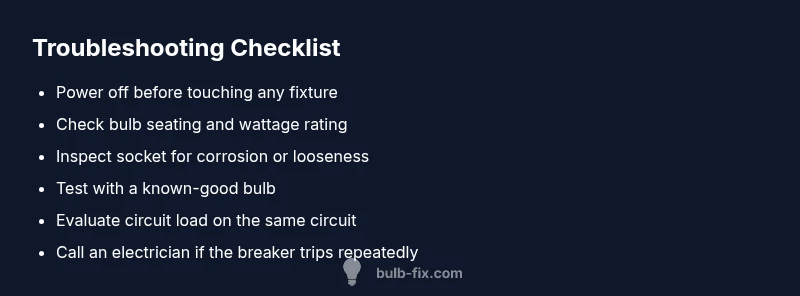
- Reseat the bulb and inspect the base for visible wear or burns. Ensure the bulb is the correct type and wattage for the fixture.
- Check the fixture’s socket terminals; look for looseness or corrosion without disassembling live wiring.
- Swap in a known-good bulb of the same rating; if the new bulb behaves the same, the issue likely lies with the fixture or circuit rather than the bulb.
- Inspect the switch and any inline fuses or transformers in the fixture for signs of wear.
- Test the circuit with a different fixture on the same circuit to see whether the breaker trips consistently.
- If trips persist, call a licensed electrician; never attempt major rewiring or panel work yourself.
Prevention tips to avoid future fused bulbs
- Match bulb wattage to the fixture’s rating and avoid overloading enclosed fixtures with high-watt bulbs.
- Use only bulbs compatible with dimmers and electronic controls when applicable. Check labeling on the bulb and the switch.
- Regularly inspect sockets for corrosion, looseness, or scorch marks and replace damaged components promptly.
- Keep electrical work in the hands of professionals for complex issues or when a breaker trips repeatedly.
- Maintain a simple maintenance routine: periodic checks extend bulb life, prevent overheating, and reduce nuisance trips.
When to call a licensed electrician
If the breaker trips repeatedly, you smell burning insulation, or you’re unsure about wiring or panel safety, stop and contact a licensed electrician. Recurrent trips often signal underlying faults that require a professional diagnosis. Documentation of symptoms, circuit location, and recent changes helps the electrician pinpoint the issue quickly and safely.
Steps
Estimated time: 45-60 minutes
- 1
Power down and prep
Switch off the breaker and unplug the fixture or switch off at the wall. Confirm there is no voltage using a tester. Gather needed tools and wear dry gloves as a precaution.
Tip: Label the circuit or fixture for future reference. - 2
Inspect the bulb seating
Remove the bulb and inspect both ends for cracks, chips, or burn marks. Reinsert firmly, ensuring even contact around the base. If the bulb shows damage, replace it.
Tip: Use the same type and wattage as rated for the fixture. - 3
Check the socket and wiring
Look for corrosion, discoloration, or loose terminals at the socket. Do not force connections; replace the socket if signs of wear exist.
Tip: Do not attempt wiring repairs unless you are confident in electrical safety. - 4
Test with a known-good bulb
Install a bulb with the same rating in the fixture. If the problem persists, the issue likely lies with the fixture or circuit rather than the bulb itself.
Tip: Keep spare bulbs for quick testing without overloading the circuit. - 5
Evaluate circuit load
Count devices on the same circuit and estimate total wattage. Remove nonessential loads or redistribute to a different circuit if possible.
Tip: Consult panel labeling and avoid DIY panel rewiring. - 6
Decide on next steps
If trips persist after these checks, schedule a professional assessment. Prepare notes on symptoms, timing, and recently changed components.
Tip: Document each test result to share with the electrician.
Diagnosis: Breaker trips or fuse blows when turning on a light
Possible Causes
- highOverloaded circuit due to high wattage or too many fixtures on the same circuit
- mediumLoose or damaged wiring or socket connection
- lowShort in the fixture or a damaged bulb
Fixes
- easyTurn off power at the breaker and unplug or switch off the fixture before inspection
- easyReseat bulb and inspect for corrosion or looseness; replace socket if required
- easyTest with a lower-wattage bulb or LED alternative within fixture rating
- mediumDistribute load by moving fixtures to separate circuits or reducing total wattage on that circuit
- hardIf breaker continues to trip, consult a licensed electrician to inspect wiring and panel for overload or faults
Got Questions?
What does it mean when a fuse trips after turning on a light bulb?
A trip usually signals an overload, a short, or a loose connection. Check seating, socket condition, and circuit load before proceeding.
A fuse trip usually means overload or a loose connection.
Can a bad socket cause a bulb to fuse?
Yes, a damaged or loose socket can arc and trip breakers. Replace the socket if evidence of wear exists.
Yes, a bad socket can cause trips; replace it if worn.
Is it safe to replace bulbs yourself?
Only if you follow safety steps: power off, dry hands, and avoid touching glass with bare skin. If unsure, call a professional.
Yes, with safety steps; otherwise, consult a professional.
What’s the difference between a fuse and a breaker trip?
A fuse is a one-time device; a breaker can be reset after a fault. Recurrent trips require investigating the underlying cause.
Fuses blow, breakers trip and can be reset; repeated trips signal a problem.
Why might an LED bulb cause a fuse to trip?
LEDs should be compatible with the fixture and driver. Incompatibility or defective drivers can cause surges or arcing.
Make sure LEDs are compatible with the fixture.
When should I call a licensed electrician?
If the breaker trips often, you smell burning, or wiring seems suspect, seek professional help promptly.
Call an electrician if trips persist or you smell burning.
Watch Video
Key Points
- Start with seating and basic checks first
- Verify bulb Wattage matches fixture rating
- Inspect sockets for wear or damage
- Call a professional if trips persist