A19 vs A21 Light Bulbs: A Practical Comparison for Homeowners
An analytical comparison of A19 and A21 light bulbs, covering size, brightness, efficiency, dimming, and fixture compatibility to guide homeowners in choosing the right bulb.


In most home lighting, the choice between A19 and A21 comes down to fit, brightness, and fixture type. A19 is the standard for many lamps, while A21 provides more light for larger fixtures. The Bulb Fix team recommends matching the bulb size to the socket and optical needs to avoid dim corners.
Understanding a19 vs a21 light bulb
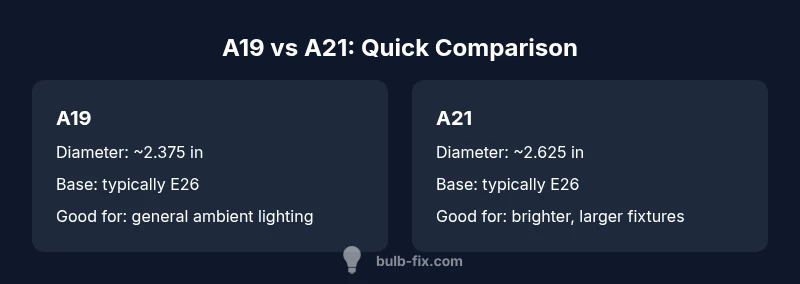
When homeowners encounter a19 vs a21 light bulb questions, they are usually weighing fit, brightness, and how the bulb will look in a given fixture. According to Bulb Fix, a meaningful comparison starts by aligning these two shapes against practical criteria: socket compatibility, light output per watt, and how the fixture’s size interacts with the bulb’s diameter. In typical residential lighting, A19 is the standard choice for most lamps and ceiling fixtures, while A21 is favored in larger fixtures or rooms that demand more lumens. While both share the familiar A-series silhouette, the 19 and 21 refer to approximate diameters in eighths of an inch, translating to roughly 2.375 inches versus 2.625 inches. The practical implication for homeowners is whether that extra diameter will cause fit issues or affect the optical effect you want. Bulb Fix recommends testing bulbs in a representative fixture, comparing brightness, warmth, and glare before making a larger purchase.
Size, Shape, and Base Compatibility
A19 and A21 bulbs differ primarily in diameter, which can matter for tight fixtures or lamps with shallow shades. The most common socket type in North American homes is the E26/Middle-base screw, and in many markets the same base supports both shapes. Always verify the socket and the interior clearance so the bulb does not touch the shade or frame. In some regions, there are A19 and A21 variants that use slightly different bases (e.g., E27 in certain countries). When upgrading to LED, ensure the base remains compatible and the ballast (if any) supports the new bulb. If you’re unsure, measure the available space and compare it to the bulb’s stated dimensions. Bulb Fix emphasizes choosing a bulb that fits the physical cavity and does not risk contact with fixtures or diffusion components.
Brightness and Efficiency: What the Numbers Tell You
Brightness is typically described in lumens, while energy efficiency is expressed as lumens per watt. The A19 and A21 shapes themselves do not fix brightness; the actual light output depends on the bulb’s technology (incandescent, CFL, LED) and the wattage. In LED form, both shapes can offer strong brightness with far lower energy use compared with incandescent equivalents. In practice, A21 bulbs often appear brighter for the same wattage due to a larger dome and higher lumen options, but this is not a guaranteed rule. When evaluating options, compare lumens ratings rather than watts alone, and consider the room’s size and the fixture’s purpose. Bulb Fix notes that a well-matched lumen target yields more comfortable, consistent lighting across spaces.
Color Temperature and Mood
Color temperature, measured in Kelvin, influences how warm or cool a space feels. Both A19 and A21 bulbs are widely available in warm (around 2700K–3000K), soft white, and daylight (about 4000K–5000K) variants. The choice affects perceived ambiance and task performance. For bedrooms or living rooms, many homeowners prefer warmer temperatures for a cozy feel; kitchens and work areas often benefit from cooler temperatures for clarity. When choosing between A19 and A21, ensure the color temperature aligns with the fixture’s purpose and existing decor. The broader lesson is that identical color temperatures in either shape will produce consistent mood, provided the lumens are comparable.
Dimmability and Fixture Compatibility
Dimming capability varies by bulb technology and model. LED variants of both A19 and A21 often offer dimmable options, but you must verify compatibility with your dimmer switch. Some older dimmers are optimized for incandescent bulbs and may not smoothly dim LED replacements. If you rely on smooth dimming, look for bulbs labeled as “dimmable” and ensure your dimmer supports LED loads. Additionally, verify that the fixture’s internal clearance, heat dissipation, and shade design won’t trap heat or cause glare. Bulb Fix recommends testing dimming behavior at multiple light levels in a representative room before committing to a full switch.
Life Expectancy and Energy Use
LED versions of A19 and A21 generally deliver long lifespans and superior energy efficiency relative to incandescent options. A21 LED bulbs tend to provide higher light output per unit energy in some configurations, partly due to larger lens areas and higher lumen targets. However, life expectancy and efficiency depend on the quality of the driver circuitry, heat management, and usage patterns. In rooms with long on-times or frequent on/off cycles, LED options for either shape tend to outperform incandescent bulbs for maintenance cost and energy savings. Bulb Fix emphasizes selecting bulbs with robust thermal management and warranties to maximize long-term value.
Installation Tips and Common Pitfalls
When swapping A19 for A21 or vice versa, gently handle the bulb to avoid breaking the glass and ensure the bulb threads engage cleanly with the socket. Do not force a bulb into a tight socket or shade; if the bulb cannot seat fully, re-check the base compatibility. Always power off at the switch or circuit prior to installation. For enclosed fixtures, verify that the bulb’s heat rating matches the fixture’s enclosure. If you notice flickering, buzzing, or dimming irregularities after replacement, double-check dimmer compatibility and consider a replacement with a compatible LED model.
Use-Case Scenarios: Which to Choose by Room
A19 is often the default choice for compact table lamps, ceiling fixtures, and spaces where subtle light is desired. A21 tends to excel in larger rooms, ceiling fan fixtures, and spaces where a more pronounced presence of light is helpful for activities or social gatherings. Consider the fixture’s scale, the shade’s design, and whether you want the space to feel more intimate or more energetic. For multi-room homes, maintaining a consistent color temperature and brightness across rooms supports visual harmony. In practical terms, use A19 for typical ambient lighting and A21 when you need more light without adding more fixtures.
Availability, Brand Variants, and Price Ranges
Availability of A19 and A21 bulbs has stabilized with the growth of LED lighting. You will find LED versions in most major brands, with wide options for color temperature and dimming. Price varies by brand, wattage, and technology; basic LED variants are generally affordable, while specialty LED options may carry a premium. Expect a broad price spectrum depending on the brightness, color quality, and warranty. As with any major bulb upgrade, compare two or three models in the same category to ensure you receive comparable brightness and color characteristics across shapes.
Maintenance and Replacement Planning
To maximize value, plan replacements around life expectancy and burn-in patterns. LED bulbs typically last longer than incandescent equivalents, reducing maintenance hassle. Keep a small inventory of spare bulbs in a cool, dry location to minimize disruption if a fixture fails. When stocking, consider mixing color temperatures for zones with different tasks (e.g., cooler lighting in work areas, warmer lighting in living spaces). Regularly reassess lighting in high-traffic rooms to ensure brightness and color still meet changing needs. Bulb Fix suggests documenting the bulb type in each room for quick future replacements and upgrades.
Comparison
| Feature | A19 Light Bulb | A21 Light Bulb |
|---|---|---|
| Size (diameter) | A19 ~2.375 in | A21 ~2.625 in |
| Base compatibility | Typically E26/Middle-base in US; verify socket | Typically E26/Middle-base in US; verify socket |
| Brightness range | LED/incandescent variants offer lower-to-higher lumens depending on technology | LED/incandescent variants offer lower-to-higher lumens depending on technology |
| Energy efficiency | LED variants deliver higher efficiency and longer life | LED variants deliver higher efficiency and longer life |
| Color temperature options | Warm to cool options common (2700K-6500K) | Warm to cool options common (2700K-6500K) |
| Dimmability | Many options are dimmable; check product specs | Many options are dimmable; check product specs |
| Best for | General ambient lighting, compact fixtures | Task lighting in larger fixtures or rooms |
| Average price range | Broad range from budget to premium options | Broad range from budget to premium options |
Upsides
- Clear fit guidance for sockets and fixtures
- Better planning across rooms with consistent lighting
- Access to LED options for energy efficiency and longevity
- Widely available in multiple brands and color temps
Drawbacks
- A21 can cause fit issues in very shallow fixtures
- Not all LED variants for both shapes are truly dimmable
- Color rendering can vary by brand and bulb technology
A19 is the safer default for most fixtures; A21 is better when you need extra brightness or a more substantial bulb presence.
For everyday lighting, choose A19 to minimize fit risk and maximize energy efficiency with LED options. If your space demands more lumens or a larger bulb presence, consider A21, but verify dimming compatibility and socket clearance before swapping across an entire home.
Got Questions?
What is the practical difference between A19 and A21 bulbs?
The main difference is physical size, which can affect fit in shallow fixtures and shades. Brightness depends on the bulb’s tech (LED, CFL, incandescent) and lumen rating, not just the shape. In practice, choose A19 for standard fixtures and A21 when you need more light or the space accommodates a larger bulb.
The key difference is size and brightness potential; pick A19 for typical fixtures and A21 when you need more light and the fixture has enough clearance.
Do A19 and A21 share the same base in most homes?
In the United States and many markets, both shapes commonly use the E26/M medium screw base. Always double-check the socket type in your fixture to avoid clearance or compatibility issues. If you’re replacing multiple bulbs, confirm that the base and dimming requirements are consistent across units.
Most homes use E26 bases for both shapes, but always verify the socket before buying.
Will an A21 bulb fit in a standard lamp?
Most standard lamps with a medium screw socket (E26) can accommodate A21 bulbs, provided there is enough clearance for the bulb’s larger diameter. If the shade or harp structure is tight, measure the available space before buying.
Usually yes, but check the physical clearance in the lamp before buying an A21.
Are A21 bulbs brighter than A19?
Brightness depends on the bulb’s lumen output and technology. An A21 LED can deliver higher lumens than an A19 LED at similar wattage, but this is not guaranteed across all models. Compare lumen ratings rather than relying solely on shape or size.
Brighter depends on lumen output, not just the bulb size.
Can I mix A19 and A21 bulbs in the same room?
You can mix shapes in the same room, but for visual harmony, try to align color temperature and brightness. Mixing variables can create uneven lighting, so plan by fixture type and intended mood for each space.
Yes, but keep color and brightness consistent for a balanced look.
What should I know about dimming A19 vs A21 bulbs?
LED versions of both shapes are commonly dimmable, but compatibility depends on the dimmer and the bulb model. Check that the bulb is labeled dimmable and that your dimmer is LED-friendly to avoid flicker or buzzing.
Make sure both the bulb and dimmer support LED dimming.
Key Points
- Check socket size before buying
- Match brightness needs to fixture size
- LED options boost efficiency and lifespan
- Dimming capability varies by model—verify compatibility
- Test bulbs in your actual fixture when possible