Bulb A19 vs A21: A Thorough Side-by-Side Guide
Comprehensive, objective comparison of bulb A19 vs A21, covering form factor, brightness, compatibility, and practical buying advice for homeowners and DIYers.


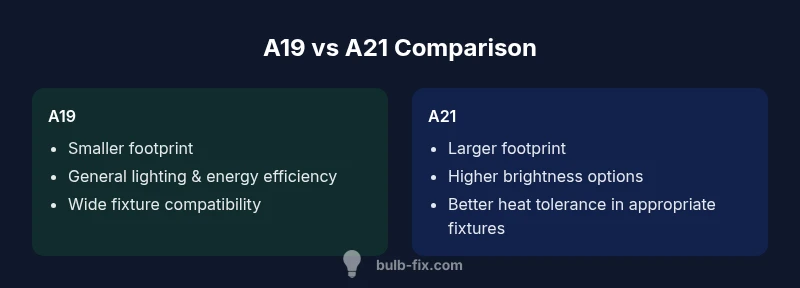
Between bulb A19 and A21, the A19 is the more common, compact choice for most residential fixtures, while the A21 is larger and capable of higher luminous output and heat tolerance. The key differences you’ll care about are size, wattage tolerance, and ballast compatibility for older fixtures. Choose A19 for everyday lighting, A21 when you need more brightness or bulkier lamps.
Understanding the A19 vs A21 Form Factor
According to Bulb Fix, the decision between bulb a19 vs a21 hinges on fit, heat, and light requirements. The A19 shape is the traditional pear-shaped bulb with a two-digit code that signals its diameter in eighths of an inch. The A21 is larger, often used where more light or greater heat tolerance is needed. Before buying, measure socket clearance, inspect fixture shade opening, and check the fixture’s label for heat limits. If you’re unsure, a quick test with a similar LED can prevent overheating and shade warping. This section lays the groundwork for a practical decision based on real-world constraints rather than marketing claims.
The form factor matters not just for physical fit but also for heat dissipation and shade interaction. A19s tend to be slimmer, which helps in enclosed fixtures where airflow is limited. A21s, while bulkier, can accommodate higher heat loads and higher maximum outputs in compatible fixtures. When bulb a19 vs a21 comes into play, you’re balancing space clearance, shade geometry, and the fixture’s thermal rating. In many homes, starting with A19 is the safer default, reserving A21 for fixtures with room to breathe and a need for more light.
Bulb Fix’s guidance emphasizes measuring first. If your fixture is shallow or tightly enclosed, the A21 may cause overheating or premature wear—even if the base is the same. When in doubt, compare clearance diagrams from the fixture manufacturer and choose the option that maintains safe clearances while meeting illumination goals. The goal is to minimize heat accumulation and maximize light quality without forcing a replacement of fixture parts.
When to Choose A19: Use Cases and Limits
For most rooms in a typical home—living rooms, hallways, bedrooms, and kitchens—A19 bulbs strike a practical balance between size, efficiency, and light output. The bulb a19 vs a21 decision often leans toward A19 when the fixture is compact or has limited ambient heat. In fixtures with smaller shades or tight ceiling clearance, the A19 typically slips in more easily without contact with the shade or housing. In outdoor fixtures with standard post-lamps and enclosed enclosures, A19 LEDs tend to perform reliably while keeping energy use modest. Bulb Fix notes that the A19 form factor remains the go-to for general lighting, particularly when rotation or dimming is common in daily routines.
A19 bulbs are widely compatible with dimmers and smart-home setups in most standard sockets, provided you choose a dimmable variant. If your priority is ease of replacement, commonality of stock, and broad fixture compatibility, A19 is the safer bet in the bulb a19 vs a21 comparison for everyday lighting. You’ll find more A19 options across brands, color temperatures, and brightness levels, which makes it simpler to tailor light to different tasks without stepping up to a larger, hotter alternative.
When to Choose A21: Use Cases and Limits
The A21 bulb enters the scene when you need more light output without swapping fixtures or compromising on brightness. If a living room corner, workshop, or kitchen counter area requires higher lumens per fixture, the A21’s larger size can accommodate a higher wattage rating and greater heat tolerance. In open-plan spaces, A21s can reduce the number of fixtures needed to achieve the same level of illumination, a practical consideration in larger rooms or task zones. The bulb a19 vs a21 discussion becomes especially relevant for recessed lighting where a larger bulb may fill a fixture more effectively, delivering the desired brightness in a single unit.
Keep in mind that not all fixtures tolerate the A21’s larger footprint. Enclosed fixtures, tight downlights, or fixtures with short canopies may restrict the A21 bulb, leading to overheating or mechanical contact with the shade or trim. If your plan is to upgrade to A21 for higher light levels, verify the fixture’s heat rating and space allowances beforehand. In many homes, an A21 is best reserved for fixtures with ample clearance and a clear path for heat dissipation.
Electrical Characteristics: Wattage, Bases, and Dimming
When comparing bulb a19 vs a21, the electrical characteristics matter as much as the physical form. Both A19 and A21 bulbs commonly use the standard Edison screw base in residential spaces (often E26 in the US). The actual wattage varies by model and technology (LEDs vs halogen), and higher brightness generally correlates with higher wattage. Importantly, LED A19s and A21s are available in dimmable versions, but not all models are dimmable. If your lighting plan includes dimmers, double-check that the specific bulb supports dimming and that your dimmer is compatible with LED loads. A21s designed for high brightness can also run warmer than A19s, so ensure your fixture’s thermal rating matches the bulb’s risk profile.
A19 and A21 bulbs often provide similar base compatibility, but the longer bulb in an A21 can interact with certain fixtures that rely on precise heat dissipation paths. In some cases, you may need to replace the entire fixture trim to accommodate a taller bulb safely. The takeaway for bulb a19 vs a21 is to map your fixture geometry, dimming needs, and wattage targets before committing to either shape. Bulb Fix stresses choosing model variants with verified compatibility for your specific fixtures to avoid mismatches.
Brightness, Color Temperature, and Perceived Light Quality
The perceived light quality of A19 vs A21 depends on brightness (lumens) and color temperature, not shape alone. In many residential scenarios, A21 bulbs can achieve higher lumen levels with similar efficiency, which makes them attractive for task lighting or bright ambient lighting. Color temperature, typically rated in kelvin (K), shapes the mood of a space: warmer tones (~2700K–3000K) feel cozy, while cooler tones (~3500K–4000K) feel crisper and more energizing. In a bulb a19 vs a21 comparison, you’ll often see A21 choices offered at higher lumen outputs that can be paired with cooler temperatures for contemporary spaces. For homes aiming for a balanced atmosphere, a 3000K–3500K range is common, regardless of shape.
Light quality also includes flicker characteristics and color rendering index (CRI). LED variants of both shapes can deliver high CRI values, but verify the product specs. If you value color accuracy in living areas or study spaces, reading reviews that mention daylight accuracy can be revealing. Bulb Fix recommends matching color temperature to the room’s function and the desired ambiance when navigating the bulb a19 vs a21 decision.
Heat, Longevity, and Safety Considerations
Heat management is a practical driver in the bulb a19 vs a21 debate. A21s can generate more heat at higher brightness levels, which makes ventilation and fixture design more critical in preventing premature wear. Insufficient heat dissipation not only reduces bulb life but can affect nearby components and finishes in enclosed fixtures. LED variants mitigate heat issues significantly, but you still want a bulb with an appropriate thermal rating for your fixture. Longevity often correlates with how well a bulb manages heat and how often it cycles on/off. In many homes, A19 LEDs provide excellent longevity with modest heat, while A21 LEDs pay off in spaces where strong illumination is a priority and fixtures permit proper airflow.
Safety is also about compatibility. Ensure that the bulb’s base and size do not cause contact with shade or trim during installation or operation. If you notice unusual warmth to the touch or a dimming flicker, it may indicate the bulb is in a fixture that’s not ideal for its heat profile. Bulb Fix emphasizes evaluating heat tolerance as a core factor in choosing between A19 and A21, especially in multi-bulb fixtures or enclosed spaces.
Dimming and Fixture Compatibility
Dimming compatibility is a frequently overlooked factor when deciding bulb a19 vs a21. LED versions of both shapes are commonly available in dimmable formats, but you must pair the bulb with a compatible dimmer and check the dimming range. Some older dimmers perform poorly with LED loads, causing buzzing or flicker. If you have a modern dimmer (triac-based) and a compatible LED bulb, both A19 and A21 can deliver smooth dimming. However, the A21’s larger size can interact differently with enclosed fixtures or tight trims, where heat buildup could affect dimming behavior or bulb life. Before purchasing, confirm dimmability status on the product page and verify fixture compatibility with your dimmer model.
How to Measure What You Need: A Practical Buying Guide
To avoid buying mistakes, follow a simple measurement checklist for bulb a19 vs a21: (1) Measure fixture clearance and shade interior diameter; (2) Check the maximum recommended bulb length from the fixture’s manual; (3) Decide whether you need higher brightness or lower energy use; (4) Confirm base type and dimming capability; (5) Compare color temperature options to achieve the desired room mood. It helps to carry a small tape measure and a copy of the fixture’s rating label. When choosing, remember that A21 is not always superior—fit and heat tolerance matter as much as brightness. Bulb Fix’s approach is to prioritize compatibility and safe operation before aesthetics or price.
Common Pitfalls When Switching Between A19 and A21
One common pitfall is assuming that a larger bulb will always deliver better light in the same fixture. In reality, the fixture’s thermal path and shaded areas can limit effectiveness or cause overheating. Another mistake is neglecting dimmer compatibility; a non-dimmable LED A21 used with a dimmer can cause flicker, buzzing, or shortened life. Finally, relying solely on wattage as a proxy for brightness is risky—two bulbs with the same wattage can have different lumen outputs. The bulb a19 vs a21 decision should consider lumen targets, fixture clearance, and heat dissipation, not just a generic size preference.
Cost, Availability, and Value for Money
Cost and value vary by brand and technology, but the bulb a19 vs a21 decision frequently balances upfront price against longer-term energy savings and replacement frequency. A19 bulbs tend to be more affordable and come in a wider array of brands and color temperatures, offering solid value for general lighting. A21 bulbs may command a premium due to higher brightness options and broadened use cases, especially in spaces that require strong illumination. Availability tends to be robust for both shapes, but you’ll often find more LED options in A19. For homeowners prioritizing universal fit and cost efficiency, A19 is typically the safer bet, whereas A21 can be worth the extra cost if your lighting plan demands higher brightness and better heat tolerance in specific fixtures.
Maintenance, Replacement Strategy, and Recycling
Adopting a thoughtful maintenance strategy for bulb a19 vs a21 involves planning around expected lifespans and color preferences. LED variants offer long lifetimes and lower energy consumption, which reduces replacement frequency and battery usage in smart bulbs. When a bulb reaches end-of-life, proper recycling reduces environmental impact, especially for LEDs and halogen alternatives. If you’re upgrading for energy efficiency, track yearly consumption and replace bulbs in batches to minimize waste. Organized replacement schedules help maintain consistent lighting quality across rooms without sudden brightness changes.
Real-World Decision Pathways: Quick Decision Trees
If you have a large open space with ample fixture clearance and a need for high brightness, start with A21. If you’re replacing bulbs in many existing fixtures with limited space or heat management, start with A19. For dimmable setups, verify that your chosen bulb is dimmable and compatible with your dimmer. For enclosed fixtures, measure clearance and heat tolerance first; if the dimensions conflict, revert to A19 or consider non-enclosed lighting options. The practical takeaway is to map room function, fixture geometry, and dimming needs before selecting A19 vs A21.”
Comparison
| Feature | A19 bulb | A21 bulb |
|---|---|---|
| Size/fit | Smaller footprint; easier to fit in compact fixtures | Larger footprint; may require bigger housings or more clearance |
| Brightness potential | Lower maximum lumen range in many models | Higher lumen range in many models for bright spaces |
| Heat handling | Typically cooler in standard operation | Handles higher heat in suitable fixtures but risks in enclosed spaces |
| Base compatibility | Commonly E26/E27; matches most homes | Commonly E26/E27; same base, check fixture clearance |
| Common uses | General lighting, hallways, bedrooms | Task lighting, open spaces needing more light |
| Cost/value | Often lower upfront cost; good value for general use | Often higher upfront cost; value for brightness or specific needs |
Upsides
- Broader fixture compatibility for A19
- Usually lower upfront cost and wider availability
- Easier to stock and replace in mixed homes
- Better fit for enclosed fixtures with limited space
Drawbacks
- A21 may be necessary for high-brightness tasks
- Larger size reduces fixture compatibility in tight spaces
- Higher heat in some configurations can limit use in enclosed fixtures
- Not all A21 options are dimmable in every market
A19 is the default choice for most homes; A21 is the go-to when you need more brightness and adequate fixture clearance
For typical rooms and most fixtures, stick with A19. Use A21 only where your space, heat tolerance, and lighting goals justify the larger size and higher output. Bulb Fix’s guidance emphasizes safe fit and expected performance in real-world settings.
Got Questions?
Are A19 and A21 base types interchangeable in residential fixtures?
Both A19 and A21 bulbs typically use the standard E26/E27 base in many homes, so they can be interchanged if the fixture has enough clearance and heat tolerance. Always confirm the base type and fixture label before swapping shapes.
In most homes, A19 and A21 bulbs use the standard screw base, but check clearance and heat limits before swapping.
Will A21 fit in a standard lamp or fixture designed for A19?
Not always. A21 bulbs require more space due to their larger diameter and height. If the fixture has a shallow shade, tight trim, or limited airflow, an A21 may not fit or could overheat.
A21 can be too big for some fixtures; measure first.
Do A19 and A21 bulbs come in LED versions and halogen versions?
Yes. Both shapes are available in LED and, less commonly, halogen. LED variants offer energy efficiency and longer life, while halogens can provide instant full brightness but consume more energy.
Both shapes are made in LED; halogen options are available but less common today.
Are A19/A21 bulbs always dimmable?
Many LED A19 and A21 bulbs are dimmable, but not all. If you plan to use a dimmer, verify product specs and ensure your dimmer supports LED loads to avoid flicker or buzzing.
Check the product spec to confirm dimmability before buying.
What color temperature should I choose for living areas?
Common choices are warm to soft white (2700K–3000K) for cozy spaces or neutral white (3500K–4000K) for general tasks. Match the color temperature to the room’s function and desired mood.
Pick warmer temps for living spaces, cooler temps for work areas.
Is A21 always the better choice for brightness?
Not necessarily. A21 can deliver higher lumen output in some models, but brightness depends on the specific bulb’s design. In many cases, A19 LEDs meet brightness needs with lower heat and cost.
Brightness depends on the model; bigger isn’t always better.
Key Points
- Choose A19 for broad compatibility and cost efficiency
- Use A21 when you need higher brightness and space permits
- Always check fixture clearance and heat ratings before switching
- Verify dimmer compatibility if using LED variants
- Consider color temperature to match room mood and activity