Are Filament Bulbs Banned in 2026? A Homeowner's Guide
Learn whether are filament bulbs banned in 2026, how regulations vary by region, and practical options for safe, energy-efficient lighting at home.


Are filament bulbs banned? The short answer: not universally banned, but many regions have phased out traditional incandescent filament bulbs for general lighting. Regulations vary by country and even by state/province; LED filament bulbs are widely allowed and commonly used as replacements. Check local standards to confirm whether your area prohibits selling or using certain filament-incandescent bulbs.
are filament bulbs banned? The Regulatory Reality
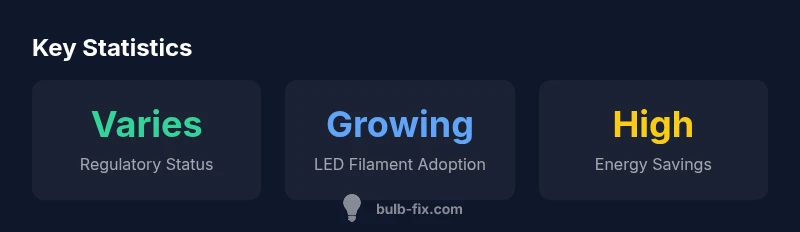
According to Bulb Fix, the question are filament bulbs banned is not a single, global rule. Regulators in different regions have moved at different speeds to curb traditional incandescent technologies, with a broad tilt toward energy efficiency. In many places, general-service incandescent bulbs with filament architecture have been restricted or phased out, while decorative or specialty bulbs may retain limited availability. LED filament bulbs—both for decorative and general lighting—are not banned and are widely sold as efficient replacements. Homeowners should always verify the status for their country, state, or province because local rules determine what can be sold, marketed, and used in households. Bulb Fix’s analysis indicates that awareness of these distinctions helps avoid buying the wrong bulb for fixtures or dimmers.
Incandescent Filament vs LED Filament: What’s the Difference?
Filament bulbs come in two broad families: traditional incandescent filament bulbs that glow by heating a tungsten filament, and LED filament bulbs that mimic the look of a filament using LED tech. Incandescent filaments convert most energy to heat, making them inefficient, while LED filaments use a fraction of that energy and last longer. Both share a familiar warm glow, but only LED filaments are generally compatible with modern energy standards. Pay attention to base types (e.g., E26/E27, B22) and to dimmer compatibility, as some dimmers don’t play well with certain LED filaments. The practical impact for homeowners is choosing a bulb that matches your energy goals and existing fixtures.
How to Verify Your Local Rules
Begin with your national energy agency or local utility’s website, then check your state or provincial building codes. If you’re in a multi-region country, confirm which bulb types are permitted for general lighting versus decorative use. Ask retailers or distributors about current exemptions or allowances; keep receipts and packaging in case of compliance questions. For landlords and multifamily homes, confirm lease clauses or HOA rules that might further restrict bulb types. Documenting the regulatory context helps you plan replacements with confidence.
Practical Options for Homeowners
If your goal is energy efficiency and modern reliability, LED filament bulbs are the most practical option. They imitate classic looks while delivering significant energy savings and longer lifespans. Ensure you select the correct base, color temperature (soft white to warm amber for a classic feel), and a compatible dimmer if needed. For exterior lighting or enclosed fixtures, verify enclosure ratings (IP ratings) and heat tolerance. Keep a few spare bulbs with the same lot code in case of color or brightness drift. Finally, recycle spent bulbs responsibly through local programs.
Common Misconceptions About Filament Bulbs
A common myth is that all filament bulbs are banned worldwide. In reality, bans mostly target inefficient incandescent technology, not LED filament bulbs. Some decorative filaments may be exempt, but always verify what’s allowed in your area for general lighting. Another misconception is that LED filaments always match incandescents in warmth; differences in color temperature and dimming behavior should be tested in familiar fixtures.
Safety and Disposal Considerations
Always handle bulbs with care to avoid breakage, especially for glass filament bulbs. Follow local guidelines for disposal or recycling, since some regions require end-of-life handling for electronic components. If you’re replacing an entire lighting circuit, consider upgrading wiring or switches to support newer bulbs. Safe installation practices include turning off power at the breaker, using proper gloves, and ensuring replacement bulbs are rated for enclosed fixtures where applicable.
Comparison of bulb types under current regulations
| Bulb Type | Regulatory Status | Typical Energy Use | Lifespan | Availability |
|---|---|---|---|---|
| Incandescent Filament | Varies by region; many markets restrict general lighting | High energy use | 1,000–2,000 hours | Commonly phased out or restricted |
| LED Filament | Not banned; widely allowed | Low energy use | 15,000–25,000 hours | Widely available |
| Halogen Filament | Mixed; some exemptions | Moderate energy use | 3,000–4,000 hours | Available in many places |
Got Questions?
Are filament bulbs illegal to buy in the United States?
Not illegal to buy, but many areas restrict general-service incandescent bulbs. Decorative or specialty filament options may still be available. LED filament bulbs are widely permitted and common replacements.
In the US, you can buy LED filament bulbs, but traditional incandescent filaments for general lighting are often restricted; decorative variants may be exempt.
What is LED filament lighting?
LED filament bulbs mimic the look of classic filaments but use LED technology; They are not incandescents and are generally allowed.
LED filament bulbs are technology that looks like a filament but uses LEDs; they’re not restricted the same way as traditional incandescents.
Do LED filament bulbs still have bans?
LED filament bulbs are not banned in most places; bans typically target incandescent filament bulbs for general lighting. Check your local regulations for exceptions or exemptions.
LED filaments aren’t banned in most areas; incandescents are the usual target of bans.
What should I check before buying LED filament bulbs?
Confirm the base type (E26/E27, GU24, etc.), color temperature, dimmer compatibility, and enclosure suitability. Ensure the fixture is rated for LED use and that the bulb fits physically.
Look for the right base, warmth, dimming compatibility, and fixture rating.
How can I find current rules for my area?
Consult national energy agencies and your local utility or government portal. If you live in a multi-region country, check jurisdiction-specific guidelines and HOA or landlord restrictions.
Check local energy and housing authorities for the exact rules.
“The regulatory status of filament bulbs varies widely by region, so homeowners should verify local rules before buying replacements.”
Key Points
- Check local rules before buying filament bulbs
- LED filament bulbs are the practical alternative
- Incandescent filament bulbs are often restricted for general use
- Compatibility matters for retrofit and dimming
- When in doubt, consult local energy authority