Bulb and Blossom Amaryllis: A Comprehensive Comparison
A data-driven comparison of bulb amaryllis vs blossom amaryllis, covering care, bloom timing, display impact, pricing, and long-term maintenance for homeowners and DIY enthusiasts.


When choosing between bulb amaryllis and blossom amaryllis, consider your goals: bulb amaryllis offers reliable, quick blooms with modest care, while blossom amaryllis delivers dramatic color and longer-lasting displays. Both benefit from bright light and steady watering, but your priorities—speed, showiness, and maintenance—will guide the best choice for your space.
What are bulb and blossom amaryllis? Definitions and context
The term bulb and blossom amaryllis describes two popular forms of the same ornamental plant, each prized for very different reasons. In general, bulb amaryllis refers to the traditional, single-blooming cultivar grown from a sturdy bulb that stores energy for a reliable spring display. Blossom amaryllis, by contrast, emphasizes varieties with multiple florets or larger, cluster-like blossoms that create a dramatic mass of color. For homeowners who want instant garden drama indoors, these distinctions become practical: they influence care schedules, flowering timelines, and how you use the plant in rooms with limited natural light. In this guide, we examine bulb and blossom amaryllis through an objective lens, focusing on care requirements, bloom quality, and overall value for a typical living space. Bulb amaryllis and blossom amaryllis are both beloved by enthusiasts, and the right pick depends on your goals, space, and willingness to experiment with timing and placement.
The anatomy of an amaryllis bulb: What makes it tick
At the heart of every amaryllis plant is a robust underground bulb that serves as energy storage for flowering. The bulb’s scales store carbohydrates and nutrients that feed the stalk, leaves, and eventually the bloom. In bulb amaryllis varieties, the bulb tends to be compact and reliable, sending up a strong flower stalk with one or two large blooms. Blossom amaryllis varieties leverage multiple florets per stem or larger, clustered blossoms, creating a spectacular display that can rival small garden cut flowers. The flowering cycle begins when daylight and warmth trigger growth, and the bulb’s reserves determine the vigor and duration of the bloom. Whether you choose a traditional bulb or a showy blossom type, proper bulb size, drainage, and soil structure play a crucial role in minimizing rot and promoting robust flowering.
Key differences between bulb and blossom amaryllis varieties
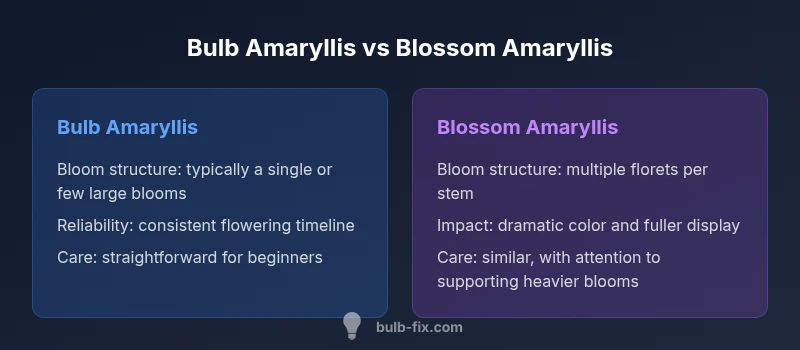
The core distinction between bulb amaryllis and blossom amaryllis lies in bloom architecture and display strategy. Bulb amaryllis tends to prioritize dependable timing, with a clean, singular or paired bloom on a sturdy stalk. Blossom amaryllis emphasizes prolific color and petal fullness, delivering clusters or multiple large flowers per stem. Growth habit also differs: bulb varieties often stay more compact, making them suitable for tabletops or small planters, while blossom varieties can require more vertical space to showcase the extra blooms. When selecting between the two, consider lighting conditions (bright, indirect light supports more petals), container size (larger bulbs need courses of soil and stable support), and seasonal goals (holiday decorating vs. ongoing focal point). In addition to aesthetics, expect minor differences in water needs and post-bloom dormancy management, with bulb types typically offering slightly simpler aftercare.
Lighting, temperature, and water: How environment affects bloom
Amaryllis plants are resilient but still respond to their environment. For bulb and blossom amaryllis, brightness is a key driver of bloom vigor: place potted specimens near a sunny window that provides at least six hours of indirect light daily. Temperature should stay between 60–70°F (15–21°C) during growth, with a slight cooler period to encourage dormancy after flowering. Watering should be consistent but not excessive; allow the top inch of soil to dry before re-watering, and ensure the pot has drainage to prevent bulb rot. Humidity matters only moderately, but stable conditions reduce bud drop and keep petals turgid. In practical terms, bulb amaryllis benefits from a predictable routine, while blossom amaryllis rewards care with longer flowering windows and stronger color saturation when light conditions are optimal.
Growing from bulb vs. cuttings: Step-by-step planting guide
Starting with a healthy bulb is the most reliable pathway to successful blooms. Choose a firm, unblemished bulb with visible root growth. Use a well-draining potting mix and a container with drainage holes. Plant the bulb so about one-half to two-thirds remains above the soil line and water lightly to settle the soil. Position the pot in a bright location and keep soil consistently moist but not soggy through the first couple of weeks. Once shoots emerge, rotate the pot to ensure even growth and remove any yellowing leaves. For blossom amaryllis, select a cultivar that is known for multiple bloom clusters and monitor for heavy stalks that may need staking. As growth advances, feed with a balanced fertilizer per package directions and watch for signs of pests. A proper start with quality bulbs sets the stage for a vibrant, long-lasting display.
Forcing blooms: Timing and seasons
Forcing blooms involves manipulating light exposure and temperature to trigger flowering on a schedule. If you’re aiming for spring blooms, start bulbs indoors in late winter, providing bright light and gradually increasing light intensity. For holiday displays, aim to achieve bud formation about 8–12 weeks before your target date. Blossom amaryllis often respond well to warmer room temperatures and consistent moisture during their forced phase, producing fuller clusters. If space is limited, consider staggered planting so not all bulbs finish blooming at once, allowing a longer period of color in your living area. Remember to let the plant rest after flowering to restore bulb energy for the next season.
Common problems and how to fix them
Even well-cared-for bulb and blossom amaryllis can encounter issues. Common problems include yellowing leaves from overwatering, soft spots indicating rot, and stalks that topple under heavy blooms. The fix starts with drainage and soil quality: use a well-draining mix, a pot with drainage, and water only when the top inch dries. Pests like spider mites or mealybugs can be controlled with an alcohol-based wipe or insecticidal soap, applied according to label directions. For blossom-heavy cultivars, provide staking to prevent toppling. If blooms fail to form, reassess light levels and temperature stability; insufficient light or overly cool conditions often delay or suppress flowering. In most cases, adjusting water, light, and humidity resolves the issue without resorting to chemical controls.
Design ideas: Using bulb and blossom amaryllis in home decor
Beyond the garden appeal, bulb and blossom amaryllis can serve as striking focal points in interior design. Use a deep decorative pot with bright, clean soil to showcase the stem and bloom. In clusters, plant multiple bulbs in a single wide container for a dramatic display that resembles a bouquet. For holiday tables, smaller bulb amaryllis cultivars work well in a row as centerpiece accents, while blossom types can anchor a living room vignette with dense color and texture. Mix amaryllis with evergreen sprays, pinecones, or seasonal ornaments to create a cohesive seasonal mood. Finally, consider the pot height and audience sightlines; choosing varieties with varied bloom heights adds depth to the arrangement.
Maintenance, storage, and long-term care
To maximize the lifespan of bulb and blossom amaryllis, allow the foliage to fully photosynthesize after flowering, then begin the dormancy phase by reducing water and letting the leaves yellow. Store the bulb in a cool, dry location for 8–12 weeks to rebuild energy for the next cycle; replant in fresh soil with a slightly larger pot when you’re ready. If you want continuous color year after year, consider rotating through several cultivars that bloom at different times. Store bulbs in breathable containers; avoid sealing them in airtight bags as this promotes rot. Regularly inspect for signs of rot or pests and act quickly to prevent spread. Through careful storage and staggered blooming, bulb and blossom amaryllis can provide reliable color for multiple seasons.
Comparison
| Feature | bulb amaryllis | blossom amaryllis |
|---|---|---|
| Flowering time | Typically 6-10 weeks after planting | Typically 8-12 weeks after planting |
| Bloom duration | 2-4 weeks | 3-6 weeks |
| Care requirements | Moderate watering and bright indirect light | Similar care with emphasis on supporting multiple blooms |
| Price range | $15-$50 per bulb | $25-$60 per bulb |
| Best for | Low-maintenance, reliable blooms | Showy, long-lasting displays with dramatic color |
Upsides
- Clear visual impact with large, dramatic blooms
- Relatively quick indoor flowering for ceilings and tables
- Low maintenance once established and watered correctly
- Wide availability makes them easy to source
- Versatile for holiday decor and year-round focal points
Drawbacks
- Limited color range compared to some other indoor bulbs
- Requires space for larger blossoms and taller stems
- Potential dormancy period is needed for long-term bloom cycles
- Overwatering or poor drainage can lead to bulb rot
Bulb amaryllis offers reliable, low-maintenance blooms with quicker returns, while blossom amaryllis delivers dramatic color and longer display times.
Choose bulb amaryllis if you want dependable performance and a compact footprint. Opt for blossom amaryllis when your goal is a striking, long-lasting color show and a bold room focal point.
Got Questions?
What is the difference between bulb amaryllis and blossom amaryllis?
Bulb amaryllis typically offers dependable blooms with a single or few large flowers per stem. Blossom amaryllis features multiple blooms or larger clusters, creating a fuller, showier display. Both share similar care needs but differ in bloom structure and visual impact.
Bulb amaryllis tends to be simpler to grow with steady results; blossom amaryllis gives a dramatic, fuller look.
How long do amaryllis blooms last in indoor conditions?
Indoor amaryllis blooms generally last 2-6 weeks depending on variety and care, with blossom-heavy cultivars leaning toward longer displays when light and moisture are optimal.
Most amaryllis blooms last several weeks indoors, vary by variety and care.
What are the best growing conditions for amaryllis indoors?
Provide bright indirect light, temperatures around 60-70°F (15-21°C), and consistent moisture without waterlogging. Use well-draining soil and a pot with drainage to prevent rot.
Bright light, steady temperatures, and good drainage keep amaryllis thriving.
Can I force amaryllis to bloom year-round?
You can force blooms by controlling light exposure and temperature, but a natural dormancy cycle is typical. Plan staggered plantings to achieve ongoing color.
You can force blooms with timing, but expect a natural rhythm and some breaks in color.
Are there safety concerns with amaryllis bulbs?
Amaryllis bulbs are generally safe when handled with care. Wear gloves if you have sensitive skin, and keep bulbs out of reach of pets and small children who may be curious.
Handle with care; keep bulbs away from curious pets and kids.
What maintenance tips help extend bloom life?
Water properly, avoid overwatering, provide bright light, support tall stems, and fertilize according to package directions to sustain bloom quality.
Give them good light, steady water, and support tall stems for longer displays.
Key Points
- Assess your space for light and height before choosing
- Aim for bright indirect light to maximize bloom quality
- Ensure drainage to prevent bulb rot and root issues
- Stagger planting for continuous color across seasons
- Plan for a dormancy period to extend bulb life