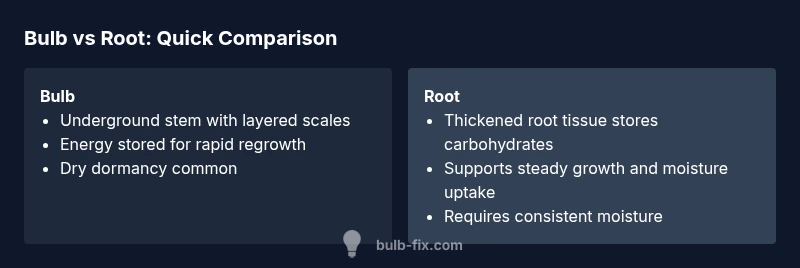
Bulb vs Root: Understanding Storage Organs for Homeowners
Explore the bulbs vs roots distinction, how each stores energy, and practical care tips for DIY homeowners. Learn to identify, care for, and optimize plants with bulbs or storage roots.


When you compare bulb storage organs to roots, bulb vs root differences are clear: bulbs are stem-based energy reservoirs that regrow annually, while storage roots store nutrients and water for longer, slower regrowth. For homeowners, this means choosing a plant type based on your space, light, and maintenance preferences. Bulb vs root distinctions guide watering, dormancy management, and overall plant health.
What is a Bulb, and How Does It Differ From a Root?
In home gardening and indoor bulb care, the phrase bulb vs root comes up often. A bulb is an underground storage organ that typically consists of a short stem encased by fleshy scale leaves. Its primary job is to store energy — sugars and starches — so the plant can push new growth when conditions improve. Roots, by contrast, are the plant's support and nutrient-collection system. They anchor the plant in soil or potting mix and transport water and minerals upward. In many cases, bulbs are reproductive units: they can produce new shoots year after year, while roots mainly sustain current growth and, in some species, store nutrients in thickened tissues. For homeowners, understanding this distinction matters when diagnosing problems, choosing plants, and planning care routines.
Examples illustrate the bulb vs root divide: onions, tulips, and daffodils are classic bulbs; storage roots include sweet potatoes and certain tuberous varieties. While a single plant may feature both kinds of organs in its life cycle, the dominant energy-storing tissue typically drives care decisions—watering, light exposure, and dormancy management. With bulbs, a dry dormancy period is common; with storage roots, moisture management and soil drainage are often the priority. The distinction is not just academic; it affects how you water, light, and winterize plants in pots or beds.
Structural Differences: Bulb vs Root Anatomy
Bulbs are compact, rounded beneath the soil, consisting of a basal plate and layered scales that resemble an onion. The central shoot grows from the top, and energy is stored in the fleshy leaves around the stem. Roots grow from the base; they branch and spread outward to seek water and nutrients. In many bulbs, the stem remains short, while in storage roots the feeding structure is tissue within the root system itself. These anatomical differences translate into practical cues: bulbs feel firmer, have a visible basal plate in the soil, and go through a predictable dormancy; roots tend to be more irregular in shape and require consistent moisture. The anatomy also informs how you can propagate or transplant: bulbs can be lifted, stored dry, and replanted, while storage roots are dug up for division or to harvest the stored food. When you examine a plant, note whether the dominant energy-storing tissue is a bulbous structure or a thickened root. This identification helps you tailor potting mixes, watering schedules, and light exposure to the plant’s true needs.
Growth Cycles and Reproduction: What to Expect
Bulbs typically follow a cyclical rhythm: a dormancy period in which growth slows or stops, followed by rapid sprouting in spring or after a trigger such as increased daylight. The energy stored in the bulb fuels this regrowth, so neglecting dormancy needs can reduce vigor or lead to rot when temperatures rise. Storage roots behave differently. They may enlarge gradually and contribute to vegetative growth or seasonal harvest, depending on the species. Some plants with storage roots produce new shoots annually, while others rely on the root’s stored carbohydrates to sustain long seasons of growth. Hybrid and ornamental varieties complicate this picture because they combine bulbous and root-like traits. For homeowners, the key takeaway is to observe seasonal cues: reduce watering during dormancy, avoid forcing growth too early, and adjust light intensity to align with the plant’s internal calendar. Practically, you can plan a calendar around the plant’s life stage: identify the dormant window, then resume normal feeding and watering once new shoots emerge. By tracking the rhythm of bulb vs root species, you’ll minimize stress, maximize bloom or harvest, and enjoy healthier plants across your home landscape.
Energy Storage and Nutrient Management
Both bulbs and storage roots store energy, but they do so in different tissues and with different implications for care. A bulb’s scales accumulate starches and sugars in a compact form around the basal plate; this arrangement supports rapid regeneration after cold or drought stress. Storage roots accumulate carbohydrates in a more extended root architecture, which can alter nutrient uptake dynamics and water need. For the homeowner, this means adjusting irrigation: bulbs often tolerate drier periods during dormancy and prefer a brief, gentle watering when new growth begins; storage roots, by contrast, benefit from even moisture and well-drained soil to prevent rot. Fertilizing strategies also diverge: bulbs generally respond to light feeding early in the growth cycle, while storage roots may benefit from steady, moderate feeding throughout the season. The upshot is simple: match your watering, feeding, and soil mix to the organ that dominates the plant’s energy storage. Doing so reduces stress, helps flowering or root quality, and minimizes common problems like rot, wilting, or poor regrowth.
Environmental Needs: Light, Water, Temperature
For light, many bulbs like bright, indirect sun or full sun depending on species. Most bulbs need a period of cool temperatures before emerging; this chilling analogue signals dormancy break. Storage-root plants vary widely in light requirements, but most prefer consistent light levels without intense midday heat that can stress the root system. Watering is the most common source of problems: bulbs are sensitive to overwatering during dormancy, which can cause fungal infections or rotting; roots dislike waterlogged soil but still require regular moisture once growth resumes. Temperature preferences align with life stage: cool winters are often needed to trigger dormancy; warmer temperatures promote growth. Soil quality matters, too: well-draining mixes prevent water from sitting around the bulb scales or root tissues. In home settings, manage humidity and airflow to minimize fungal issues. The bulb vs root distinction guides your microclimate choices, helping you set up a healthy environment for the specific storage organ your plant relies on. With thoughtful planning, you’ll achieve reliable emergence and robust growth year after year.
Practical Care Scenarios: Indoor vs Outdoor
Indoors, potted bulbs and root plants demand stable temperatures and bright light. Keep containers on a shelf with even exposure and avoid sudden temperature shifts, which can interrupt dormancy. Outdoors, you’ll experience natural seasonal cues that drive growth and dormancy; ensure mulch and soil structure supports drainage. In both settings, avoid overwatering and give roots or bulbs time to acclimate to new environments after relocation. Potting mixes should be medium in texture with good drainage; a blend of perlite or coarse sand can help prevent waterlogging around bulbs, while organic matter improves nutrient availability for storage roots. Storage-root crops like sweet potatoes require deeper containers and careful soil management to prevent disease. The bulb vs root framework helps you choose appropriate crop types for your space and climate, guiding you toward reliable results with the least amount of effort and risk.
Common Mistakes and How to Diagnose Problems
Root issues are often misdiagnosed as nutrient deficiency or pests, especially when the plant exhibits poor growth after dormancy. Common bulb problems include rot from overwatering, fungal infections, or chilling injury. For storage roots, symptoms such as soft spots, mold, or an overly mushy texture indicate moisture imbalance or soil pathogens. The diagnosis process starts with careful observation: examine the bulb’s scales, the root system's thickness, and the presence or absence of new shoots. Diagnostics can be simplified by comparing current growth with the plant’s normal calendar and environmental conditions. If you’re unsure, isolate the plant and adjust watering to a more conservative regime, improve drainage, and increase air circulation. In many cases, a simple switch in soil or pot size makes a dramatic difference. The bulb vs root approach helps you identify which organ dominates the plant’s health story, which in turn informs cultivation decisions and problem-solving steps.
Practical Identification: How to Tell Bulbs from Roots in Your Pots
To identify whether you’re dealing with a bulb-based plant or a storage-root plant, start with a visual inspection. Bulbs show a central basal plate, layered scales, and a compact, rounded profile just under the surface. Storage roots appear as thickened root bundles that may radiate outward or create a more irregular, elongated form. Digging gently a shallow amount can reveal the dominant organ without harming the plant. The presence of dry, papery tunics and the reappearance of shoots from a crown typically signal a bulb; mushy textures and dense, fibrous root networks without a clear bulb suggest a storage root. After identification, tailor growing media, watering, and light to the organ’s needs. For home projects, labeling pots and maintaining a simple care calendar will increase consistency. The bulb vs root lens makes this task straightforward and can save you from misapplying watering schedules or soil mixes.
Choosing Between Bulbs and Storage Roots for Your Garden
When selecting plants for your home garden or indoor landscape, the bulb vs root decision should align with your maintenance tolerance, climate, and space. If you want seasonal color and quick, repeatable cycles with predictable spring blooms, bulbs are often the best bet. If you prefer steady harvests or resilient energy storage that sustains growth through longer seasons, storage roots may be more appropriate. Consider the pot size, drainage, and light exposure available; bulbs generally require dry dormancy, while storage roots need consistent moisture and well-draining soil. Budget considerations matter too: bulbs may be cheaper upfront and easier to replace, whereas storage-root crops can provide longer-term yields or culinary value. By mapping your climate, space, and goals to the biology of bulb vs root, you’ll maximize the odds of success and minimize disappointments.
Comparison
| Feature | bulb | root |
|---|---|---|
| Definition | Underground stem with fleshy leaves that stores energy for regrowth | Underground organ for water and nutrient storage, not a stem |
| Primary storage strategy | Energy reserves stored within a stem and surrounding leaves | Carbohydrates stored in root tissues or tubers |
| Growth cycle | Typically perennial with annual emergence from stored energy | Growth depends on stored nutrients; slower regrowth in some species |
| Common examples | Onion, tulip, daffodil | Sweet potato, storage-root crops like tubers |
| Care implications | Dry dormancy; avoid overwatering during dormancy | Maintain moisture and drainage; avoid waterlogging to prevent rot |
| Best for | Seasonal color and easy replacement | Longer-term energy storage and potential edible uses |
Upsides
- Clarifies distinct care needs, reducing plant losses
- Helps tailor watering and light for each organ
- Improves flowering or root quality when cared for properly
- Aids in selecting plants suited to bulb or root growth patterns
Drawbacks
- Requires botanically accurate identification for mixed plants
- Care guidelines can be complex and differ by species
- Misidentification can lead to suboptimal watering and lighting
Bulbs offer easier annual regrowth and simpler indoor care; storage roots provide steady energy storage but require different maintenance
If you want quick, repeatable blooms and simpler dormancy handling, choose bulbs. If you prioritize flexible use and long-term energy reserves, storage roots are worth it. The Bulb Fix team recommends matching your space and climate to the dominant storage organ for best results.
Got Questions?
What is the main difference between a bulb and a storage root?
A bulb stores energy in a compact, stem-based form with layered scales, enabling rapid regrowth. A storage root stores carbohydrates in root tissues and supports longer-term maintenance, often without a distinct stem.
The bulb is a stem with energy stored in layers; storage roots are thickened roots storing nutrients.
Can a plant have both a bulb and a storage root?
Yes, some plants exhibit traits of both organs at different life stages or in mixed cultivars. Proper identification helps you tailor care, especially watering and light.
Some plants show both traits at once or over their life cycle.
How can I tell if I have a bulb or a root in my pot?
Look for a central basal plate and layered scales in bulbs; thickened, irregular root tissues without a defined bulb signal storage roots.
Check the base structure; a bulb has layers, a thick root does not.
Are bulbs more drought-tolerant than storage roots?
Bulbs often tolerate short dry spells during dormancy, while storage roots prefer steady moisture to prevent tissue damage.
Bulbs handle dry dormancy better than many storage roots.
What care changes when transitioning from dormancy to growth?
Begin with gentle watering and increased light as shoots emerge; avoid overwatering early to prevent rot in either organ.
Ease into watering and light as growth starts.
Which plants are classic bulbs vs roots?
Classic bulbs include onions, tulips, and daffodils; storage-root examples include sweet potatoes and some tuberous ornamentals.
Onions and tulips are bulbs; sweet potatoes are storage roots.
Key Points
- Identify whether your plant is bulb- or root-dominated to tailor care
- Bulbs favor dry dormancy and bursts of growth with light exposure
- Storage roots need steady moisture and well-drained soil
- Watering strategy should differ between bulbs and roots
- Plan seasons to align with the plant’s storage organ rhythm