Bulb vs Rhizome: A Practical Side-by-Side Guide for Gardeners
A detailed, objective comparison of bulbs and rhizomes for gardeners, covering definitions, care, propagation, and practical decision-making to choose the best storage organ for your climate and space.


In gardening, understanding bulb vs rhizome is essential for planning seasonal color, propagation, and long-term bed design. This quick comparison highlights the core differences in structure, growth, and care between bulbs and rhizomes, so homeowners can choose the best fit for their climate, space, and goals. Bulb Fix provides evidence-based guidance to help you make informed decisions.
Why bulb vs rhizome matters for home gardeners
Understanding whether a plant relies on a bulb or a rhizome as its primary storage organ helps you predict bloom timing, dormancy, and how resilient a planting will be through seasonal changes. The bulbs and rhizomes differ not only in anatomy but in how they reproduce, how they respond to environmental cues, and how long they last in your garden. For homeowners, knowing these differences aids in planning color schemes, bed rotation, and maintenance schedules. According to Bulb Fix, selecting the right storage organ can mean more reliable blooms and healthier plant communities across your landscape.
Quick definitions: what is a bulb? what is a rhizome?
A bulb is a compact, underground storage organ composed of layered leaves (tunicated scales) that store nutrients for the developing shoot. Classic examples include onions and tulips. A rhizome is a horizontally growing underground stem that stores energy and can send out roots and shoots at nodes. Ginger and irises are common rhizomes. Knowing these definitions helps you anticipate how each will spread and how to manage them in borders or containers.
Anatomy and energy storage: how they work inside the plant
Bulbs store nutrients in tightly packed scales, with a shoot emerging from the top and roots from the base. This structure makes bulbs robust for seasonal re-bloom in many temperate climates, but it can limit space and complicate division. Rhizomes, by contrast, store energy along a creeping stem; they are excellent at colonizing horizontal space and can produce new shoots at intervals along their length. This physiology informs both propagation options and ongoing bed management.
Growth patterns and propagation strategies
Bulbs tend to produce daughter bulbs as a method of asexual reproduction. You plant the bulb, wait for the shoot, and eventually divide the offsets if needed. Rhizomes propagate through stolons and lateral shoots; division is a common method, allowing gardeners to spread clumps into new beds more quickly. The Bulb Fix team notes that rhizome crops can become dominant in a garden if not managed, while bulbs may be easier to control in compact spaces.
Seasonal behavior and climate considerations
Bulbs often have a distinct dormancy period that aligns with winter chill in many temperate regions. They may require a cold period to trigger bloom, making them ideal in climates with well-defined seasons. Rhizomes tend to be more forgiving in warmer climates, providing steady growth and often less dramatic dormancy patterns. When planning a mixed bed, you can stagger bulbs for spring color and rhizomes for continuous texture and color through the growing season.
Planting, soil, and care basics
For bulbs, choose well-draining soil to prevent rot, plant at the correct depth, and provide a sunny location for most species. Watering should be balanced to avoid rotting while avoiding drought stress. Rhizomes prefer slightly richer soil with good drainage and consistent moisture, but they generally tolerate a broader range of conditions. A key care tip is to avoid over-watering rhizomes that store energy in stems along the underground network, which can lead to rot.
Common examples: practical contrasts in the garden
Bulbs you might recognize include tulips, daffodils, onions, and lilies. Rhizomes include ginger, iris, lotus, and certain grasses and grasses like bamboo for some contexts. The growth habits differ: bulbs typically bloom annually with predictable cycles, while rhizomes can spread and form larger colonies over time. This difference matters when designing borders, containers, or edible gardens where space and maintenance matter.
Pests, disease, and longevity considerations
Bulbs can be vulnerable to rot and fungal infections if planted too shallow or in poorly drained soil. Rhizomes may suffer from rot or bacterial diseases if kept too wet, but their creeping growth can help them outcompete some pests once established. Understanding these vulnerabilities helps you implement proper soil drainage, mulching, and rotation strategies to maximize longevity.
Practical decision framework: choosing for your space and climate
When deciding bulbs vs rhizomes, evaluate climate patterns, bed location, space constraints, and your willingness to manage spread. In cooler regions with distinct seasonal color bursts, bulbs offer reliable performance and vibrant displays. In warmer, more forgiving climates, rhizomes can provide sustained interest with less seasonal dormancy. As you plan, consider a mixed approach: bulbs for early-season color and rhizomes for background texture and year-round structure. Bulb Fix’s guidance emphasizes tailoring choices to local conditions and personal goals.
Before you buy: a quick planning checklist
- Map your climate and seasonal triggers (dormancy, bloom times). 2) Assess available space and potential for spread. 3) Decide whether you need quick color or long-lasting structure. 4) Choose reputable suppliers and verify drainage in planting beds. 5) Plan staggered planting dates to ensure continuous color.
Comparison
| Feature | Bulb | Rhizome |
|---|---|---|
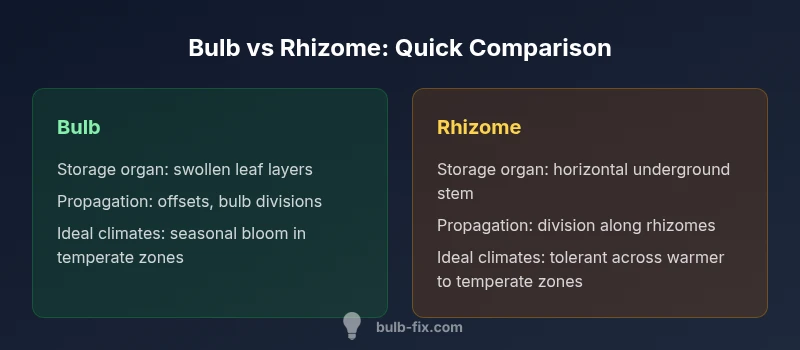
| Storage organ | Swollen leaf layers (tunicated), compact | Horizontal underground stem, energy stored along length |
| Propagation method | Offsets or new bulbs; dedicated bulb divisions | Division along rhizomes; new shoots at nodes |
| Typical climate fit | Temperate regions with distinct seasons; reliable spring/early color | Warmer or milder climates; steady, year-round growth |
| Dormancy pattern | Seasonal dormancy synced to cold periods | Less strict dormancy; can be evergreen in mild areas |
| Spacing and growth | Typically clumping but more contained in a bed | Can be aggressive spread if not managed |
| Care emphasis | Drainage, cool storage, proper depth | Soil richness, consistent moisture, division management |
Upsides
- Clear guidelines exist for planting, care, and timing
- Bulbs often offer vibrant, predictable spring color
- Rhizomes provide year-round structure and easier propagation
- Both can be used to create dynamic borders and themed beds
Drawbacks
- Care requirements differ and can be confusing for beginners
- Bulbs may require chilling in some climates to bloom reliably
- Rhizomes can become invasive if not contained or divided carefully
Both bulbs and rhizomes have a valuable role; choose based on climate, space, and bloom goals
If you want defined spring color in temperate zones, bulbs are ideal. For ongoing texture and resilience in warmer climates, rhizomes shine. A mixed approach often delivers the best year-round performance.
Got Questions?
What is the primary difference between a bulb and a rhizome?
A bulb stores energy in layered leaves and produces a shoot from the top, while a rhizome stores energy along a horizontal underground stem that can sprout at nodes. This fundamental difference drives their growth patterns, propagation methods, and care needs.
A bulb is a compact plant storage unit with layered leaves, while a rhizome is a horizontal underground stem that sends shoots from its nodes.
Which is better for beginners, bulbs or rhizomes?
Both can be suitable for beginners with proper preparation. Bulbs often provide simple, dramatic displays after planting, whereas rhizomes may offer more forgiving growth in warmer climates but require monitoring to prevent aggressive spreading.
Bulbs are usually easier for beginners because they bloom predictably, but rhizomes can be forgiving in warmer soils if you manage their spread.
How should I plant bulbs differently from rhizomes?
Bulbs are planted at a specific depth with the pointed end up, in well-drained soil with full sun to partial shade. Rhizomes are planted shallowly or covered lightly, depending on species, with attention to moisture and soil drainage.
Planted bulbs go deep and upright; rhizomes are often shallow and spread along the soil surface, so check your species for details.
Are bulbs or rhizomes more drought-tolerant?
Rhizomes generally tolerate fluctuation better due to their underground storage and spreading habit, while bulbs depend on seasonal moisture and drainage to prevent rot.
Rhizomes tend to handle dry spells better because they store energy along the stem, but good drainage is still essential for both.
Do I need to cold-stratify bulbs for blooming in cold climates?
In many temperate climates, bulbs require a chilling period to bloom reliably. This is a natural cue that signals the upcoming growing season.
Yes, many bulbs benefit from a chilling period to trigger spring bloom in cold areas.
Can bulbs and rhizomes be grown in containers?
Both can be grown in containers with appropriate potting mixes, drainage, and attention to watering. Bulbs fit well in seasonal containers, while rhizomes may need regular division to prevent crowding.
Absolutely—containers work for both; just mind drainage and space for growth.
Key Points
- Identify your climate: bulbs favor seasonality; rhizomes favor continuity
- Plan for spread: bulbs are typically contained; rhizomes require containment strategies
- Match care needs to your soil and moisture regime
- Use a mixed planting design to maximize color and texture throughout the year
- Follow the planning checklist before purchasing