Bulb vs Root Vegetables: A Practical Gardening Comparison
A data-driven comparison of bulb vegetables (onion, garlic, shallot) and root vegetables (carrot, beet, radish) to guide gardeners and cooks in planning harvests, storage, and meal prep efficiently.


For home gardeners and cooks, bulb vs root vegetables diverge in storage life, flavor, and growing needs. Bulb vegetables like onions and garlic excel in long-term storage and milder cooking notes, while root vegetables such as carrots and beets offer versatility and quick harvests. Your choice depends on space, climate, and planned meals.
bulb vs root vegetables: Definitions and categories
In everyday gardening and cooking, the distinction between bulb vegetables and root vegetables informs planning, storage, and meal planning. Bulb vegetables store most of their energy in a fleshy underground bulb, examples being onion, garlic, and shallot. They typically mature within one growing season and respond well to cool, dry storage once harvested. Root vegetables store energy in underground roots or root crowns, with common examples including carrot, beet, radish, turnip, and potato (the latter is botanically a tuber, yet widely treated as a root crop in kitchens and markets). The Bulb Fix team notes that framing crops this way helps homeowners optimize a garden layout for both harvest windows and pantry needs. Storage environments differ: bulbs usually enjoy cool, dry spaces, while root crops often benefit from humidity control and curing. With this framework, we can compare growth timing, storage tactics, and culinary uses across these two families.
According to Bulb Fix, recognizing how bulb vegetables and root vegetables cooperate in a small garden can simplify planning and stretch your harvest across seasons.
Nutritional and culinary contrasts
Nutritionally, bulb vegetables and root vegetables offer complementary profiles. Bulb vegetables tend to deliver strong aromatic compounds—think sulfur-containing compounds in onions and garlic—that contribute depth to sautés, roasts, and braises. They are usually consumed in smaller quantities per dish, but their flavors are foundational, enabling a wide range of cuisines. Root vegetables deliver earthy sweetness, fiber, and bulk that support heartier meals like stews, roasts, and purees. Carrots bring beta-carotene; beets supply folate and minerals; radishes add crisp bite. In terms of texture, bulbs soften with caramelization, while roots provide substantial bite and creaminess when roasted or mashed. When planning a kitchen menu, a mixed approach leveraging bulb vegetables for flavor bases and root vegetables for body and color tends to yield balanced meals. Bulb vs root vegetables both contribute to nutrition, but they do so through different flavor dynamics and culinary roles, expanding what a home cook can achieve from a single garden bed or pantry.
Storage and processing are integral to flavor outcomes. Bulb vegetables often benefit from air circulation and a temperature range that suppresses moisture loss, while root crops enjoy slightly higher humidity and careful curing to maximize shelf life. The Bulb Fix team emphasizes that a well-considered approach to bulb vs root vegetables helps reduce waste and improves meal variety over the year.
Growing conditions and garden planning
Growing bulb vegetables versus root vegetables requires distinct bed preparation and management strategies. Bulbs like onions and garlic prefer well-drained soil with moderate fertility and consistent moisture—enough to promote bulb formation but not so much that rotations invite rot. Plant spacing is often wider for onions and garlic greens, and planting depth typically shallow. Root vegetables favor lighter, looser soil with good mineral content to facilitate root penetration and uniform development. Carrots, beets, and radishes benefit from soil that is free of large clumps and stones to prevent forked roots. Crop rotation is essential: avoid planting heavy bulb crops in the same soil year after year if pests or diseases are a concern; for roots, rotate with legumes or leafy greens to maintain soil health. In a compact space, succession planting for bulbs can be paired with staggered root crops to maximize harvests. Planning tools such as grid layouts, companion planting charts, and rotation calendars help ensure that bulb vs root vegetables occupy complementary parts of the garden, minimizing soil depletion and pest pressure. The Bulb Fix team recommends mapping out both crop groups on a single plan to visualize harvest times and storage capacity in advance.
Storage, shelf life, and spoilage prevention
Storage is a decisive factor in how bulb vs root vegetables fit into a home pantry. Bulb vegetables typically store for several weeks to months in a cool, dry, well-ventilated space, provided they are cured and kept away from excess moisture. Avoid overcrowding to minimize fungal spoilage and micromovements that bruise skins. Root vegetables often require different conditions: many perform best in a cool environment with moderate humidity, sometimes after curing to improve shelf life. Proper curing helps maximize flavor and texture by reducing internal moisture and increasing skin hardening, which reduces spoilage during storage. Handling matters—minimize bruising, wash only when cooking, and separate varieties to prevent cross-contamination by pests or rot residues. The contrast between bulb storage and root storage underscores the need for separate storage zones or containers that reflect each crop’s climatic needs. With careful handling and the right storage environment, both bulb vegetables and root vegetables can contribute fresh flavors well into the off-season.
Economic and environmental considerations
From an economic perspective, bulb vs root vegetables reflect different cost structures. Bulb vegetables often command stable, predictable prices at market and seed catalogs, and their longer shelf life can translate to lower waste in households that plan meals around pantry staples. Root vegetables typically offer a faster return on investment in a garden—from quick germination to harvest—but their shorter shelf life requires timely use or processing. Environmentally, both crop groups can be grown with sustainable practices: mulching conserves moisture in bulbs, while soil microbe health is important for roots. Water-use efficiency, soil health, and pest-management strategies influence the ecological footprint of each crop type. The Bulb Fix analysis shows that combining bulb and root crops in a well-planned rotation can reduce soil stress, optimize water use, and support year-round food resilience. Diversified cropping also helps spread risk if a weather pattern affects one group more than the other, providing a more robust home garden.
Planning a kitchen garden rotation: practical steps
A practical rotation plan for bulb vs root vegetables helps prevent disease buildup and supports soil health. Start by mapping your growing space into four zones: bulbs, shallow-root crops (radishes, turnips), mid-depth roots (carrots, parsnips), and long-season bulbs (garlic, onions). Aim for a two-year rotation for most crops to minimize pest and disease pressure. Prepare beds with compost and balanced fertilizer, then adjust pH for specific crops (bulbs prefer slightly acidic to neutral soil, roots can tolerate neutral to slightly alkaline). Plan staggered sowing dates to space harvests, using succession planting to ensure a steady supply. Finally, consider storage and processing: harvest bulbs after drying periods, cure root crops in a cool area, and set up containers or crates so air can circulate. Practically speaking, a two-year rotation for bulbs and roots, with a well-thought layout, yields better results than a single-season approach. The process may require more upfront planning, but the payoff is extended harvest windows and a more diverse, resilient pantry.
Common myths and misconceptions about bulb vs root vegetables
Myth: Bulb vegetables are the only long-term pantry option. Fact: Root vegetables can last many months in the right conditions, and bulbs store well too when properly cured. Myth: Root vegetables require more soil depth than bulbs. Fact: Depth needs vary by crop; many root crops tolerate lighter soil if properly prepared, while bulbs may require more uniform moisture. Myth: All bulbs are difficult to grow. Fact: With proper soil preparation, drip irrigation, and seasonal timing, onions and garlic can be surprisingly forgiving for many hobby gardeners. Myth: Bulbs and roots cannot be grown together. Fact: A mixed planting plan can maximize space, spread harvest times, and improve soil health when implemented with thoughtful spacing and crop rotation. By debunking these myths, you can plan a garden that blends bulb vs root vegetables effectively.
Selecting seeds and starts: practical tips
Choosing the right varieties is key when planning bulb vs root vegetables. For bulbs, select storage onion types suited to your climate and garlic strains adapted to your growing season. For roots, pick varieties known for your region’s day length and soil type, and consider early, mid, and late harvest windows to extend availability. Read seed catalogs for germination guidance and disease resistance traits. When starting indoors, use trays with good drainage, and harden-off seedlings before transplanting. Keep in mind that different crops have distinct spacing and soil depth needs, so a well-labeled garden map helps avoid confusion at planting time. The goal is to align varieties with your local climate, space, and culinary preferences, so bulb vs root vegetables yield a balanced harvest that covers fresh, canned, and preserved uses throughout the year.
4-week starter plan for a small garden: actionable steps
Week 1: Prepare soil, add compost, and map zones for bulbs and roots. Buy starter sets for onion sets, garlic cloves, and a few root crops. Week 2: Plant shallow bulbs and early root crops like radishes; ensure consistent watering and mulching. Week 3: Sow mid-season root crops such as carrots in rows or blocks; monitor for pests and thinning needs. Week 4: Begin harvests for quick-root crops; start curing bulbs in a dry, ventilated space. Maintain a log of varieties, dates, and yields. This starter plan emphasizes a practical, incremental approach to bulb vs root vegetables, maximizing space while balancing maintenance with harvest timing. A thoughtful plan reduces wasted space and yields a steady supply of fresh ingredients, no matter the season.
Practical post-harvest processing and preservation tips
After harvest, bulb vegetables benefit from drying and curing to extend shelf life. Store them in a cool, dark, well-ventilated area, ideally with good airflow to prevent moisture buildup. Root vegetables should be cleaned gently and stored in a breathable container with appropriate humidity, avoiding moisture trapped against the skin. For long-term use, consider quick-preservation methods: canning or pickling for bulbs and root vegetables, or turning roots into stocks and frozen purées. Label storage containers with crop type and harvest date to monitor freshness. Keeping organized storage routines for bulb vs root vegetables reduces waste and ensures you can use your harvest across multiple meals. With careful handling, bulb vs root vegetables can be a reliable backbone of a season-long pantry.
Comparison
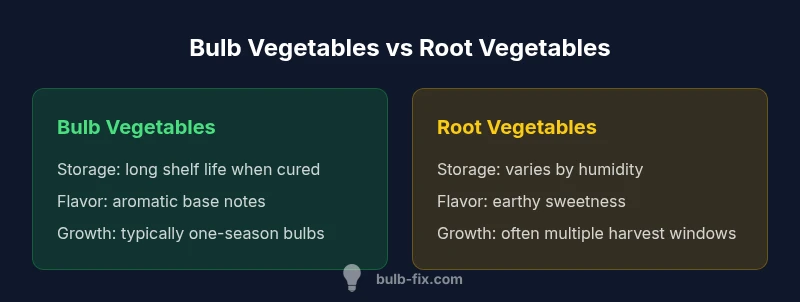
| Feature | bulb vegetables | root vegetables |
|---|---|---|
| Growth time | longer-season for bulbs; typically one growing cycle | shorter-to-mid season; multiple harvest windows |
| Storage life | longer shelf life when cured and stored cool/dry | variable; depends on humidity and curing; generally shorter shelf life |
| Flavor profile | aromatic, savory and strongly shaped by cooking | earthy sweetness and robust textures when roasted or boiled |
| Space/soil needs | often shallower planting depth; good for long, patient beds | deeper roots; soil must be loose and stone-free |
| Best use case | pantry staples and flavor bases with extended storage | quick harvests and versatile meals with fresh produce |
| Price variability | cost-competitive; depends on storage longevity | varies with season; often cheaper per pound when in season |
Upsides
- Offers a balanced approach to planning and storage
- Supports year-round kitchen needs with diverse crops
- Helps reduce waste through strategic planting and rotation
- Encourages a resilient pantry with mixed harvest windows
- Facilitates flexible meal planning and flavor variety
Drawbacks
- Requires careful storage management and space planning
- Different crops may need distinct soil and humidity controls
- Root crops can suffer from pests if not rotated properly
- Bulbs can be affected by late-season moisture causing rot
Both bulb vegetables and root vegetables have distinct advantages; a mixed approach is best for most home gardens.
Bulbs excel in long-term storage and flavor bases, while roots offer quick harvests and versatile textures. The optimal garden plan blends both, aligning with climate, space, and cooking goals.
Got Questions?
What counts as a bulb vegetable in common gardening terms?
Bulb vegetables include onions, garlic, and shallots, which store energy in a fleshy underground bulb. They mature in one season and store well when cured properly. Other crops may be botanically different, but these are the typical bulb crops grown in home gardens.
Common bulbs are onions, garlic, and shallots. They store well when cured and are often grown in the same beds as roots.
Are root vegetables always easier to grow than bulbs?
Root vegetables can be forgiving in many soils, especially when you prepare the bed and avoid stones. Bulbs require specific moisture levels and spacing to form well. Overall, ease depends on soil quality, climate, and the variety chosen.
Roots can be forgiving if the soil is prepared; bulbs need careful spacing and moisture. It varies by climate and variety.
Can bulbs be stored at room temperature for long-term use?
Most bulbs store best in a cool, dry space with good air circulation. Room temperature storage risks moisture buildup and rot. Proper curing and ventilation extend shelf life significantly.
Keep bulbs cool and dry; room temperature storage can lead to spoilage.
Do potatoes count as root vegetables?
Potatoes are technically tubers, not true roots, but they are commonly categorized as root vegetables in cooking and grocery planning. They store well under proper conditions but have different care needs than true root crops like carrots.
Potatoes are tubers, not true roots, but often treated as root vegetables in stores.
What are common pests for bulbs in storage?
Common issues for stored bulbs include mold growth in damp environments and pests like mites or weevils if storage is not clean and dry. Proper curing and ventilation reduce risk.
Dry, cool storage helps prevent pests and mold in bulbs.
Can bulb and root vegetables be grown in the same bed?
Yes, with careful planning. Use companion planting principles, rotate crops yearly, and ensure each crop has enough space and compatible soil moisture. This reduces disease risk and makes efficient use of garden space.
Sure—just plan spacing and rotate crops to keep soil healthy.
Key Points
- Plan for both bulb vegetables and root vegetables to maximize pantry resilience
- Use rotation and proper storage to extend shelf life
- Balance flavor bases (bulbs) with body crops (roots) for diverse meals
- Stagger harvests to avoid glut and waste
- Invest in labeled storage zones to maintain quality