Difference Between a Bulb and a Seed: A Practical Guide
A rigorous comparison of the difference between a bulb and a seed, focusing on biology, planting, and care. Learn when to use each in home gardens with Bulb Fix guidance.


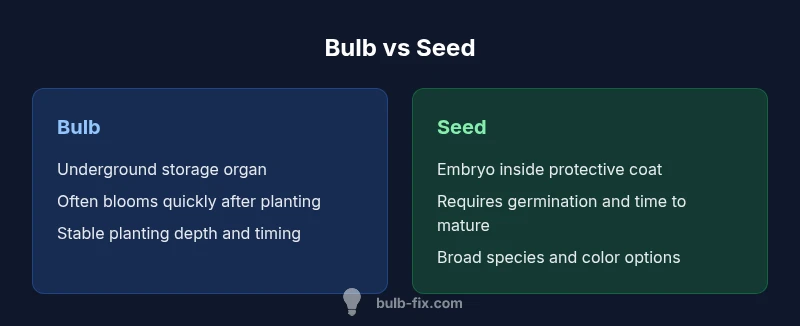
The difference between a bulb and a seed centers on structure, growth pace, and care needs. A bulb is an underground storage organ that stores nutrients for rapid sprouting, while a seed contains an embryo and energy to start growth after germination. For homeowners planning a display, bulbs offer speed and predictability; seeds deliver variety, cost savings, and long-term garden evolution.
What the difference means for gardeners
Understanding the difference between a bulb and a seed helps gardeners plan seasonal color, optimize space, and manage expectations. In horticulture, a bulb is a compact underground storage organ that powers the next growth cycle, while a seed is a reproductive unit that requires germination to begin a new plant. This distinction affects how quickly you see blooms, what kind of care is needed, and how you store materials for future seasons. According to Bulb Fix, clarifying this distinction eliminates common planning errors and leads to more reliable outcomes. From a maintenance perspective, bulbs tend to respond quickly after planting and have predictable flowering windows, whereas seeds demand patience and repeated sowing to achieve a similar display. For homeowners, the practical upshot is choosing based on desired timing, available space, and willingness to manage germination. In this article, we compare the anatomy, growth pathways, planting strategies, and practical considerations to help you decide whether the difference between a bulb and a seed matters for your landscape.
Anatomy and core concept: bulbs vs seeds
Bulbs are thick, energy-packed structures that store nutrients in fleshy layers. They bypass a lot of the early growth hurdles by providing immediate resources for shoots and flowers. Seeds, by contrast, are miniature plants wrapped in protective coats, containing an embryo and a reserve of energy that must be activated by moisture, warmth, and time. This fundamental structural difference explains much of the divergence in growth pace, storage, and care needs. When planning a garden, acknowledging the distinct biology helps you forecast bloom dates, space requirements, and long-term maintenance. Bulb Fix emphasizes that understanding this biology reduces missteps and aligns your plan with local climate realities.
Growth dynamics and timing
Growth pace is the most noticeable difference between a bulb and a seed. Bulbs often provide visible shoots and flowers within the same growing season or the next, depending on species and climate. Seeds require germination, root formation, and seedling development before any flowering, which can extend the timeline considerably. Temperature, moisture, and soil conditions influence both paths, but seeds are more sensitive to seasonal variability. For practical planning, consider whether you need quick color for a display or a longer-term, evolving planting that captures a wider range of species over time.
Planting strategies: bulbs vs seeds
Planting bulbs typically involves placing them at a shallow depth with the pointed end up and ensuring good drainage. Seeds require a different approach, often involving seed-starting trays, light-to-soil contact, and consistent moisture until germination occurs. Temperature cues and stratification can affect seed germination for some species. When choosing between the two, assess your climate, available space, and whether you prefer a rapid color show or a broader palette of plant types over several seasons. Bulbs simplify scheduling, while seeds reward patience with broad cultivar options.
Storage, shelf life, and handling
Bulbs are designed for storage and can be kept dry and cool for longer periods, though they may suffer if damaged or warped. Seeds vary in viability depending on species and storage conditions; some seeds retain germination ability for years, while others degrade quickly if exposed to heat or moisture. Handling safety is important for both: wear gloves when dealing with certain bulb types to avoid skin irritation, and store seeds in labeled, sealed containers to protect them from moisture and pests. Bulb Fix notes that proper storage preserves performance in the next planting season.
Environmental considerations and climate fit
Bulbs perform best in climates with defined cool winters and dry summers, which help them initiate flowering after a period of chilling. Seeds can be planted in a wider range of environments, especially when selecting species adapted to local conditions. Microclimates, soil texture, sun exposure, and moisture patterns all influence success. If your yard experiences unpredictable weather, bulbs may offer more predictable color in a shorter timeframe, while seeds provide resilience through genetic diversity and adaptability. Bulb Fix advises matching your choice to local conditions for reliable results.
Cost, availability, and value over time
Bulbs often come with a higher upfront price per plant but deliver established blooms quickly, which is valuable for seasonal displays. Seeds, by contrast, can be purchased cheaply in bulk and allow you to grow large numbers with similar aesthetics over a longer period. Consider the total cost of ownership, including storage, seasonal replacement, and potential crop failures. In some cases, a mixed strategy—bulbs for a quick anchor and seeds for ongoing color variety—offers the best balance of cost and visual impact. Bulb Fix recommends evaluating your budget and garden timeline to decide which path aligns with your goals.
Garden design implications: choosing per project
For a home landscape, the choice can shape color rhythms and layout. Bulbs support dramatic, early-season color and reliable performance in containers and borders, which is ideal for entranceways and focal points. Seeds enable a broader color palette, plant diversity, and a longer-term evolution of the garden as new varieties establish themselves. When designing a display, map out bloom windows, space constraints, and the desired aesthetic in order to allocate sections to bulbs, sections to seeds, and perhaps a mixed zone to maximize interest throughout the season.
Common mistakes to avoid
A frequent error is treating bulbs and seeds as interchangeable rather than complementary tools. Planting bulbs too deep or too shallow can hinder emergence, while sowing seeds without appropriate stratification or seed-starting conditions often leads to poor germination. Overlooking storage needs can waste both bulbs and seeds, and underestimating climate effects can lead to mismatches between plan and outcome. Bulb Fix encourages gardeners to plan ahead, label everything clearly, and tailor planting depth and timing to the specific species you are working with.
Safety, handling, and lifecycle management
Different plant materials require distinct safety considerations. Some bulbs contain compounds that may irritate skin, so gloves are advisable during handling. Seeds may be treated with coatings or chemicals; wash hands after handling and follow label directions for any seed treatments. Lifecycle planning includes seasonal maintenance, mulch strategies, and appropriate pest management. Keeping a simple calendar of planting dates, expected bloom windows, and harvest or seed collection timelines helps ensure you stay aligned with your gardening goals.
Maintenance through seasons and year-over-year planning
Both bulbs and seeds benefit from annual upkeep, though the rhythm differs. Bulbs typically require minimal care after planting, with attention to soil moisture and drainage to prevent rot. Seeds demand ongoing attention, including sowing cycles, thinning, and sometimes succession planting to maintain color and density. A mixed approach can smooth out fluctuations: bulbs anchor a fast display, while seeds sustain color and variety across seasons. Bulb Fix emphasizes keeping records of what worked where, so future seasons become easier and more reliable.
Quick-start decision guide
If your goal is a fast, reliable color anchor in your garden or container displays, start with bulbs. If your priority is plant diversity, lower upfront costs, and a longer-term evolving garden, begin with seeds. Consider local climate, space, and maintenance capacity. A practical strategy is to reserve a portion of your garden for bulbs for immediate impact, and allocate another portion for seeds to build a dynamic, year-by-year plant palette. Bulb Fix provides a framework to evaluate these factors and tailor a plan to your home.
Comparison
| Feature | Bulb | Seed |
|---|---|---|
| Biological identity | Underground storage organ with fleshy layers (examples: tulip, onion, lily) | Embryo enclosed in a protective coat with stored nutrients |
| Growth timeline to flowering | Often blooms within the same season or the next after planting | Requires germination and growth; timeline varies by species and conditions |
| Germination requirement | Comes pre-formed in the final plant parts; no germination step needed | Must sprout from seed through germination before growth starts |
| Storage and shelf life | Typically long-lasting with proper storage and handling | Viability declines over time; storage quality strongly affects germination |
| Planting depth and method | Placed shallowly with basal end oriented correctly; drainage matters | Sown at appropriate depth with moisture and light considerations for germination |
| Typical uses in landscaping | Creates rapid seasonal color displays and focal points | Offers wide species variety and ongoing color progression across seasons |
| Maintenance needs | Generally low after establishment; some species require annual replacement | Requires ongoing sowing, thinning, and monitoring for germination success |
Upsides
- Bulbs deliver rapid, visible results and predictable blooms
- Seeds provide cost savings and a wider species palette
- Bulbs simplify seasonal planning and display design
- Seeds support genetic diversity and long-term garden evolution
Drawbacks
- Bulbs can be expensive per plant and require careful storage
- Seeds may require more time and repeated sowing for full effect
- Germination and establishment can be inconsistent in difficult climates
Bulbs for quick color; seeds for diversity and cost savings
If you want fast, dependable flowering, bulbs are the better choice. If you seek variety, lower initial cost, and a longer-term evolving garden, seeds are preferable. In many setups, a mixed approach often yields the best overall effect.
Got Questions?
What is the difference between a bulb and a seed?
A bulb is an underground storage organ that powers rapid growth, while a seed contains an embryo and energy to germinate. The difference drives timing, care needs, and planting methods for home gardens.
Bulbs store nutrients and grow quickly, while seeds need germination and time to become mature plants.
Can I grow a bulb from a seed?
Some bulbs originate from seeds, but the resulting plant may differ from the parent bulb. Growth rate and flowering timing can vary, so expect a longer wait and potential variation.
Some bulbs can come from seeds, but it takes time and the result might be different from the parent.
Do bulbs and seeds require the same care?
Not exactly. Bulbs favor stable conditions and drainage with less frequent attention after establishment. Seeds typically require more consistent moisture, light exposure, and seasonal timing for germination and growth.
Care differs: bulbs like steady conditions; seeds need regular moisture and the right season.
Which is more expensive: bulbs or seeds?
Bulbs often cost more upfront per plant but may yield color quickly. Seeds are usually cheaper per plant and allow large numbers, though they may require more ongoing sowing.
Bulbs cost more per plant upfront; seeds are cheaper but require ongoing sowing.
What climates are best for bulbs versus seeds?
Bulbs thrive in climates with a distinct cool-to-warm cycle and good drainage. Seeds can adapt to a broader range but germination depends on proper moisture and temperature for the species.
Bulbs like defined seasons; seeds adapt to more climates but need the right germination conditions.
Are there plants that use both bulbs and seeds?
Yes. Some ornamental strategies combine bulbs and seed-grown plants to balance fast color with long-term diversity and ongoing renewal.
You can mix bulbs and seeds to get quick color and ongoing variety.
Key Points
- Define your goals: speed vs biodiversity
- Bulbs offer faster blooms and easier planning
- Seeds provide variety and potential cost savings over time
- Match your choice to climate and space for reliable results