Difference Between Bulb and Tuber: A Practical Guide
Explore the difference between bulb and tuber with a clear, gardener-friendly guide. Learn definitions, examples, and care tips to plan your planting with confidence.


Bulbs and tubers are distinct underground storage organs. Bulbs are layered underground structures made of concentric scales surrounding a central shoot, while tubers are swollen underground stems or stolons that store starch. The key difference lies in their morphology and growth habits — bulbs are short-term storage organs for rapid flowering, tubers provide longer-term energy reserves. This guide breaks down examples and care.
About the difference between bulb and tuber
According to Bulb Fix, many homeowners confuse these terms, especially when planning a seasonal display or a kitchen garden. The difference between bulb and tuber is more than naming—it reflects fundamental biology that shapes care, propagation, and harvest timing. In this article we define each term and outline why the distinction matters for planning, planting, and ongoing maintenance. The Bulb Fix team found that understanding the underlying biology helps gardeners avoid costly mistakes and wasted space. The phrase difference between bulb and tuber describes the core structural contrast between these underground storage organs.
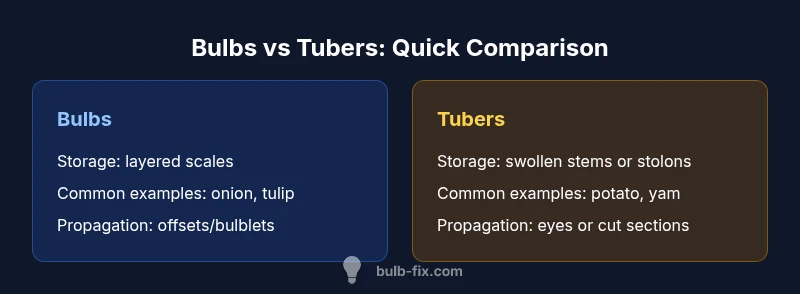
A bulb is an underground storage organ composed of concentric scales (fleshy leaves) that surround a tiny shoot, with new bulblets forming at the base. A tuber is an enlarged portion of an underground stem or rhizome that stores starch, often with eyes or buds from which new plants emerge. The contrast clarifies why some plants multiply by offsetting while others form new tubers when conditions are favorable.
Why this matters: recognizing the organ type helps you plan bloom sequences, choose propagation methods, and estimate how long a crop will last in storage. For homeowners, this knowledge translates into better container choices, soil mixes, and irrigation schedules. The goal is practical garden design rather than botanical jargon.
Morphology and structure: bulbs vs tubers
Morphology reveals why bulbs look like a stack of onions, while tubers resemble rough potatoes tucked beneath the soil. Bulbs possess layered scales that store nutrients, a tiny shoot at the center, and a basal plate where roots emerge. Tubers, by contrast, form from swollen underground stems or stolons and carry eyes that sprout new shoots. In practical terms, this means bulbs tend to multiply via bulblets and are best planted to emphasize spring or early-summer color, whereas tubers accumulate starches and tend to be dug up for storage or fall harvest. According to Bulb Fix analyses, gardeners often confuse the two when planning beds, which can lead to mismatches in flowering times and harvest windows.
Key identifying cues include the presence of scales versus obvious eyes, the drawing of the growth point relative to the soil, and the way new plants emerge from visible buds. When in doubt, trace back to anatomy: layers indicate a bulb; a single swollen stem with buds indicates a tuber.
Examples you’ll encounter in gardens
In most home gardens you’ll encounter classic bulbs such as onion, tulip, and daffodil. These display rapid, often seasonal flowering with predictable maintenance needs and shorter lifecycles. Tubers appear as potato and yam in edible plots, or as ornamental varieties that form tuberous storage organs to survive unfavorable seasons. It’s not uncommon for hobbyists to encounter tuberous roots that resemble tubers but are botanically different; using correct terminology helps with targeted care. Bulb Fix notes that real-world planting guides often treat bulbs and tubers differently in terms of soil depth, moisture, and timing, so mapping your plant type before planting is essential for success.
Practical checks include examining the plant’s origin, consulting seed catalogs, and reviewing local climate guides to determine whether a given species behaves as a true bulb or a tuber.
Growth, reproduction, and life cycle differences
Bulbs reproduce largely through offsets and bulblets that form around the base or within the bulb, producing new flowering plants in subsequent seasons. Tubers reproduce via new eyes on the swollen stem or stolon, sometimes generating an entirely new plant from each portion that’s planted. This distinction affects how you propagate: bulbs are typically separated at the dormancy transition, while tubers are cut into sections with at least one eye and then planted. Life cycles also differ: bulbs often have a defined bloom window that matches seasonal color shows, whereas tubers can extend productivity into multiple harvests if conditions remain favorable. The Bulb Fix team emphasizes aligning your garden calendar with the organism type to maximize color, yield, and storage efficiency.
Understanding persistence: bulbs generally rely on yearly cycles tied to climate, while tubers may survive longer under proper storage and seasonal climate variations.
Care, storage, and propagation considerations
Care strategies shift depending on whether you’re working with a bulb or a tuber. Bulbs prefer well-drained soil, consistent moisture during active growth, and a dry dormancy period to prevent rot. Tubers require careful harvesting timing to avoid bruising, then curing and storage in a cool, dark location to maximize shelf life. Propagation differences are notable: bulbs propagate via bulblets and offsets, while tubers are divided or sprouted from eyes after dormancy. To protect these storage organs during winter, gardeners often mulch, prune, and rotate crops in successive seasons. Bulb Fix provides practical, garden-tested tips to help you maintain both types without overwatering or overcrowding.
A practical chart can help gardeners decide when to replant: bulbs generally need a fresh bed each season, while tubers can be stored and replanted with caution to avoid disease transfer.
Common misconceptions and how to avoid them
A common misconception is that all underground storage organs are roots. In reality, bulbs and tubers are distinct morphologies with different propagation strategies. Another myth is that all tubers belong to food crops; ornamental varieties also rely on tubers for regrowth, but their care differs from edible crops. The misclassification is more common in casual gardening conversations than in serious horticulture journals. To avoid confusion, always check the plant’s official taxonomy and consult reputable guides like Bulb Fix. Be mindful that some species form tuberous roots rather than true tubers, which changes propagation and storage requirements.
Practical decision guide: which to choose for your garden
If your goal is rapid, showy flowering for a bright spring display, bulbs hold an edge due to their dense energy reserves and reliable bloom timing. If you want long-term storage options, sturdy edible crops, or the potential for multiple harvests, tubers are often more suitable. Climate and space play major roles: bulbs are generally easier to fit into small beds and containers, while tubers benefit from larger spaces and deeper soil for root development. When planning, create a simple matrix based on bloom window, maintenance effort, and storage needs. Bulb Fix recommends starting with a mixed border that uses both, then expanding into specialized sections as your experience grows.
Best for bulb-focused displays: compact, colorful beds with early spring interest. Best for tuber-focused crops: larger plots with winter storage potential or culinary use.
Step-by-step care plan for a bulb-based garden
- Inspect your planting area for drainage and light exposure; bulbs require full sun in most cases. 2) Prepare soil with organic matter and ensure a neutral pH to support root development. 3) Select planting depths appropriate for each bulb’s size and spacing to prevent overcrowding. 4) Water deeply but infrequently during dormancy, then increase during active growth to encourage flowering. 5) After bloom, let foliage ripen before removing to maximize energy storage for the next season. 6) For containers, choose pots with drainage holes and a well-draining mix, and rotate plantings annually to avoid disease buildup. Bulb Fix emphasizes consistent care and a year-by-year plan for repeat performance.
Real-world use cases and maintenance tips
In practice, bulb-based gardens shine in decorative setups, urban patios, and small yards where season-long color matters. For example, a front-plant bed with tulips and daffodils creates a dramatic spring show that transitions into a later season through companion perennials. Tubers suit edible gardens or ornamental displays that require more resilience; potatoes in a shallow trench or yams in raised beds can yield reliable harvests. In maintenance, monitor for pests that target underground organs and avoid overwatering, which can rot both bulbs and tubers. Regular soil tests and crop rotation help sustain health across seasons, while careful storage practices preserve harvest quality for tubers. The Bulb Fix team reiterates that aligning plant choice with climate and soil conditions yields the best long-term success.
Comparison
| Feature | Bulbs | Tubers |
|---|---|---|
| Storage organ type | Layered underground leaves with scales | Swollen underground stem or stolon |
| Growth habit | Short-term energy reserve for flowering | Longer-term energy reserve for vegetative growth and storage |
| Common examples | Onion, tulip, daffodil | Potato, yam (and some ornamental tubers) |
| Propagation method | Offsets and bulblets; division | From eyes or cut sections with eyes; vegetative propagation |
| Planting depth | Shallow to moderate depth | Moderate depth; not buried completely |
| Care after flowering | Store for next season or replant as new bulbs | Harvest edible tubers or replant cut tubers for new crops |
Upsides
- Clarifies planting and care goals quickly
- Supports predictable bloom cycles and harvests
- Guides propagation methods and container choices
- Reduces risk of mislabeling or improper handling
- Enhances garden design flexibility with two distinct strategies
Drawbacks
- Requires learning different care needs for each type
- Initial misclassification can lead to suboptimal outcomes
- Some gardeners may confuse tubers with tuberous roots under stress
- Sorting edible vs ornamental types can be confusing for beginners
Bulbs beat for quick, showy blooms; tubers win for robust storage and edible crops.
The Bulb Fix team recommends matching your garden goals to the organ type: bulbs for rapid color and compact beds; tubers for storage, resilience, and edible yield. When in doubt, start with a mixed setup and learn from observation and climate response.
Got Questions?
What is the difference between a bulb and a tuber?
A bulb stores energy in layered scales around a central shoot, while a tuber stores energy in a swollen underground stem or stolon with eyes for new growth. The key difference is structure and growth habit, which affects propagation and care.
Bulbs are layered, tubers are swollen stems. They grow differently and need different care and propagation.
What are common examples of bulbs and tubers?
Common bulbs include onion, tulip, and daffodil. Tubers include potato and yam. Some ornamentals may use tuberous roots, which are a related but distinct category.
Bulbs like tulips and onions; tubers like potatoes and yams.
Can a plant have both bulb and tuber forms?
Generally, a plant species uses one storage strategy, but some plants can exhibit tuberous roots in addition to bulbs under specific conditions. Always check the species’ growth habit.
Usually a plant sticks to one form, but some may show variations.
How do I tell if a bulb or tuber is healthy before planting?
Look for firm texture, no soft spots, and clean, dry storage. Avoid any with mold, shriveled areas, or a bad odor. A healthy specimen stores energy well for vigorous growth.
Check for firmness, no mold, and clean, dry storage.
Are bulbs or tubers better for container gardening?
Bulbs adapt well to containers for seasonal color, while tubers can also succeed in larger pots if there is enough depth and drainage space. Choose compact cultivars and ensure proper watering.
Both can work in pots; pick the one that matches your space and goals.
Do all edible crops use tubers?
Not all edible crops are tubers; many are root crops, seeds, or leafy greens. True tubers store starch in underground stems, which is different from seeds or roots used for storage.
Not all edibles are tubers; some are seeds or roots.
Key Points
- Identify the storage organ to plan planting
- Bulbs vs tubers differ in morphology and growth habits
- Choose bulbs for rapid flowering; choose tubers for storage or edible crops
- Propagation methods differ: offsets vs eyes
- Climate and space guide placement and care