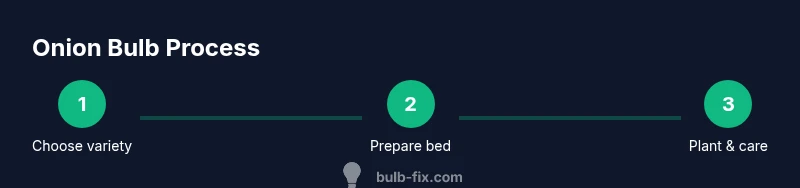
How to bulb onions: A practical step-by-step guide
Learn how to bulb onions from selection to harvest. This educational guide covers variety choice, soil prep, planting, care, and curing, with practical tips for home gardeners.


In this guide you will learn how to bulb onions from sets or direct-sown seeds, including variety choice, soil prep, planting depth, watering, and curing. You’ll finish with properly dried, stored bulbs ready for long-term use. By following these steps, novice gardeners can reliably bulb onions in home gardens, maximizing flavor and storage life.
Understanding bulb onions and what bulbing means
According to Bulb Fix, bulbing is the process by which an onion plant forms a storage bulb underground as day length lengthens and temperatures cool. This block explains the basics of bulbs and why some onion varieties bulb more reliably in certain climates. You’ll learn how bulbs differ from green onions, the role of day length in triggering bulbing, and how soil, water, and nutrition influence bulb development. For home gardeners, the key is to provide consistent moisture, loose soil, and enough time for the bulbs to swell before the heat of late summer. Different onion types exist, including long-day, short-day, and day-neutral varieties, each with distinct bulbing behavior. By recognizing these patterns, you can choose the right type for your region and timing. A successful bulbing cycle begins with choosing a reliable variety, preparing a fertile bed, and setting realistic expectations for harvest windows. In our experience at Bulb Fix, a well-prepared start reduces common issues such as split bulbs or uneven sizing. The next sections walk you through selecting varieties and planning your season so that your onions bulb evenly and store well. Bulbing is not just about planting; it’s about aligning cultivar choice, daylight cues, and cultural practices for a robust harvest.
Choosing the right varieties and timing
Selecting the right bulb onion varieties is critical for successful bulbing. In cool northern climates, long-day varieties typically form bulbs more reliably, while short-day types suit southern regions where days stay longer in late winter or early spring. Day-neutral options offer flexibility across a wider range of latitudes. When planning, consider: flavor profile, storage potential, and maturity days. Early varieties can start bulbing sooner, but larger bulbs often require longer growing periods. At Bulb Fix, we recommend checking seed catalogs for whether a variety is described as long-day or short-day and lining that up with your local climate. If you’re planting from sets, choose those labeled as bulb-forming rather than green onions to encourage proper bulbing. Timing matters too: planting too late after the heat sets in can reduce bulb size and storage life. In our trials, starting beds in early spring or late summer for fall harvest tends to yield the best tuber-like bulbs in temperate zones. Preparation of a reliable calendar helps you track transplant dates, expected harvest windows, and curing time. The goal is even bulbing across most bulbs for uniform cooking quality. Based on Bulb Fix analysis, 2026, long-day varieties bulb best in cooler climates.
Preparing soil and bed setup
A productive bulbing bed starts with well-drained soil, a neutral to slightly acidic pH (about 6.0 to 7.0), and a base of organic matter. Loosen the top 8–12 inches (20–30 cm) of soil to improve root penetration and reduce compaction. If your soil is sandy, add compost to boost moisture-holding capacity; if it’s heavy clay, amend with aged compost and coarse sand to improve drainage. Raised beds can provide consistent drainage and easier weed control. Before planting, test your bed for drainage by sinking a rod or your finger; if water pools, you’ll need improved drainage. Remove perennial weeds and incorporate a starter fertilizer or well-rotted compost to supply nitrogen, phosphorus, and potassium in the early growth stages. Mulching after planting helps conserve moisture and suppress weeds. Throughout the season, monitor soil moisture closely to keep it evenly moist but never waterlogged. Good soil preparation reduces bulb deformities and encourages uniform bulb development across the row. A tidy, well-prepared bed sets the stage for healthy bulbing and easier harvest later.
Planting onion sets vs. transplants for bulbing
You have two primary routes to start bulbing: planting onion sets (small bulbs) or sowing from seed or transplanting seedlings. Sets are convenient and speed bulbing; they jump-start growth and produce usable bulbs sooner, typically within 60–90 days depending on variety and climate. Seed-grown onions take longer to bulb but offer broader variety options and often stronger disease resistance. If you’re in a region with short growing seasons, sets are often the best choice for a reliable harvest; in longer seasons, starting from seed can yield unusually large bulbs and greater flavor variety. Spacing is critical: plant sets about 4–5 cm deep and 10–15 cm apart in rows 30–45 cm apart, while seedlings can be spaced a bit wider to accommodate root growth. Water gently after planting to settle the soil and prevent displacement. Label rows to track variety performance and harvest timing. Inconsistent spacing or depth can lead to uneven bulbing or bulb split.
Caring for growing bulbs: irrigation, fertilization, and weed control
Bulb onions demand steady moisture and balanced nutrition. Water deeply and evenly during the bulbing period, aiming for consistent soil moisture rather than frequent shallow watering. Avoid waterlogging, which can cause rotting or fungal issues. A drip system or soaker hose helps keep foliage dry and soil evenly moist. Fertilize with a balanced, slow-release fertilizer or composted manure early in the season, followed by a phosphorus- and potassium-rich feed as bulbs begin to swell. Avoid excessive nitrogen late in the season, which can delay bulbing and promote leaf growth at the expense of bulb size. Weed control is essential; shallow cultivation or hand-weeding around shallow roots keeps competition down without damaging the bulbs. Mulch after planting to reduce weed growth and temperature fluctuations. Regular scouting for pests such as onion thrips, wireworms, or onion maggots allows for timely, targeted interventions. Practice crop rotation so that onions are not grown in the same bed more than every three years to minimize disease buildup. A calm, consistent care regimen results in uniform bulbing and healthier bulbs at harvest.
Harvesting, curing, and storing onion bulbs
Harvest timing depends on the variety and climate. You’ll know bulbs are ready when the tops fall over and begin to dry, and the bulbs have formed a firm, rounded shape with the necks drying. Gently lift bulbs with a fork or hand tool, avoiding soil damage. After harvest, cure bulbs in a warm, dry, well-ventilated area for 2–3 weeks, turning them occasionally to promote even drying. Once skins are papery and bulbs feel dry, trim the roots and cut the tops to a 1–2 inch length. Store cured onions in a cool, dry, and well-ventilated space with 45–55°F (7–13°C) temperatures and 65–70% relative humidity. Proper curing and storage extend shelf life to several months in ideal conditions. If you notice soft spots or signs of mold, separate affected bulbs to prevent spoilage. With careful timing and handling, you can enjoy home-grown bulbs throughout the storage season.
Common problems and quick fixes
Onion bulbing can encounter several common issues. If bulbs are uneven or fail to bulge, problems often stem from heat stress or inconsistent moisture, so adjust irrigation schedules and provide shade during peak heat. Pests like onion maggots and thrips will damage bulbs and foliage; use row covers and rotate crops to reduce pressure, and consider organic control options where appropriate. Fungal diseases such as downy mildew or botrytis thrive in damp conditions; improve airflow, avoid overhead irrigation, and remove infected plant material. Excessive nitrogen late in the season can cause lush foliage with poor bulbing, so adjust feeding to avoid late-season growth spurts. Cure and store properly to prevent post-harvest rot, and inspect bulbs before storing. Implementing crop rotation, good sanitation, and careful field monitoring dramatically reduces many common problems. When in doubt, start with basic preventive practices and gradually incorporate targeted treatments based on observed conditions.
Practical next steps and seasonal schedule
To keep your bulbing project on track, create a simple seasonal plan that aligns with your local climate. In early spring, prepare beds, choose varieties based on day-length needs, and plant sets or seedlings. Mid-season, monitor soil moisture, weed regularly, and begin feeding with a balanced fertilizer. As days shorten and bulbs swell, reduce nitrogen and maintain even moisture to maximize bulb size. Harvest when tops fall and bulbs are fully formed, then cure in a dry space with good air circulation. Store in a cool, dark area with stable temperatures for longer shelf life. Maintain a garden calendar noting which varieties performed best, which soil amendments aided bulbing, and how long harvesting and curing took. A thoughtful seasonal approach reduces surprises and increases yields year after year. If you keep records and adjust, you’ll improve your bulbing results over time.
Tools & Materials
- Onion sets or seeds(Choose long-day or short-day varieties based on climate; sets are faster to bulb, seeds offer more variety.)
- Compost or well-rotted manure(Improves soil structure and provides slow-release nutrients.)
- Dark, loose, well-drained soil or raised beds(Essential for proper bulb formation and drainage.)
- Garden tools (trowel, hoe, rake)(For bed prep, planting, and weeding.)
- Mulch (straw, shredded leaves, or grass)(Reduces moisture loss and suppresses weeds.)
- Drip irrigation or soaker hose(Promotes even moisture and keeps foliage dry to reduce disease.)
- Vitamin and mineral fertilizer or balanced slow-release(Use according to package directions for early growth and bulbing phase.)
- Plant markers and a calendar(Helps track variety performance and harvest windows.)
Steps
Estimated time: 90-180 minutes
- 1
Select variety and plan timing
Review your climate and choose long-day or short-day varieties accordingly. Decide whether you’ll start with sets or seeds and build a planting window that aligns with your regional frost dates and growing season.
Tip: Use a local seed catalog or extension site to confirm day-length needs for your region. - 2
Prepare the bed
Loosen the soil to 8–12 inches and amend with compost. If your beds drain slowly, consider raised beds and adding sand or grit to improve drainage.
Tip: Incorporate biochar or additional organic matter to improve soil structure for bulb development. - 3
Plant sets or seeds
Plant sets about 4–5 cm deep and 10–15 cm apart in rows 30–45 cm apart. If starting from seeds, thin seedlings to spacing that allows bulb growth.
Tip: Label varieties and keep a garden log to compare bulbing performance. - 4
Water and start nutrition
Water deeply after planting and maintain even moisture through bulbing. Apply a balanced fertilizer early and transition to a potassium-rich feed as bulbs swell.
Tip: Avoid high-nitrogen feeds late in the season to encourage bulb growth rather than leaf expansion. - 5
Control weeds and pests
Weed regularly and use mulch to suppress competition. Scout for onion pests; cover beds if pest pressure increases and rotate crops to reduce disease risk.
Tip: Row covers can deter pests early in the season without harming growth. - 6
Monitor bulbing
Watch for uniform bulb formation and adjust moisture if heat intensifies. Harvest timing depends on variety and climate; plan curing once bulbs reach full size.
Tip: Keep a harvest checklist with expected bulb sizes by variety. - 7
Harvest and cure
Harvest when tops fall over and start to dry. Cure bulbs in a warm, dry space for 2–3 weeks, then store in a cool, ventilated area.
Tip: Avoid stacking bulbs during curing to ensure proper airflow and prevent mold. - 8
Store properly
After curing, store bulbs in a cool, dry, well-ventilated space. Check periodically for spoilage and remove affected bulbs to protect the rest.
Tip: Keep onions away from potatoes, which can release gases that reduce storage life.
Got Questions?
What is bulbing in onions?
Bulbing is the process where an onion plant forms a storage bulb underground as daylight increases and temperatures cool. It marks the shift from leaf growth to bulb enlargement.
Bulbing is when the onion forms a bulb underground as days lengthen and temperatures cool.
Should I plant from sets or seeds?
Sets provide faster bulbing and earlier harvest, while seeds offer more variety and potentially larger bulbs if you have a longer season.
Sets bulb quickly; seeds give more variety if you have time.
When should I harvest onions?
Harvest when the tops fall over and begin to dry. Confirm bulb size before lifting, then cure in a dry space to finish drying.
Watch for tops to fall over; harvest then and cure the bulbs.
How can I protect against onion pests?
Use row covers, rotate crops, and monitor for signs of onion maggots or thrips. Remove severely infested bulbs to protect the rest.
Row covers help keep pests away; rotate beds to reduce problems.
How long can I store cured onions?
Cured onions stored in a cool, dry place can last several months, depending on humidity and temperature.
When cured and stored properly, you can keep onions for months.
Watch Video
Key Points
- Choose varieties suited to your day-length and climate.
- Prepare well-drained soil and control weeds to support bulbing.
- Plant sets or seeds with attention to depth and spacing for uniform bulbs.
- Harvest, cure, and store bulbs properly to maximize shelf life.