How to Choose Light Bulbs for Home
Learn how to choose light bulbs for home across rooms, covering brightness, color temperature, energy efficiency, and fixture compatibility. Practical tips from Bulb Fix for safer, smarter lighting.


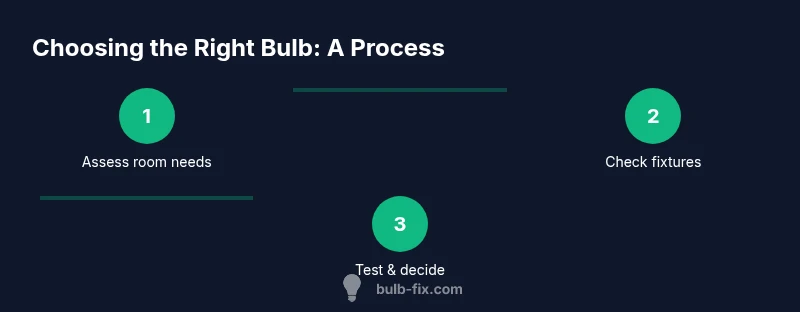
You will learn how to pick the right light bulbs for every room, considering brightness, color temperature, energy use, dimming, and bulb types. You’ll know what labels to read, how to compare lumens vs watts, and how to avoid common pitfalls. According to Bulb Fix, a well-chosen bulb improves comfort and efficiency.
Understanding light quality and its impact on rooms
Light quality affects how spaces feel, function, and look. Brightness influences task ability, while color temperature sets mood. Of course, efficiency matters too—LEDs now offer long life with low running costs. According to Bulb Fix, the right balance of brightness and warmth helps you read comfortably, cook safely, and relax without eye strain. In practice, start by mapping each room’s purpose: living areas for soft, warm light; kitchens and workspaces for neutral, clear light; bedrooms for restful warmth. Use layering—ambient, task, and accent lighting—to avoid harsh shadows. Remember: your eyes adapt, so test bulbs in real living conditions before committing. If a room feels dim, check not just bulb wattage, but fixture placement and shade transparency. Lighting plans that consider activity zones lead to consistent comfort across spaces.
Tools & Materials
- Set of LED bulbs in common color temperatures (2700K, 3000K, 3500K, 4000K, 5000K)(Include warm, neutral, and daylight variants for living areas and task zones)
- Dimmable bulbs (if required)(For rooms with dimmer switches)
- Old bulbs for comparison (if replacing)(Take out to compare brightness)
- Color-temperature reference chart(Helps translate Kelvin to mood)
- Light meter or smartphone app(Optional for precise lux measurements)
- Soft cloth and gloves(For handling bulbs safely)
- Adapters for different bases (if needed)(E26/E27 starter adapters)
- Notebook or note-taking app(Record measurements and preferences)
Steps
Estimated time: 30-60 minutes
- 1
Identify room goals and lighting tasks
Define how each space will be used and what tasks require light. List activities like reading, cooking, or relaxing. This sets the foundation for brightness and color choices.
Tip: Write down at least two primary tasks per room. - 2
Check fixture types and base compatibility
Inspect every fixture to note the base type (E26/E27, GU10, etc.) and any dimmer or smart controls. This prevents mismatched bulbs at purchase.
Tip: Carry one old bulb to confirm fit and base. - 3
Decide color temperature by room function
Choose warmer temperatures for cozy spaces and cooler temperatures for task areas. Use a range rather than a single value to accommodate preferences.
Tip: For living rooms, start with 2700K-3000K; for kitchens, 3500K-4100K. - 4
Match brightness to activity and fixture
Select lumens rather than watts. For lamps, 300-600 lumens; for kitchen task areas, 500-800 lumens; for bedrooms, 200-400 lumens near seating.
Tip: Avoid over-bright bulbs in small lamps. - 5
Assess energy use and lifespan
Compare lm/W efficiency and rated life; LEDs typically offer high efficiency and 15,000-25,000 hours. Consider the total cost of ownership over time.
Tip: Prioritize higher lm/W for busy spaces. - 6
Check dimmer and control compatibility
If dimming, ensure bulbs specify compatibility with your dimmer type. Incompatible bulbs can flicker or buzz.
Tip: Test one dimmable bulb with your dimmer before buying a full batch. - 7
Plan layered lighting strategy
Use ambient, task, and accent lighting to create depth and flexibility. Avoid relying on a single light source.
Tip: Place task lights at or slightly below eye level. - 8
Create a room-by-room shopping plan
List required bases, color temps, brightness targets, and preferred brands. Compare like-for-like options to avoid confusion.
Tip: Bring your reference chart to the store. - 9
Test bulbs in real fixtures if possible
If store testing is allowed, compare brightness and color output in actual fixtures. This helps visualize the final effect.
Tip: Take photos in the room with each bulb. - 10
Consider future-proofing with tunable/SMART options
Smart bulbs and tunable lighting offer flexibility for changing needs. Ensure network compatibility and app support before buying.
Tip: Check for firmware update support. - 11
Check warranties and return policies
Longer warranties can indicate better quality. Verify return policies in case a bulb fails early.
Tip: Keep receipts for warranty claims. - 12
Finalize purchase and schedule maintenance
Purchase your bulbs, label boxes with room assignments, and plan a quarterly lighting check to re-balance as seasons and tasks change.
Tip: Mark a calendar reminder for bulbs replacement.
Got Questions?
What is the difference between lumens and watts, and why does it matter?
Lumens measure brightness; watts measure energy use. Modern LED bulbs use far fewer watts to achieve the same lumen output, so focus on lumens to compare brightness. This helps avoid overpaying for brightness you don’t need.
Lumens tell you how bright the bulb is, while watts show energy use. With LEDs, you get the same brightness with much lower watts, so always compare lumens.
How do I choose color temperature for living rooms vs kitchens?
Living rooms benefit from warm temperatures around 2700K-3000K for a relaxing vibe; kitchens work best around 3500K-4100K for task clarity. Use a mix or tunable bulbs to adapt to activities.
Living rooms prefer warm light, kitchens need clearer light. Aim for 2700K to 3000K in living spaces and 3500K to 4100K in kitchens.
Are LED bulbs safe to use with dimmer switches?
Many LEDs are dimmable, but not all. Check packaging for dimmer compatibility and ensure you use the right dimmer type to avoid flicker or buzzing.
Most LEDs are dimmable, but you must verify compatibility and use the correct dimmer.
Can I mix different bulb types in the same room?
Mixing bulbs is possible but can create color mixing issues and uneven lighting. Plan an intentional mix and keep related fixtures in the same zone.
You can mix bulbs, but do it on purpose to avoid odd color shifts in one room.
How long do bulbs last, and should I replace all at once?
Bulbs have varying lifespans; LEDs typically last many thousands of hours. Replace based on performance, not age, and consider rotating bulbs to balance wear.
LED bulbs last a long time, but replace ones that dim or color-shift rather than waiting for a specific date.
What should I do with old bulbs when disposing?
Dispose of LED bulbs through recycling programs where available. CFLs require special handling due to mercury; follow local guidelines.
Recycle LEDs where possible and follow local rules for CFLs that contain mercury.
Watch Video
Key Points
- Balance brightness and mood with color temperature.
- Lumens matter more than watts for LED bulbs.
- Plan layering to avoid flat lighting.
- Check compatibility before buying dimmable or smart bulbs.
- Test bulbs in actual fixtures when possible.