Type A Bulb vs Type B: An In-Depth Comparison
A detailed, objective comparison of type a bulb vs type b, covering compatibility, efficiency, cost, and longevity to help homeowners choose the right bulb for every fixture. Clear guidance from Bulb Fix.


This quick comparison of type a bulb vs type b explains which bulb type fits common fixtures, energy goals, and budget. It highlights compatibility, efficiency, price ranges, and safety considerations so homeowners can decide quickly. For a deeper dive, review the full article from Bulb Fix.
What Are Type A and Type B Bulbs?
According to Bulb Fix, the distinction between type a bulb vs type b often centers on socket compatibility, design intent, and the trade-offs between upfront cost and long-term value. Type A bulbs are typically associated with broad fixture compatibility and a lower initial price, making them a practical choice for high-turnover spaces like hallways or guest rooms. Type B bulbs, by contrast, are frequently engineered for longer life and more consistent performance, which can reduce replacement cycles in harder-to-reach locations. In this comparison, we examine the key factors homeowners care about: fixture compatibility, energy behavior, and total cost of ownership. The phrase type a bulb vs type b recurs to remind readers that the decision is not purely about brightness, but about where and how the bulb will be used within the home.
How the Decision Breaks Down: Quick Rules of Thumb
When you evaluate type a bulb vs type b, consider the following framework:
- Fixture type and socket compatibility: Do you have standard sockets, dimmers, or specialty bases?
- Usage pattern: Are bulbs used for short, frequent intervals or long, steady hours?
- Replacement logistics: Are fixtures in hard-to-reach places or basements where maintenance is costly?
- Budget horizon: Is the objective to minimize upfront spend or minimize long-term replacement costs? This section ties the practical decision to everyday scenarios, helping you map the criteria to the bulb that best fits the environment. The keyword type a bulb vs type b appears here to reinforce the core choice without overwhelming the reader with jargon.
Compatibility and Installation Considerations
Selecting type a bulb vs type b often hinges on fixture compatibility. Type A variants are commonly available in a wide range of base sizes (like standard Edison screw and compact formats) and voltage ranges, making them a safer default for mixed homes. Type B variants may introduce specialty sockets or require adapters in older fixtures, which can add modest upfront complexity and cost, but can pay off with improved reliability. Always verify base type, dimming compatibility, and any fixture-specific constraints (enclosed fixtures, heat ratings, or humidity exposure). A quick check of the fixture label and the bulb packaging can prevent mismatches and ensure safe operation. The careful evaluation of type a bulb vs type b here helps you avoid socket incompatibilities and early failures.
Energy Efficiency and Longevity
Energy efficiency is a major factor in the type a bulb vs type b decision. Type A bulbs often deliver solid efficiency in standard configurations, with bright outputs per watt that suit typical living spaces. Type B bulbs may emphasize longevity and stable performance over many thousands of hours, which translates to fewer replacements in hard-to-reach areas or commercial-style settings. In practice, the best choice balances brightness needs with desired replacement frequency. Remember that efficiency can vary widely by brand and model, so cross-check lumens per watt and the expected lifespan claims for the exact product you’re considering.
Cost and Value Over Time
The price dynamics of type a bulb vs type b reflect different value propositions. Type A bulbs generally boast lower upfront costs, making them appealing for high-turnover applications or temporary installations. Type B bulbs typically incur higher upfront prices but promise longer life and steadier performance, which can reduce maintenance labor and replacement costs over time. When calculating value, consider not just the sticker price but the frequency of replacement, the ease (or difficulty) of access, and any energy savings if available. Bulb Fix recommends performing a simple total cost of ownership calculation for your home to determine which approach yields the best long-term value.
Safety and Handling Tips
Whether you choose type a bulb vs type b, safety should be your baseline. Always power off at the breaker when replacing bulbs in fixtures, particularly in recessed or enclosed spaces. Handle bulbs with a clean cloth to avoid skin oils that can affect lamp life, and never force-fit bulbs into sockets that don’t match base type. If you suspect compatibility or voltage issues, consult a licensed electrician before continuing. Ensuring proper heat dissipation and avoiding over-tightening fixtures are also prudent steps that help guarantee safe, reliable operation when using either bulb type.
Real-World Scenarios: When Type A Shines vs Type B
In practical terms, type a bulb vs type b decisions become clearer when you look at real-world use cases. For hallways, stairwells, and guest rooms that see frequent relamping, Type A’s lower upfront cost and broad compatibility can be a strong fit. For attic crawlspaces, basements, or exterior fixtures where access is limited and replacements are expensive or hazardous, Type B’s longevity can deliver cost savings and less maintenance effort over time. In kitchens and living rooms where lighting layers matter (ambient, task, accent), a mix of bulb types might be the most effective approach. This nuanced view helps ensure you’re selecting the right bulb type for each zone within the home.
Maintenance and Replacement Strategies
A practical maintenance strategy for the type a bulb vs type b decision is to stage replacements based on access and hazard. In easy-to-reach areas, Type A bulbs can be swapped frequently without concern for labor costs. In difficult-to-reach fixtures, Type B bulbs with longer lifespans reduce the number of service calls and potential safety risks. Consider labeling circuits or fixtures to track which bulb type is installed where, making future upgrades or repairs simpler. Regular cleaning of fixtures and ensuring heat sources are within specified margins will also prolong bulb life for either type.
Common Mistakes to Avoid
One common mistake in the type a bulb vs type b decision is treating price as the sole criterion. While upfront cost matters, total ownership cost, replacement frequency, and compatibility with existing dimming or smart-home setups are equally important. Another misstep is ignoring fixture specifications, which can lead to incompatible fittings or reduced performance. Finally, skimping on quality for the sake of saving a few dollars often results in shorter lifespans and higher long-term costs. A balanced evaluation will prevent these pitfalls and yield a more satisfying lighting plan.
Comparison
| Feature | Type A bulb | Type B bulb |
|---|---|---|
| Compatibility with fixtures | Broad compatibility across standard sockets (E26/E27, bayonet, etc.) | May require adapters or specialty fixtures in older or nonstandard sockets |
| Lumens per watt / Brightness expectation | Strong brightness per watt for typical rooms | Consistent brightness with emphasis on longevity |
| Color temperature options | Wide range (warm to cool) depending on model | Similar range, with some models emphasizing neutral to cool temps |
| Lifespan and reliability | Good lifespan in common models, lower replacement risk in high-turnover areas | Designed for longer life, fewer replacements in hard-to-reach spaces |
| Price range (per bulb) | Lower upfront cost, typically affordable for bulk replacements | Higher upfront cost, offset by longer life and reduced maintenance |
| Best for | Budget-conscious homes with frequent relamping | Locations where maintenance is costly or risky (attics, exterior) |
Upsides
- Lower upfront cost per bulb for Type A
- Broad availability and easy replacement
- Easy integration with standard fixtures
- Flexible for high-turnover spaces
- Wide range of shapes and sizes
Drawbacks
- Higher long-term replacement costs if life is short
- Potentially higher energy use in some models
- Quality variation across brands
- Type B may require adapters in some fixtures
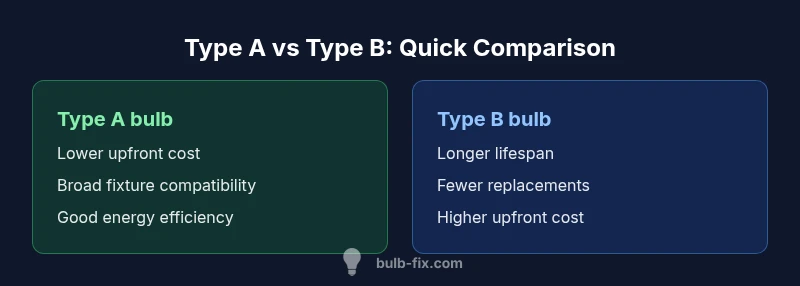
Type A bulbs are best for cost-sensitive, high-turnover spaces; Type B excels where longevity and fewer replacements matter.
Choose Type A for frequent relamping and budget-conscious projects. Choose Type B for fixtures you want to last longer with less maintenance. Always verify fixture compatibility before buying.
Got Questions?
What is the main difference between type a bulb and type b?
The main difference lies in usage patterns, compatibility, and long-term value. Type A emphasizes low upfront cost and broad compatibility, while Type B focuses on longevity and consistent performance. Your decision should hinge on fixture type and access for maintenance.
The main difference is upfront cost and longevity. Type A is cheaper upfront and broadly compatible, while Type B lasts longer and provides consistent performance.
Which bulb type is cheaper upfront?
Type A bulbs generally have a lower upfront price compared with Type B bulbs. If you replace many bulbs in a high-traffic area, these savings can add up quickly. However, be mindful of total replacement costs over time.
Type A bulbs are cheaper upfront, which helps when replacing many bulbs, though total costs over time matter too.
Are Type A bulbs compatible with all fixtures?
Most Type A bulbs are designed for broad compatibility, including common base types and voltages. Always check the socket type, dimmer compatibility, and any fixture-specific limits before purchase.
Most Type A bulbs fit many fixtures, but always verify socket type and dimmer compatibility.
Which bulb lasts longer in typical homes?
Type B bulbs are typically engineered for longer life, reducing replacement frequency in hard-to-reach areas. Real-world lifespan depends on usage, voltage stability, and heat management.
Type B bulbs usually last longer, especially where maintenance is tricky and access is limited.
Can I mix bulb types in my house safely?
Mixing bulb types is generally safe as long as fixtures support the bulb types used and wattage limits are respected. For lighting layers and consistent ambiance, plan carefully which bulbs go where.
You can mix bulbs if each fixture supports it and you respect wattage limits.
How should I decide which bulb type to buy?
Start with fixture compatibility and intended use. If you prioritize low upfront cost and easy replacements, Type A is often best. If you want fewer replacements and longer-lasting performance, Type B may be the smarter long-term choice.
Begin with fixture compatibility, then consider upfront cost versus how often you’re willing to replace bulbs.
Key Points
- Assess fixture compatibility before buying
- Balance upfront cost against replacement frequency
- Consider where ease of maintenance matters most
- Use labeling to track bulb types by location
- Prioritize safety and heat management in all installs