What bulb is smaller than A19? A practical size guide
Discover which bulb types are smaller than A19, how to compare diameters and bases, and tips for safe, energy-efficient replacements. Bulb Fix guides you through size differences, compatibility, and buying tips for easy upgrades.


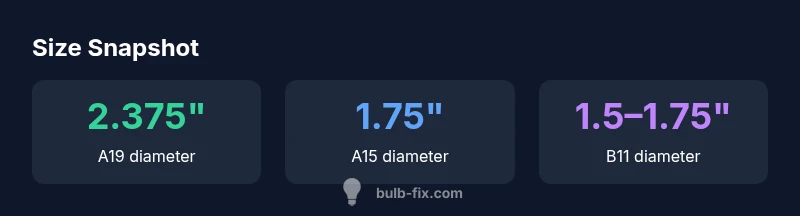
If you’re wondering what bulb is smaller than a19, the quick answer is that several common A-series options fit the bill, with A15 and B11 as the most recognizable examples. A15 bulbs typically measure around 1.75 inches in diameter, while B11 decorative bulbs hover near 1.5–1.75 inches depending on model. Size matters most for fixture clearance and base compatibility (E26 vs E12). According to Bulb Fix, these smaller options are popular in ceiling fans, chandeliers, and compact lamps where space is tight. When selecting replacements, always verify the socket type and the physical clearance to ensure a safe fit.
Why smaller bulbs matter in everyday lighting
When you’re choosing bulbs, the physical footprint matters as much as brightness. A bulb that is too large for a fixture can hit the shade, interfere with a cover, or restrict airflow around the socket. The question what bulb is smaller than a19 becomes practical when you consider common fixtures such as ceiling fans, bath vanity lights, and decorative lamps where space is at a premium. Bulb Fix emphasizes that the most reliable ways to ensure a proper fit are to measure the mouth of the fixture, verify the socket type, and compare the bulb’s shoulder width in addition to its diameter. Smaller bulbs also open up design possibilities, enabling layered lighting and more even light distribution without crowding nearby components.
Common smaller bulb families and how they relate to A19
In the A-series family, A15 is the standard smaller cousin to A19, typically about 1.75 inches in diameter. B-series bulbs like B11 offer a compact footprint often used in chandeliers and night-lights with E12 bases. It’s important to remember that the base size (the screw or pin) often determines compatibility more than shape alone. If you see an A15 with an E26 base, it will screw into most standard sockets, while a B11 with an E12 base won’t fit a typical household lamp that expects an E26 socket. This difference can prevent a great replacement from fitting snugly, even if the bulb’s diameter seems similar in the listing. When evaluating options, compare both the diameter and the base type; dimension labels can vary slightly by manufacturer, so double-check before purchasing.
How diameter translates into real-world fit
Diameter numbers provide a quick cue about whether a bulb will physically fit in a given socket and shade. For example, a typical A19 measures about 2.375 inches in diameter, whereas A15 and B11 sit at roughly 1.75 inches and 1.5–1.75 inches respectively. In many fixtures, a few tenths of an inch difference can affect shading, trim rings, or the ability to tilt the bulb for optimal light distribution. For recessed cans or compact desk lamps, even minor diameter reductions may improve clearance and reduce heat buildup.
Base types and fixture compatibility you must confirm
/socket compatibility is the gatekeeper for any smaller bulb. If your fixture uses an E26-medium screw base, ensure your smaller bulb also uses E26 or a compatible adapter. If you’re dealing with decorative lighting or fixtures marketed as “candelabra,” you’ll likely encounter E12 bases, which are not interchangeable with E26 sockets. In some modern fixtures, LED replacements come in mixed-base configurations, so read the packaging carefully. Bulb Fix recommends keeping a small measurement tool handy and noting the socket type printed on the fixture or its manual. This practice helps you quickly separate truly smaller bulbs from those that just look compact but won’t fit your socket.
Practical buying tips and common pitfalls
When shopping for bulbs smaller than A19, start with the fixture’s mouth diameter and the socket type. If you need a compact bulb for a ceiling fan or a chandelier, consider A15 with a compatible base; for intimate decorative lighting, B11 can be ideal if the fixture accepts E12 bases. Always compare the “diameter” measurement and confirm base type on the packaging. If you’re upgrading to LED, look for LED replacements labeled as “A15 LED” or “B11 LED” to ensure you retain brightness and color temperature while benefiting from energy savings. Finally, test the bulb in a non-critical fixture first to verify fit and warmth before making a larger purchase. Bulb Fix’s approach stresses careful measurement, base verification, and choosing energy-efficient options to maximize both safety and visual comfort.
Size comparison of common bulbs relative to A19
| Bulb Type | Approx Diameter (in) | Notes |
|---|---|---|
| A19 | 2.375 | Standard household size (E26 base) |
| A15 | 1.75 | Smaller decorative/compact lighting (often E26 base) |
| B11 | 1.75 | Candelabra-style decorative bulb (E12 base) |
Got Questions?
What bulb is smaller than A19?
Common options include A15 (about 1.75 in diameter) and B11 (about 1.5–1.75 in diameter). These sizes are typical in fixtures where space is limited, but always verify base types.
Smaller options are A15 and B11, usually with E26 or E12 bases depending on the fixture.
Can I use an A15 bulb in a standard lamp that takes A19?
If the lamp accepts an E26 base and has enough clearance, an A15 with an E26 base can fit. If the fixture requires E12, you’ll need a base-compatible bulb or an adapter. Always check the socket type and distance to the shade.
Check the base and space; adapters are not always safe or recommended.
How do I measure bulb size correctly?
Measure the bulb’s diameter at its widest point and verify the base size printed on the packaging or fixture label (e.g., E26, E12). Compare with the fixture’s opening and shade depth to ensure full clearance.
Measure the width, then check the base type on the socket.
Are smaller bulbs less bright?
Size does not strictly determine brightness. LED bulbs in smaller sizes can deliver comparable lumens with better efficiency. Consider lumen output and color temperature rather than size alone.
Size isn’t the whole story—check lumens and efficiency.
What about energy efficiency when choosing smaller bulbs?
Choose LED options when possible; they provide similar or higher lumens with less wattage. Look for ENERGY STAR labeled bulbs for reliable efficiency and performance in smaller sizes.
LEDs save energy in small sizes, especially in long-lived fixtures.
“Sizing a bulb correctly is half the job; the right base and diameter ensure safety, fit, and optimal light distribution.”
Key Points
- Measure fixture opening before buying
- Check base type (E26 vs E12) to ensure compatibility
- A15 and B11 are the most common smaller A-series options
- LED replacements exist for most smaller sizes and save energy