White Light Bulb vs Yellow: A Practical Guide
Explore the differences between white light bulbs and yellow bulbs—color temperature, energy use, mood, and task suitability. Practical buying tips with Bulb Fix insights to help homeowners choose confidently.


According to Bulb Fix, the choice between white light bulbs and yellow light hinges on color temperature, energy efficiency, and use-case. White light bulbs (often cool or daylight) maximize visibility and task performance, while yellow warm bulbs (soft white) create a cozy ambience but may affect color perception. LED options now span both spectrums, making it easy to tailor lighting per room.
White light bulb vs yellow: Color temperature and perceptual impact
When we talk about the phrase white light bulb vs yellow, the crucial difference is color temperature. White light bulbs are typically cooler, closer to daylight, and come in various temperatures like cool white or daylight. Yellow light bulbs skew warm, producing a cozy, amber-toned glow. This distinction matters for how you perceive colors, read fine print, and feel in a space. The Bulb Fix team notes that matching color temperature to activity improves visual comfort and mood, especially in rooms where you perform precise tasks or want a relaxing atmosphere. The keyword white light bulb vs yellow appears in this context to anchor the topic in real-world decisions.
Many modern bulbs can shift between warm and cool tones, particularly LEDs with tunable color settings. If you’re uncertain, start with a neutral white around 3500K and adjust based on room use and personal preference. Bulb Fix emphasizes that a simple, measurable approach—test a few color temperatures in the same fixture—often yields quicker, more reliable results than guessing based on aesthetics alone.
Color temperature ranges explained (2700K–6500K)
Color temperature is measured in Kelvin (K). Warm, yellowish light commonly falls around 2700K to 3000K, delivering a soft ambience suitable for living rooms and bedrooms. White to cool white light sits in the 3500K to 5000K range, which enhances contrast and detail for kitchens, home offices, and bathrooms. High-end LED options can reach 6500K for a bright, daylight feel. Understanding this spectrum helps you choose bulbs that support daily activities, from morning reading to evening relaxation. According to Bulb Fix analysis, most households benefit from a balance of room-specific temperatures rather than a one-size-fits-all approach.
Why color temperature matters for tasks and mood
A cooler white light (closer to daylight) improves alertness and helps with tasks that require focus, such as cooking or assembling furniture. Warmer yellow light reduces glare and creates a more intimate mood, which can enhance ambiance in lounges and bedrooms. The right mix, tailored to each room, can improve comfort, reduce eye strain, and influence how you feel after a long day. The goal is to align light color with function, not just with personal taste.
Energy efficiency and longevity: LED vs incandescent in white vs yellow tones
Incandescent bulbs naturally emit a warmer yellowish glow and have shorter lifespans, while LEDs dominate today’s market for both warm and cool tones. In the white light category, LEDs are renowned for energy efficiency and long life, translating to cost savings over time. Yellow-tinted LEDs share these benefits, offering warmth without the energy penalties of traditional incandescents. The Bulb Fix team highlights that modern LED technology delivers both color temperature options and improved CRI, meaning colors appear truer under white or yellow light. If you’re upgrading, look for LEDs with high color rendering (CRI 80+), good dimming compatibility, and a reported long lifespan.
Dimming and compatibility considerations
If you plan to dim, verify that the bulb and dimmer are compatible. Some older dimmers work poorly with LEDs, causing flicker or reduced brightness when the tone shifts between white and yellow. For mixed rooms, consider multi-zone lighting or smart bulbs that can be scheduled to shift color temperature throughout the day. Bulb Fix recommends a phased approach: start with task areas in white, then introduce warm lighting in living or dining spaces to balance function and mood.
Color rendering and mood: How color affects tasks and atmosphere
Color rendering index (CRI) indicates how accurately a light source reveals colors compared with a natural light source. White light bulbs with higher CRI values help you discern details more clearly in kitchens, craft rooms, and bathrooms. Yellow light tends to slightly desaturate some colors, which can soften the appearance of fabrics or artwork in living spaces. However, for general relaxation, warm hues can reduce perceived glare and create a welcoming environment. The key is to choose a temperature that aligns with the primary activity, keeping an eye on CRI, brightness, and the room’s natural daylight exposure. Bulb Fix’s guidance emphasizes a balanced approach to color temperature, not a binary choice between white and yellow.
Practical room-by-room guidance: kitchens, living rooms, bathrooms, offices
In kitchens and home offices, leaning toward white light around 3500K–5000K improves visibility for chopping, reading recipes, or reading small print on devices. Living rooms and bedrooms benefit from warmer yellows around 2700K–3000K to foster relaxation and social interaction. Bathrooms take well to bright, clean white light with decent CRI for makeup and grooming. For rooms with mixed-use or multi-task zones, consider tunable LEDs or smart bulbs that let you switch from white to yellow as needed. This flexible approach helps you optimize both performance and comfort without juggling multiple fixtures.
How to switch between white and yellow with tunable LEDs and smart bulbs
Tunable LEDs enable on-demand color temperature changes, often via a smartphone app, voice assistant, or wall switch. To implement effectively, plan a lighting plan by room and activity. For example, morning routines might use cooler white for alertness, while evenings switch to warmer tones to encourage winding down. When shopping, prioritize bulbs with clear color-temperature ranges (2700K–6500K) and strong compatibility with your chosen control system. The goal is predictable, simple adjustments that match your daily rhythm.
Safety and installation tips: heat, compatibility, dimmers, ballast
Always follow manufacturer guidelines and ensure fixtures support the chosen bulb type. LED bulbs generate less heat than incandescent bulbs, which can influence fixture compatibility and dimming behavior. If you replace in a fixture with an integrated dimmer, ensure the dimmer is rated for LED use and that any smart controls are installed per local electrical codes. Keep ballast compatibility in mind for any legacy fixtures, and avoid using bulbs with damaged packaging or signs of wear. Proper installation reduces flicker, extends bulb life, and maintains color accuracy across rooms.
Common myths and misconceptions about white light bulb vs yellow
A common myth is that warm yellow light is always better for relaxation and that cool white is never suitable for living spaces. In reality, modern bulbs offer tunable warmth, and many people prefer neutral whites for general living areas. Another misconception is that higher wattage equals better brightness; today’s efficiency is driven by LED technology, not wattage alone. The most reliable approach is to test actual bulbs in your room, compare perceived brightness, color rendering, and mood, and adjust as needed. Bulb Fix encourages homeowners to experiment safely and iteratively.
Budgeting and value: cost considerations for bulbs
Initial bulb cost varies by technology and color temperature options, but long-term value is often determined by energy savings and lifespan. LEDs, whether white or yellow-tinted, typically offer superior efficiency and durability compared with incandescent bulbs. When evaluating cost, consider not just upfront price but expected usage, replacement frequency, and any smart features you plan to use. In many households, investing in a few tunable-white LEDs yields greater flexibility and longer-term savings than stocking several fixed-tone bulbs.
How to mix bulbs in a single space (zoning and lighting layers)
Layering light involves combining ambient, task, and accent lighting to achieve a balanced environment. In a single room, you can mix white and yellow bulbs by zoning: keep task areas in cooler white for clarity and safety, and use warm accents for social zones to foster comfort. If you want to preserve flexibility, install dimmable LEDs that allow you to shift color temperature gradually or switch zones for different times of day. Bulb Fix’s guidance supports a practical, modular approach rather than a one-size-fits-all solution.
Final checks before purchasing: color temperature, CRI, brightness, and dimming
Before you buy, evaluate color temperature options, aim for high CRI for better color accuracy, and confirm compatibility with dimmers or smart controls. Measure brightness not by watts but by lumens and perceived intensity in your space. Finally, ensure the chosen bulbs fit your fixtures and are compatible with any existing sensors or automation. A thoughtful selection process—guided by color temperature needs and room function—will reduce the need for frequent replacements and improve overall satisfaction. Bulb Fix recommends documenting your room-by-room plan to simplify future updates.
Comparison
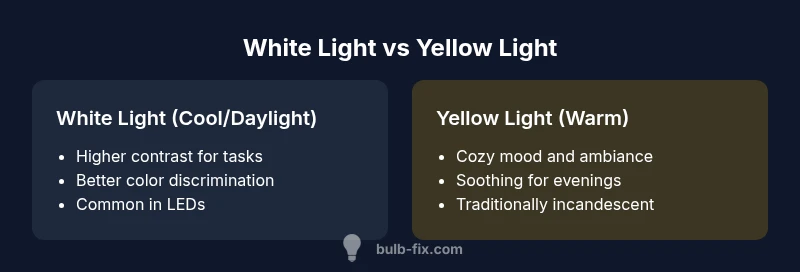
| Feature | white light (cool/daylight) | yellow light (warm) |
|---|---|---|
| Color temperature range | ~3500K–5000K (white) | ~2700K–3000K (yellow) |
| Energy efficiency | Higher with LED white options | High with LED yellow options; generally efficient |
| Color rendering (CRI) | Typically high in whites for detail | Moderate to good; warmth can slightly affect color perception |
| Best uses | Task-heavy spaces, kitchens, offices | Ambience, living rooms, bedrooms |
| Lifespan/maintenance | Longer life with LEDs; lower replacement frequency | Long life with LEDs; comparable maintenance |
| Dimming compatibility | Excellent with compatible dimmers/controls | Good with compatible dimmers/controls |
| Mood and perceived brightness | Perceived brightness improves task focus | Cozy ambience enhances relaxation |
Upsides
- Improved task visibility and color discrimination with white light
- Energy efficiency and longevity in modern LEDs (white or yellow)
- Flexibility with tunable white options and smart controls
Drawbacks
- Warm yellow light may desaturate some colors, affecting detail in tasks
- Too much emphasis on one tone can create eye strain or mood imbalance
- Inconsistent dimming performance can cause flicker or color shift in non-native dimmers
Tunability and room-based zoning trump a rigid choice
For most homes, use white light for task-oriented areas and yellow light for ambience. If possible, install tunable-white LEDs to switch tones as needed, guided by room function and activity.
Got Questions?
What is the difference between white light bulbs and yellow bulbs in terms of temperature?
White light bulbs usually emit cooler light in the 3500K–5000K range, while yellow bulbs emit warmer light around 2700K–3000K. This distinction affects mood, color perception, and visibility for tasks.
White light is cooler and brighter; yellow light feels warmer and cozier. Temperature ranges guide mood and task suitability.
Which bulb is better for reading and cooking?
For reading and cooking, white light with higher color temperature improves contrast and detail. Warm yellow is less ideal for precision tasks but can be comfortable for dining or relaxing after meals.
Reading benefits from cooler white light, while cooking can benefit from clear visibility.
Can I mix white and yellow bulbs in the same room?
Yes, mixing tones is common. Use task areas with white light and add warm lighting in living or relaxation zones. Tunable LEDs simplify this by shifting temperature as needed.
Yes, mix tones by area or use tunable bulbs for flexibility.
Are warm bulbs worse for energy efficiency?
Not inherently worse. Warm bulbs can be LED-based and highly energy-efficient; efficiency depends on the technology (LED vs incandescent) and the bulb’s construction, not just color temperature.
Warm bulbs can still be energy-efficient if they’re LED-based.
What should I look for when buying color temperature bulbs?
Look for color temperature range (2700K–6500K), high CRI (80+), dimmable options if needed, and compatibility with your fixtures and dimmers.
Check color temperature, CRI, dimming, and fixture compatibility.
Is there a health impact to white vs yellow light?
Light color can influence circadian rhythm and wakefulness. Cooler white light in the morning can aid alertness, while warmer tones in the evening can support wind-down. Consider room timing and natural daylight exposure.
Color temperature can affect wakefulness and sleep patterns.
Key Points
- Test color temperature in actual rooms before committing
- Prioritize high-CRI LEDs for color accuracy in task spaces
- Use tunable White LEDs to combine the benefits of both hues
- Match lighting to activity and mood to optimize comfort and productivity
- Check dimmer compatibility when upgrading to LEDs