Can You Plant Bulbs If They Have Sprouted? A Practical Guide
Discover whether sprouted bulbs can be planted, how to prepare them, and actionable steps for successful blooming. Bulb Fix provides expert, safe guidance for homeowners and DIY gardeners.


Yes—bulbs that have sprouted can often be planted, but success depends on bulb health, sprout condition, and timing. Handle sprouts gently, plant with the sprout facing up, and provide well-draining soil, consistent moisture, and proper depth. The Bulb Fix team offers practical steps to maximize bloom potential when planting sprouted bulbs.
Can sprouted bulbs be planted? A quick reality check
Yes, you can plant bulbs that have sprouted, but success depends on bulb health, sprout condition, and timing. If a bulb is firm, with visible green or white sprouts reaching upward, it’s usually viable for planting. Handle the sprouts gently to avoid bruising, and plant so the sprout will emerge through soil with minimal obstruction. According to Bulb Fix, the key is to minimize trauma while preserving the energy stored in the bulb, and to re-create a stable environment that supports root and shoot growth. When in doubt, err on the side of gentle handling and shorter storage time before planting. This approach aligns with practical gardening norms and ensures you’re not forcing growth in a stressed bulb. By starting with healthy material and a solid plan, you increase your odds of a robust bloom next season.
How sprouting changes a bulb's needs
Sprouts shift the bulb's priorities from storage to active growth. Energy moves from the bulb's interior toward the green shoot, which means roots must establish quickly to support future blooms. Sprouted bulbs are more susceptible to drying out or bruising, so you should plant them promptly with proper moisture and protection from extreme temperatures. Use loose, well-drained soil and avoid compacting around the shoots; the goal is a stable environment that welcomes root growth and prevents rot. Bulb Fix's guidance emphasizes keeping the planting site consistently moist but never soggy during the initial rooting period, and ensuring good drainage to prevent waterlogged crowns. Precision in depth and soil preparation reduces the risk of issues that commonly derail sprouted bulbs.
Timing: when to plant sprouted bulbs
Timing is critical. In temperate climates, plant sprouted bulbs in early fall for winter-spring bloom or in early spring for late-season bloom, depending on your zone. If sprouts are very long, it’s often better to plant bulbs slightly deeper to protect the crowns from cold snaps or sun scorching. If you live in a region with hot summers, consider planting in late fall so the roots can establish before heat arrives. Quick action after sprouting tends to yield higher success, as delayed planting can cause sprouts to weaken or flatten. Bulb Fix's practical approach combines healthy, firm bulbs with timely planting for best results. The seasonal window matters as much as the bulb anatomy when you’re planning your garden.
Preparing sprouted bulbs for planting
Begin by inspecting each bulb for soft spots, mold, or signs of decay; trim away damaged tissue with clean pruners. Leave healthy sprouts intact. If a root system is present, rinse gently to remove soil without breaking delicate roots. Gently pat the base dry and set the bulb on a clean surface while you prepare the planting bed. Soak the soil slightly before planting to help roots establish, but avoid waterlogged conditions. Label each bulb or pot to track varieties and planting dates. This careful preparation reduces the risk of rot and ensures sprouts have a clean entry path into the soil.
Choosing a planting method: in-ground vs container
Decide whether to plant in-ground or in containers. In-ground planting requires well-drained soil and a sunny or lightly shaded site, while containers demand a high-quality, breathable potting mix and drainage holes. Position the bulb with the pointed end upward and the shoot facing upward toward the surface. If mixing multiple varieties, provide enough spacing according to bulb size to prevent crowding. In containers, use a pot at least 6-8 inches deep to accommodate the bulb and its root zone, and water regularly to keep the mix evenly moist. This choice affects how you manage moisture, temperature, and growth.
Soil, drainage, and site selection
Soil structure matters more than exact nutrient levels for sprouted bulbs. Use a loamy mix or amended soil with organic matter to improve drainage and aeration. Choose a site with adequate sunlight—most bulbs bloom best in full sun to light shade. Create a shallow planting bed with a light top mulch to regulate temperature and moisture. Ensure that the soil drains well; if your soil holds water, consider raised beds or adding perlite or coarse sand. After planting, water thoroughly to settle the soil around the bulb and sprouts. The blend of soil texture and drainage supports healthier roots and stronger shoots.
Watering, mulching, and post-plant care
Water gently after planting and again when the top inch of soil dries, but avoid soggy conditions. Apply a light mulch to regulate soil temperature and moisture; mulch also helps prevent weeds and keeps the root zone stable. As sprouts emerge, monitor for signs of rot or pests and address promptly. Fertilization is generally light for bulbs; a balanced, slow-release fertilizer applied in early spring can support growth, but avoid overfertilizing which can encourage lush foliage at the expense of blooms. A steady routine of moisture management and minimal disturbance helps your sprouts settle in and begin to form bulbs.
Common problems and troubleshooting
Rot can creep in if the bulb sits in wet soil; curb watering and improve drainage. If sprouts fail to emerge, check soil temperature and depth; sometimes sprouted bulbs need a bit more time. Pests like slugs or snails may nibble on new growth; use slug deterrents and barrier methods. If bulbs dried out during storage before planting, rehydrate by soaking and planting promptly. For crowded beds, thin out surrounding growth to give each bulb space to develop. Early identification of issues and prompt actions maximize success.
Authority sources and further reading
For further guidance, consult reputable extension sources. University of Minnesota Extension provides practical guidance on bulb planting and timing (extension.umn.edu). Oregon State University Extension covers bulbs in containers and in the garden (extension.oregonstate.edu/gardening/flowers/bulbs). Penn State Extension also offers insights into bulbs and seasonal planting (extension.psu.edu/bulbs). These sources complement Bulb Fix's advice and provide region-specific recommendations.
(End of body blocks) This guide emphasizes practical steps and careful observation when working with sprouted bulbs to ensure a flourishing bloom year after year.
Tools & Materials
- Sprouted bulbs(Select firm bulbs with visible sprouts; avoid mushy or shriveled specimens)
- Well-draining soil or potting mix(Loam-sand mix preferred; add compost for nutrients)
- Trowel or clean knife(Sharp blade; sanitize between bulbs to prevent disease)
- Gloves(Firm grip and protection while handling roots)
- Watering can or hose(For even moisture, avoid heavy splashing on shoots)
- Labels or garden marker(Track varieties and planting dates)
- Mulch (optional)(Light mulch around the bed to regulate moisture and temperature)
Steps
Estimated time: 60-90 minutes
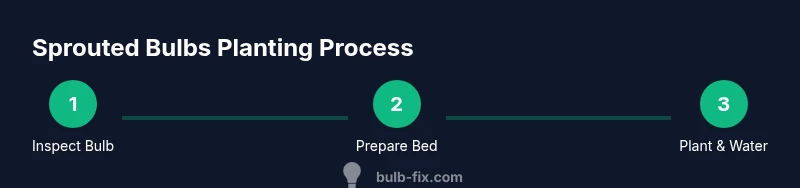
- 1
Inspect the bulb
Hold the bulb up to light and look for firm flesh and healthy sprouts. Remove any mushy or moldy tissue with clean pruning shears. If the roots are damaged, trim only the damaged portion and keep as much healthy tissue as possible.
Tip: Use clean tools; removing contaminated tissue reduces disease spread. - 2
Decide on planting site
Choose a site with good drainage and adequate sunlight. For containers, select a pot with drainage holes and at least 6-8 inches depth. Confirm you have enough space so roots won’t crowd as they grow.
Tip: In tight spaces, plan for staggered blooming by using different bulb sizes. - 3
Prepare the bed or container
Loosen soil to improve aeration and incorporate compost or organic matter. In containers, fill with a quality potting mix designed for bulbs. Create a shallow basin around each bulb to catch water without flooding the crown.
Tip: Texture matters—avoid compacted soil which can suffocate roots. - 4
Plant with sprouts upward
Place each bulb so the sprout faces upward and the pointed end is just below the soil surface. If sprouts are long, you can angle them slightly to fit the space but avoid bending sharply.
Tip: Aim for the sprout to emerge easily without obstruction from soil or mulch. - 5
Backfill and settle
Gently backfill around the bulb to stabilize it. Press soil lightly but do not compact. Water slowly to settle the soil around the roots.
Tip: A gentle water start helps prevent air pockets around the roots. - 6
Mulch and label
Apply a light mulch layer to regulate moisture and temperature. Label each bed or container with variety and planting date for future care.
Tip: Mulch conserves moisture but keep it light to prevent crown rot.
Got Questions?
Can you plant bulbs if they have sprouted?
Yes. Sprouted bulbs can be planted if they are firm and the sprouts are healthy. Trim any obviously damaged tissue and place the bulb with the sprout upward in well-drained soil. Plant promptly for best results.
Yes. If the bulb is firm and the sprouts look healthy, you can plant it now. Trim damaged parts, place the sprout upward, and keep the soil well-drained.
Should I remove the sprouts before planting?
No, do not remove healthy sprouts. They are the growth point that will become the bloom stem. If sprouts are damaged, trim only the damaged portion to avoid harming the healthy growth.
Leave healthy sprouts intact; they’re essential for bloom. Trim only damaged portions if necessary.
What depth should I plant sprouted bulbs at?
Plant according to bulb type, but a safe rule is to cover the bulb with soil up to about two times its height, ensuring the sprout is just above the soil when finished. In containers, use a slightly deeper layer to accommodate root growth.
Use about twice the bulb height as the planting depth; ensure the sprout is above soil after planting.
Can sprouted bulbs be planted in pots or only in the ground?
Sprouted bulbs can be planted in pots or in-ground, as long as the container has drainage and the soil is suitable for bulbs. Containers are great for controlled moisture and easier inspection.
Yes, you can plant sprouted bulbs in pots or in the garden as long as drainage is good.
What if sprouts are very long and fragile?
If sprouts are long, plant deeper so the crown is protected and the shoots have room to grow. Avoid bending or breaking the sprouts; gently guide them into place and water after planting.
Long sprouts need gentle placement and slightly deeper planting to avoid damage.
Watch Video
Key Points
- Check bulb health before planting.
- Plant sprouts facing up with appropriate depth.
- Prioritize drainage and consistent moisture.
- Choose ground or container based on space and sun.
- Monitor for rot and pests in early growth.