What Bulbs Can You Plant in December for Winter Bloom
Learn which bulbs you can plant in December, with climate tips, soil prep, and care for winter-blooming varieties. Bulb Fix provides practical, safe guidance for homeowners and DIY enthusiasts.


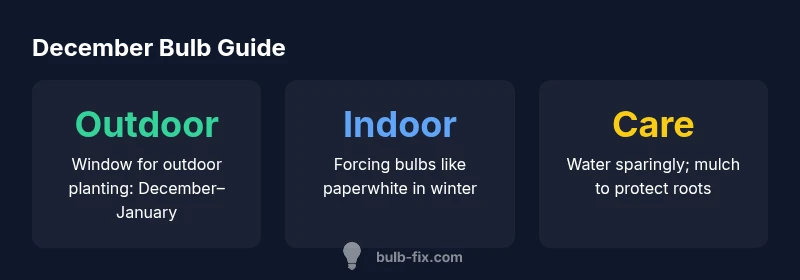
If you’re asking what bulbs can you plant in December, the short answer is: in mild climates, choose bulbs that tolerate cool soils and short days, such as crocus, snowdrops, and certain narcissus, while indoors you can force paperwhite narcissus or amaryllis. In colder regions, December is best for indoor forcing or waiting for a milder spell; always ensure good drainage and avoid waterlogged soil. Bulb Fix recommends starting with winter-blooming varieties and adjusting to your microclimate for best results.
Understanding December Planting: What Bulbs Fit Your Climate
When you ask what bulbs can you plant in December, the answer hinges on your local climate and soil conditions. In milder coastal or southern zones, December can still be an active planting window, especially for bulbs that tolerate cooler soils and shorter days. In cooler inland areas, December often marks a transition to indoor forcing or late-season plantings that rely on a milder spell or protective measures. The key is to observe soil temperature and moisture; bulbs want to establish roots before a hard freeze, but they should not be sitting in saturated soil. A practical approach is to test your soil with a quick moisture check and adjust with drainage amendments if needed. For many homeowners, this is the time to plan for staggered color through winter and early spring—something Bulb Fix has found to be achievable with proper selection and care. Remember to choose varieties known for winter performance and to work within your local hardiness zone to maximize success. The central question remains: what bulbs can you plant in December depends on climate, soil, and microclimates around your garden.
Selecting bulbs for December planting
Deciding which bulbs to plant in December means balancing bloom expectations with winter resilience. Crocus and snowdrops are classic performers in mild climates, delivering early color as days lengthen. Narcissus varieties—especially paperwhites—offer reliable winter-to-spring blooms when forced indoors or planted outdoors in protected, well-drained soil. Iris reticulata and small alliums can also be good options in warmer microclimates where soils drain quickly. For DIY enthusiasts who want guaranteed color during the darkest weeks, indoor forcing of paperwhite narcissus or amaryllis can be a satisfying option, with bulbs purchased and potted in late autumn. Bulb Fix emphasizes selecting bulbs with strong storage history and proper storage handling to ensure December planting success. In all cases, read the label for chilling requirements and expected bloom windows, and adjust for your specific conditions. The emphasis for December planting should be quality bulbs, proper depth, and consistent moisture control to promote root establishment before winter dormancy. The overarching principle is to align bulb choice with your climate and garden conditions.
Soil prep and site selection for December planting
Healthy December plantings start with soil that drains well and has a light, crumbly texture. In damp or clay-heavy soils, amend with compost and coarse organic matter to improve drainage and add organic matter that helps retain nutrients. Choose a sunny or gently shaded site, as many winter-blooming bulbs prefer full sun to partial shade. Before planting, remove weeds that compete for moisture and nutrients, and rake the soil to a fine tilth. In colder regions, consider raised beds or mounded areas to improve drainage and soil warmth. If you’re planting in December, the goal is to create a hospitable bed that warms quickly with sun exposure while protecting bulbs from frost pockets. Watering should be moderate as temperatures drop; overwatering can rot bulbs, especially in poorly drained soil. Mulching with a light layer of organic material can help insulate roots and stabilize soil temperature.
Planting depth and spacing guidelines
Bulb planting depth typically depends on bulb size, but a common rule is to plant bulbs at a depth of two to three times their height. For example, a 2-inch-tall bulb goes 4–6 inches deep. Space bulbs about two to three bulb diameters apart to allow room for root growth and air circulation, which helps prevent fungal issues. If you’re planting in December, consider your soil temperature and moisture; in colder soils, watering in after planting can help settle soil, but avoid leaving damp soil around the bulb stem. Label each bed or area to track which varieties were planted in December, enabling you to anticipate bloom times and plan for later succession planting. For bulbs that require chilling, December planting should align with local frost dates, ensuring that roots establish while shoots will emerge as days lengthen in late winter.
Watering, mulching, and winter care
Winter care for December-planted bulbs focuses on balancing moisture and soil temperature. Water the bulbs only when the top inch of soil feels dry, paying attention to rainfall patterns and soil drainage. Mulching with organic material like shredded leaves or compost can help moderate soil temperature and conserve moisture, while also suppressing weeds that compete for nutrients. In areas with early freezes, a light mulch layer can reduce frost heave and protect shallow roots. If you notice repeated soggy conditions, lift the mulch and allow soil to dry slightly before re-mulching. With December plantings, expect slower root growth, so monitoring moisture is crucial. For indoor forcing, maintain bright light and consistent, moderate moisture to encourage steady growth while avoiding waterlogged pots. Bulb Fix notes that stable moisture management is essential to successful December plantings.
Indoor forcing options for December
December is a prime time for indoor bulb forcing, allowing you to enjoy winter color even when outdoor conditions are unfavorable. Paperwhite narcissus and amaryllis are popular choices for containers and planters, as they require minimal chilling and respond quickly to bright, indirect light. Forcing indoors offers a reliable bloom window mid-winter and can be used to stagger color in a single room or across several containers. When forcing indoors, use clean pots with drainage holes and a well-draining growing medium. Keep the soil consistently moist but not soggy, and rotate containers to ensure even light exposure. If indoor forcing, consider companion plants or decorative elements like twigs and greenery to extend the display. Bulb Fix emphasizes using bulbs suited for forcing and avoiding varieties that need long chilling in winter.
Common mistakes to avoid in December planting
December planting mistakes often come down to weather, water, and timing. Planting too deep or too shallow can prevent proper root establishment. Poor drainage leads to rot, especially in soils with high clay content. Overwatering during winter can suffocate roots and invite fungal diseases. Failing to label beds or pots makes it hard to track bloom times, resulting in color gaps. Finally, ignoring microclimates within a garden—sunny slope vs. shade pocket—reduces success rates. By choosing appropriate bulb types for December, ensuring drainage, and providing consistent moisture management, you can minimize these common errors. Bulb Fix recommends testing soil drainage first, choosing climate-appropriate bulbs, and avoiding heavy pruning near bulb beds that may disturb emerging shoots.
Common December-planted bulbs and their bloom expectations
| Bulb Type | Outdoor Planting Window (Dec–Jan) | Typical Bloom Time | Notes |
|---|---|---|---|
| Crocus | December–January | Late winter to early spring | Prefers well-drained soil; sun to light shade |
| Snowdrops | December–January | Late winter | Naturalizes in rich, moist soil; avoid heavy clay |
| Narcissus (paperwhite) | Outdoor in mild climates; indoor forcing | Winter to early spring | Easy to force indoors; avoid overwatering |
| Iris reticulata | December–January in mild areas | Late winter | Good for borders in warm microclimates |
Got Questions?
Can I plant bulbs outdoors in December in cold climates?
In very cold regions, December is risky for outdoor bulb planting. Look for hardy varieties and consider protective mulch, raised beds, or waiting for a milder spell. For many gardeners, indoor forcing provides reliable color during deep winter.
In cold climates, December outdoor planting is tricky. Use hardy bulbs, mulch, or indoor forcing for winter color.
Which bulbs naturalize best when planted in December?
Bulbs that naturalize well in winter soil include crocus and snowdrops in suitable climates. They spread gradually with proper drainage and partial sun.
Crocus and snowdrops are good for naturalizing in milder winter soils with good drainage.
Do I need to refrigerate bulbs before December planting?
Some bulbs benefit from a short chill before planting, but many winter-blooming varieties are ready to plant as purchased. Follow label instructions and consider your local climate.
Chill requirements vary; follow the bulb label and your climate needs.
What soil prep is best for December planting?
Ensure well-drained soil with organic matter. If drainage is poor, amend beds and consider raised rows. Gentle soil aeration helps root penetration during winter.
Make sure the soil drains well and is enriched with organic matter.
How deep should December-planted bulbs be planted?
Plant at a depth of two to three times the bulb height. This supports root development and protects against cold bumps.
Plant bulbs about two to three times their height deep.
“Proper bulb selection and soil preparation are the two most important factors for successful December planting. With the right climate and care, you can enjoy winter color that transitions into spring.”
Key Points
- Know your climate: December planting success depends on temperature and drainage.
- Choose bulbs bred for winter performance and shorter days.
- Outdoor December planting works in milder zones; otherwise, force indoors.
- Ensure proper depth and spacing to promote root establishment.
- Mulch lightly to regulate soil temperature and moisture.