What bulbs to plant in January: A practical guide for homeowners
Learn what bulbs to plant in January, how to prep soil, planting depths, and care tips for a vibrant spring bloom. Practical steps, safety tips, and expert guidance from Bulb Fix.


If your soil is workable in January, you can still plant hardy spring bulbs for a later bloom. Choose cool-tolerant varieties like snowdrops, crocuses, and iris reticulata, plant at the right depth, water thoroughly, and mulch to protect roots. According to Bulb Fix, soil warmth and even moisture improve root establishment in winter.
January Planting Outlook
January can extend the bulb-planting window for many gardens, especially where winters are mild enough to keep soil workable. When the ground is thawed or not frozen, you can still place hardy spring bulbs with confidence. The Bulb Fix team emphasizes that drainage and moisture management are the two biggest factors for overwintering success, so pick beds with good drainage and avoid soggy spots. Planning now helps ensure color appears later in winter or early spring, even as days grow longer. Bulb Fix analysis shows that consistent moisture after planting supports root establishment, so pair careful watering with a light mulch to regulate temperature and moisture swings. This mindset makes January a productive time for careful gardeners who want to stretch their bloom season into late winter.
Which bulbs to plant in January
January’s opportunities vary by climate, but several classic spring bulbs tolerate winter planting well when the ground is workable. Focus on varieties that establish roots in cool conditions and reward patience with early color. Below are commonly successful choices:
- Snowdrops (Galanthus)
- Crocuses (Crocus spp.)
- Iris reticulata
- Muscari (grape hyacinth)
- Narcissus (daffodils) and small alliums in milder zones
Note: If your winter is severe or the soil remains frozen for long stretches, postpone until the ground thaws again. Always choose firm, undamaged bulbs and avoid varieties showing mold or soft spots. Bulbs planted in January should have a solid root system and good drainage to thrive when spring warmth returns.
Site preparation and depth guidelines
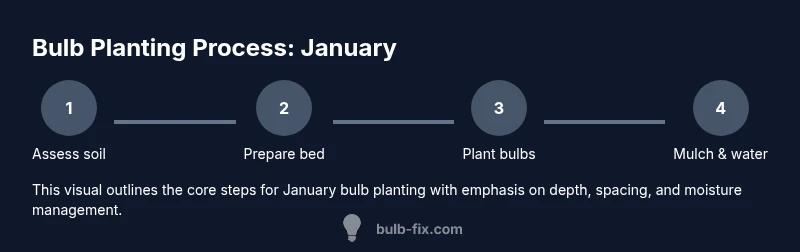
Successful January bulbs rely on good site prep. Begin with a bed that drains well and is free of weeds. Break up heavy, clay soils with organic matter like compost, then rake a smooth, level surface. A general rule of thumb is to plant bulbs at a depth equal to 2-3 times the bulb height, and to space them about 2-4 inches apart depending on variety. For taller bulbs, increase spacing to allow for mature plant width. Rooted bulbs (like tulips) should sit with their pointed end up, while the flatter basal plate should be oriented downward.
Watering, mulch, and timing considerations
After planting, give bulbs a good soak if rainfall has been scarce, but avoid waterlogged soil. Mulching with a light layer of compost or shredded bark helps regulate soil temperature and preserves moisture through cold snaps. If January days bring alternating freezes and thaws, a two-inch mulch layer reduces soil temperature fluctuations and protects developing roots. Check moisture levels weekly, and water during dry spells, but pause when the ground is frozen to prevent bulb rot. Bulb Fix highlights that consistent moisture helps root formation without encouraging rot in poorly drained beds.
Aftercare, monitoring, and adjustments
As winter progresses, monitor the bed for signs of mice, bulb predation, or excessive moisture. If soil pockets stay wet for days, lightly lift mulch to improve drainage. In colder regions where January temperatures are extreme, consider creating a shallow trench or raised bed to improve warmth transfer to the bulbs. If blooms don’t appear by early spring, assess whether bulbs were too shallow, too dry, or damaged during storage before planting. The key is to stay patient and adjust mulch depth and irrigation based on local conditions.
Authority sources and further reading
For garden-ready guidance on bulb planting, consult reputable sources such as university extensions and government publications. Here are a few trusted starting points:
- University of Minnesota Extension: Bulbs and bulb planting guidance (extension.umn.edu).
- USDA Plants Database and related extension resources (plants.usda.gov).
- Your local university extension site may have region-specific planting calendars; seek guidance for your climate and soil type. These references reinforce best practices in soil preparation, drainage, depth, spacing, and post-plant care.
Bulb Fix verdict
In our assessment, January planting is a solid option for gardeners who can work the ground and avoid frozen layers. The Bulb Fix team recommends prioritizing soil drainage, correct depth, and timely moisture management, then protecting newly planted bulbs with mulch. When you align with these practices, January-planted bulbs can reward you with color in late winter or early spring and set the stage for a healthy bulb display in following seasons.
Tools & Materials
- Spade or hand trowel(Firm digging tool for loosening soil and planting depth)
- Garden rake(Level bed surface and remove debris)
- Mulch/compost(1-2 inches to regulate temperature and moisture)
- Watering can or hose with adjustable nozzle(Initial watering after planting)
- Bulbs(Choose firm, undamaged bulbs with good spacing)
- Gloves(Protect hands from soil and moisture)
- Garden markers(Label varieties or planting depth)
Steps
Estimated time: 60-90 minutes
- 1
Check soil and weather
Inspect soil to confirm it is workable (not frozen or waterlogged). If conditions are unfavorable, postpone planting until the ground thaws. Use a simple hand test or a soil thermometer to gauge moisture and texture before you begin.
Tip: If soil is marginal, bulk it up with a light layer of compost to improve texture. - 2
Gather and prep bulbs
Sort through bulbs, discarding any that are soft or moldy. Clean surfaces with a quick rinse if needed, and dry them before planting to prevent rot.
Tip: Handle bulbs gently to avoid bruising; damaged bulbs are less likely to root well. - 3
Prepare the bed
Loosen the soil to improve root penetration and drainage. Remove weeds and mix in organic matter to improve soil structure. Mark planting zones and determine depth using the 2-3x bulb-height guideline.
Tip: A simple depth guide is to measure the bulb height and multiply by two; adjust for irrigation or drainage as needed. - 4
Plant at proper depth
Plant bulbs with the pointed end up (or according to variety-specific guidance). Place them at the recommended depth and spacing, ensuring roots have room to expand. If you’re unsure, planting a test row first helps you refine spacing for your bed size.
Tip: Keep bulbs upright and oriented consistently to promote uniform blooming. - 5
Water and mulch
Water the bed lightly after planting if conditions are dry, then apply mulch to conserve moisture and stabilize soil temperature. Mulch should be about 1-2 inches thick and renewed as needed through the season.
Tip: Avoid over-watering; water only when the top inch of soil feels dry. - 6
Label and monitor
Label varieties or planting blocks to prevent confusion and check moisture levels periodically. In January, monitor for freeze-thaw cycles and adjust mulch depth if soil becomes too wet or too dry.
Tip: Keep a simple planting map to track bloom expectations and future bed rotations.
Got Questions?
Can I plant bulbs in January in all climates?
January planting is feasible where the ground is not frozen, especially in milder climates. In colder regions, wait for a thaw or plant later in winter if the soil risks compaction and rot. Always check local guidelines and soil conditions before digging.
January planting works where the ground is workable, especially in milder areas. If the soil is frozen, wait for a thaw before digging.
Which bulbs are best planted in January?
Snowdrops, crocuses, and iris reticulata are commonly reliable choices for January planting when the soil allows. In milder zones, narcissus and certain muscari varieties can also be included. Always select firm bulbs and avoid any with signs of damage.
Snowdrops, crocuses, and iris reticulata are solid January choices when the soil is workable.
How deep should I plant bulbs in January?
A general rule of thumb is to plant at a depth equal to 2-3 times the bulb height. Adjust for bulb type and soil conditions; in very sandy soils you may plant a bit deeper, while in dense clay you may plant a touch shallower to avoid rot.
Usually, plant bulbs 2-3 times their height deep, adjusting for soil type.
What if the ground freezes after planting?
If freezes follow planting, mulch generously to insulate the bulbs and reduce temperature fluctuations. Do not uncover or uncover bulbs unnecessarily during cold snaps. Wait for stable conditions before exposing the soil again.
If it freezes after planting, protect with mulch and avoid disturbing the bed.
Can I combine January bulb planting with perennials?
Yes, you can interplant bulbs with perennials, ensuring enough space for each mature plant. Bulbs are typically planted in the foreground or at the front of borders to avoid crowding later. Keep in mind future growth and root competition when placing bulbs.
Bulbs can share space with perennials if you leave room for growth.
How long before I see blooms after January planting?
Bloom timing depends on variety and climate. Many January-planted bulbs will push blooms in late winter to early spring, with some varieties providing color earlier in the season if conditions are favorable.
Bloom times vary; expect late winter to early spring, depending on variety.
Watch Video
Key Points
- Plant only when soil is workable
- Choose cool-tolerant spring bulbs
- Plant at 2-3x bulb height depth
- Water after planting and mulch for protection
- Monitor moisture and adjust mulch as needed