Replacement Light Bulb Guide: How to Choose and Replace Safely
Learn how to pick the right replacement light bulb and replace it safely at home. This Bulb Fix guide covers bulb types, bases, wattage, color temperature, and disposal to keep your lighting efficient and reliable.


By safely replacing a light bulb, you restore proper illumination and reduce energy waste in your home. Before you begin, identify the correct base type, wattage, and whether a dimmer is involved; switch off power at the switch and circuit, and use a sturdy ladder if needed. This quick guide will lead you through selecting a compatible replacement light bulb, removing the old bulb, installing the new one, and testing the fixture.
What is a replacement light bulb and why it matters
A replacement light bulb is the small but essential component that restores lighting in a fixture. The right bulb improves energy efficiency, brightness, and safety. According to Bulb Fix, selecting the correct replacement light bulb starts with the fixture and base type. Getting this right saves energy, reduces hot surfaces, and maintains consistent color and brightness across rooms. When you know your base, wattage, and any dimming needs, you can avoid unnecessary trips to the store and ensure reliable performance every night.
Types of bulbs and bases you’ll encounter
There are several lamp technologies and base styles you’ll face when shopping for a replacement light bulb. For most indoor rooms, LED bulbs are the modern default because they last longer and use less energy. CFLs offer good efficiency but contain small amounts of mercury and may take time to reach full brightness. Incandescent bulbs are still available in some fixtures and are valued for their warm glow but consume more energy. Base types are the critical compatibility detail. The Edison screw base (E26 in North America or E27 elsewhere) is common for residential lighting. Other bases include GU10 (twist-lock for spotlights), and B22 (bayonet) or smaller candelabra bases like E12. Always match the bulb base to the socket and check any fixture labels for maximum wattage.
Reading the specs: watts, lumens, color temperature
Wattage indicates energy use, not brightness, especially with LEDs. To compare brightness, look at lumens instead of watts. A higher lumen rating means a brighter light. Color temperature, measured in kelvin (K), describes the light color: around 2700K is warm, 3000K is soft white, and 5000K is daylight. For most living spaces, 2700K–3000K is comfortable, while task areas benefit from 3500K–4100K. CRI, or color rendering index, shows how accurately a light reveals colors; higher CRI (80+ is good) yields more natural tones. Finally, verify if the bulb is rated for enclosed fixtures or dimming, as required by your setup.
Planning for safety and fixture compatibility
Safety comes first when replacing a bulb. Always turn off power at the wall switch and, if needed, at the circuit breaker. Let bulbs cool completely to avoid burns. If the fixture is high or hard to reach, use a stable ladder with a helper nearby. Check that a new bulb matches the base and is rated for any dimming or enclosed use; incompatibility can cause flicker or shortened life. For fixtures in damp or vibration-prone areas, select bulbs rated for those conditions. By planning ahead, you minimize risk and ensure a successful replacement.
A practical replacement workflow (what to do, step by step)
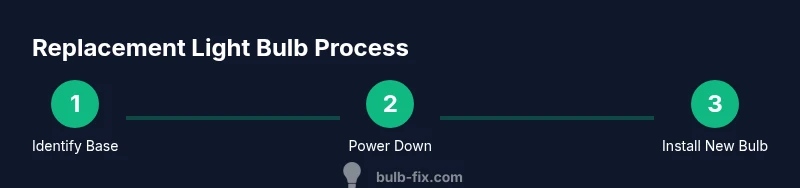
When you’re ready to replace a bulb, follow a practical workflow that reduces mishaps and keeps you safe. Start by confirming base type and brightness needs, then prepare your workspace, remove the old bulb, and verify socket health. Select a compatible replacement light bulb, install it firmly, and restore power to test. If the bulb doesn’t light, double-check the base and filament orientation, and re-seat the bulb. This approach minimizes the chances of dropping a bulb and ensures a clean transfer of power.
Disposal, recycling, and sustainability considerations
Proper disposal of bulbs protects the environment. CFL bulbs contain trace amounts of mercury and should be recycled at local household hazardous waste programs. LED bulbs are recyclable and generally safer to handle, but they should not be discarded with regular trash where prohibited. Always follow local guidelines for disposal and recycling. After replacing, consider labeling the fixture if you’ve used a smart or color-changing bulb, so future maintenance is straightforward.
Tools & Materials
- Replacement light bulb(Choose the correct base (E26/E27, GU10, B22, etc.) and type (LED, CFL, incandescent) for your fixture.)
- Safety glasses(Protect eyes against glass shards or accidental breakage.)
- Stable ladder or step stool(Use only on a flat, stable surface; have a helper hold the ladder if needed.)
- Gloves (optional)(Wearing gloves or using a dry cloth prevents oils from your skin from transferring to the bulb.)
- Soft cloth or microfiber cloth(Use to wipe the socket area if dust or residue is present.)
Steps
Estimated time: 15-25 minutes
- 1
Identify the correct bulb
Check the old bulb or fixture label for base type and wattage. If the base is unclear, compare with a known bulb of the same socket or consult the fixture’s manual. This step prevents mismatched replacement that can cause flicker or failure.
Tip: Take a photo of the bulb base and label for later reference. - 2
Power down and prepare
Switch off the power at the wall and, if possible, at the circuit breaker. Wait until the bulb is cool to touch to avoid burns. Clear the area around the fixture to prevent accidental drops.
Tip: Use a stable ladder; never lean over the edge to reach a high fixture. - 3
Remove the old bulb
Gently grasp the bulb near the base and rotate counterclockwise if it’s a screw base, or follow the socket’s twist-and-remove mechanism. If the bulb is stuck, don’t force it; apply a little more counterclockwise motion and inspect for damage.
Tip: If the bulb is broken, wear safety glasses while carefully removing shards. - 4
Verify socket health and base
Inspect the socket for corrosion, burn marks, or loose connections. A damaged socket may require professional replacement. Ensure the new bulb base matches the socket type exactly.
Tip: If you see corrosion, stop and consult an electrician before installing a new bulb. - 5
Install the new bulb
Align the base with the socket and insert gently. For screw bases, twist clockwise until snug but not overtightened. For pin or twist-lock bases, insert and rotate as required by the base type.
Tip: Do not overtighten; this can damage the bulb or socket. - 6
Restore power and test
Turn the power back on and switch on the fixture to confirm the bulb lights and distributes light as expected. If not, re-seat the bulb or re-check the base and wattage.
Tip: If the fixture hums or flickers, the bulb may be incompatible with the dimmer or fixture.
Got Questions?
What is the difference between incandescent, CFL, LED, and halogen bulbs?
Incandescent bulbs use more energy and generate more heat but have a familiar warm glow. CFLs are more efficient but contain small mercury amounts and may take time to reach full brightness. LEDs are the most energy-efficient and longest-lasting option with a wide range of color temperatures. Halogen bulbs are a type of incandescent with a brighter intensity for certain applications.
Incandescent bulbs are common but use more energy; CFLs are efficient but contain mercury; LEDs are the best all-around choice for most homes; halogens are bright but energy-heavy.
How do I know which base type my bulb uses?
Check the bulb base markings on the bottom or side of the bulb, or inspect the socket itself for labeling. If you’re unsure, bring the old bulb to a hardware store or consult the fixture manual to confirm the exact base (e.g., E26, GU10, B22).
Look at the bulb’s base or the socket labeling, or compare it with a known bulb to match the base type.
Can I replace a bulb while the fixture is on?
No. Always turn off power at the wall switch, and if possible at the circuit breaker, before removing or installing a bulb to prevent shocks or burns.
Always switch off power and let the bulb cool before handling.
Is it okay to mix bulb types in a fixture?
Avoid mixing different bulb types or wattages in a single fixture, especially with dimmers or enclosed fixtures. Mismatched bulbs can create flicker, reduced performance, or overstress the dimming control.
Don’t mix bulb types in the same fixture, especially with dimmers.
What should I do if a bulb breaks in the socket?
Carefully remove glass shards with gloves and a sturdy tool. If mercury-containing CFLs are involved, ventilate the area and follow local disposal guidelines. Do not attempt to retrieve pieces with bare hands.
If a bulb breaks, wear gloves and clean up carefully; follow local disposal rules for CFLs.
How long do replacement light bulbs typically last?
Lifespan varies by technology. LEDs commonly last many years with regular use, while CFLs and incandescent bulbs have shorter lifespans and higher energy use. Actual life depends on usage, voltage stability, and fixture conditions.
LEDs last longer and use less energy; other bulbs burn out sooner depending on use.
Watch Video
Key Points
- Verify base and wattage before purchasing.
- Power off and cool bulbs before handling.
- LEDs are typically the best long-term choice for most homes.
- Install securely and test after replacement.
- Recycle or dispose of old bulbs according to local guidelines.