Best LED Bulbs for Floor Lamps in 2026: Practical Guide
Discover the top LED bulbs for floor lamps in 2026. Learn base compatibility, brightness, color temperature, dimming, and safety with practical guidance from Bulb Fix.


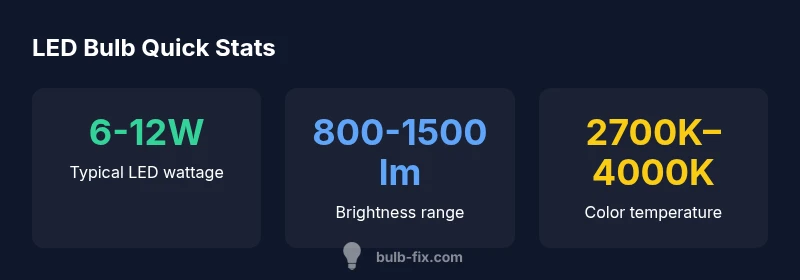
According to Bulb Fix, for a floor lamp you should choose an LED bulb with an E26 base, 6-12W (60-100W equivalent), 2700K-3000K for warm ambience, and a dimmable option if your lamp supports dimming. Look for high CRI (90+) for accurate color, and ensure compatibility with enclosed fixtures. This balances energy savings with comfortable lighting.
Base compatibility and socket types
Choosing a LED bulb for a floor lamp starts with understanding the base. In most North American floor lamps, the standard is E26 screw-in bulbs. In Europe and many other regions, E27 is common. Some decorative floor lamps use smaller candelabra bases (E12) or even GU24 sockets. Always check the lamp label or the user manual to confirm base size and maximum wattage. If you’re replacing an old incandescent, match the base and note the fixture’s shade clearance. Bulb Fix notes that most modern LED bulbs with an E26/E27 base offer higher efficiency and longer life than legacy incandescent equivalents, but the physical fit matters more than the label alone. When shopping, verify that the bulb’s base matches the socket and that the bulb length won’t protrude into the shade or contact the socket housing. If in doubt, bring the lamp’s model number to a lighting retailer for a quick compatibility check, and avoid forcing a bulb into a tight space.
Brightness and lumen guidance
Brightness for floor lamps is measured in lumens, not watts. For most living spaces, aim for 800-1500 lumens to create a comfortable ambience without glare. For reading nooks or desk corners, 1500-2000 lumens can help reduce eye strain. LED bulbs are energy-efficient; a 6-12W LED often provides a 60-100W incandescent equivalence, depending on the product. When comparing bulbs, look at both lumen output and beam angle: a narrower beam (15-40 degrees) is better for spotlighting a reading area, while a wider beam (60-120 degrees) fills a room more evenly. Also check initial light output versus steady-state performance; some bulbs brighten slowly on startup, which may affect mood and activity timing in living rooms.
Color temperature and ambience
Color temperature affects mood and task performance. Warmer temperatures around 2700K-3000K produce cozy, living-room ambience ideal for relaxing evenings; neutral white 3500K-4000K supports tasks such as writing and crafts; cooler 5000K-6500K is less common in home living spaces but can be useful in home offices or garages. When selecting for a floor lamp, consider the room’s overall lighting scheme and other fixtures. Bulb Fix recommends starting with 2700K-3000K for most sofas and side tables, then adjusting to 3500K if you want slightly crisper color without sacrificing warmth. If you have artwork or fabrics, aim for a CRI of 90+ to ensure colors look true under the lamp.
Dimming, compatibility, and flicker prevention
If your floor lamp includes a dimmer, choose a dimmable LED bulb and confirm compatibility with the dimmer type (leading-edge vs trailing-edge). Not all LED bulbs work well with old dimmer switches; incompatibility can cause flicker, buzzing, or reduced dimming range. Look for bulbs labeled as dimmable and check the bulb’s minimum dimming level. The safest path is to test the combination in-store or at home using a return policy. Bulb Fix notes that high-quality dimmable LEDs can preserve smooth dimming across most standard lamp configurations, but you should still read the product’s dimming curve and warranty terms.
Enclosed fixtures, heat considerations, and ratings
Many floor lamps are partially enclosed or have shades that trap heat. LED bulbs generate far less heat than incandescent, but some LEDs are not rated for enclosed fixtures. If the lamp is enclosed or has a metal shade that heats, purchase bulbs labeled for enclosed fixtures. Overheating can shorten bulb life or trigger safety protections. Always verify the bulb’s maximum temperature rating and enclosure rating on the package. Bulb Fix’s analysis shows that choosing enclosed-rated LED bulbs reduces failure rates and keeps fixture surfaces cooler, improving comfort and safety in living spaces.
Longevity, energy savings, and warranties
LED bulbs typically offer extended lifespans compared with incandescent or halogen bulbs, often in the range of 15,000 to 25,000 hours depending on quality and usage patterns. If a lamp is used every evening for several hours, you can expect years of service before replacement. Energy savings can be substantial, reducing electricity use by up to 80% versus incandescent equivalents. When shopping, check the warranty period—many reputable LED bulbs come with 2-5 year warranties. Remember that a longer warranty often reflects better build quality and engineering, but it does not guarantee failure-free operation under every condition. Bulb Fix’s team emphasizes selecting brands with transparent warranty terms and reasonable service support.
Smart features and compatibility with floor lamps
Smart LED bulbs offer remote control, scheduling, and voice assistant integration, which can be appealing for living rooms. Ensure your lamp’s socket and shade allow for the extra electronics, and verify that the lamp’s power rating meets the smart bulb’s requirements. Compatibility with hubs or ecosystems (such as Google Home or Amazon Alexa) varies by brand. If you’re new to smart lighting, start with a single lamp and a non-fallback, widely supported bulb. Bulb Fix recommends prioritizing products with robust app support, good firmware update history, and clear energy-use reporting.
Practical buying tips and how to compare products
Before buying, make a quick checklist: base compatibility, brightness needs, color temperature, dimming compatibility, enclosure suitability, and warranty. Read user reviews focusing on heat, flicker, and real-life lifespan. Compare lumens for brightness, not watts, and examine the color rendering index (CRI) if you care about true color in artwork or clothing. Use your lamp’s shade height and room size to estimate appropriate bulb size and beam angle. If you’re unsure, seek an in-store demonstration or consult Bulb Fix's buying guide for a tailored recommendation based on your room layout and lamp style.
Installation basics and quick troubleshooting tips
When replacing a floor-lamp bulb, ensure the lamp is unplugged, wait for any heat to dissipate, and handle the bulb by its base to prevent oils from your skin reducing life. Check the bulb is firmly seated in the socket, then switch on to test. If flicker occurs, try a different dimmer or bulb, or check for loose fixtures or a tripped circuit breaker. For enclosed fixtures, swap to an enclosed-rated LED bulb and confirm the fixture’s wattage rating isn’t exceeded. With the right bulb, you’ll enjoy steady, efficient light without the headaches of frequent replacements.
Guide: LED bulb choices for floor lamps
| Aspect | Recommendation | Notes |
|---|---|---|
| Base compatibility | E26/E27 screw-in (US/EU) | Check lamp label or model |
| Brightness target (lumens) | 800-1500 lm for living spaces | Higher for task lighting |
| Color temperature | 2700K-3000K warm; 3500K-4000K neutral | Match room mood |
| CRI (color rendering) | Aim for 90+ in color-critical areas | Artwork/fabrics benefit |
| Dimming compatibility | Choose dimmable LED; verify dimmer type | Test with your lamp setup |
Got Questions?
What base is most common for floor lamps?
Most floor lamps use a standard E26/E27 screw base. Verify with the lamp label and model number to ensure a proper fit.
Most floor lamps use an E26 or E27 screw base. Check the lamp label to confirm.
Do LED bulbs require special dimmers?
Many LED bulbs are dimmable, but compatibility with your dimmer matters. If mismatched, you may experience flicker or limited dimming range.
Many LEDs are dimmable, but check compatibility with your dimmer.
Can I use an LED bulb in an enclosed floor lamp?
If the bulb is rated for enclosed fixtures, it will say so on the packaging. Otherwise, avoid using it in enclosed spaces.
Look for 'enclosed fixture rated' on the bulb.
How long do LED bulbs last in floor lamps?
LED bulbs typically last 15,000 to 25,000 hours, depending on quality and usage. Check the warranty for length of coverage.
Usually 15,000 to 25,000 hours with good warranties.
Are smart bulbs safe for floor lamps?
Smart LED bulbs are safe when the fixture is rated for the combined load and ventilation is adequate. Use trusted brands.
Yes, with caveats about load and ventilation.
What color temperature should I choose for a living room?
For living spaces, 2700K-3000K provides warmth; 3500K-4000K offers crisper light for activities without harshness.
Warm whites for cozy spaces, neutral for tasks.
“LED bulbs are growing the most in home comfort when you match base, brightness, and dimming to the lamp’s design. Proper choices reduce heat, flicker, and replacement frequency.”
Key Points
- Verify base type before shopping
- Prioritize lumens over watts for brightness
- Choose 2700K-3000K for cozy spaces
- Check dimming compatibility with your lamp
- Always confirm enclosure ratings for enclosed fixtures